“Challenge the status quo” is popular advice, but most brands use it badly. A new color palette, another discount code, or a feature added to a Shopify theme doesn’t challenge anything if the underlying buying experience stays the same.
For ecommerce teams, the more useful question is operational: what default behavior are you replacing, why does it underperform, and what mechanism will work better? That question matters when margins are shrinking, conversion is insufficient, and constant promotions are teaching customers to wait for the next markdown.
Why the Phrase Gets Used Loosely
“Challenge the status quo” has become familiar filler in pitch decks, agency websites, and brand manifestos. Teams attach it to almost any new feature, campaign, or visual refresh. The phrase often means little more than “be different,” even though difference alone doesn’t create value.
A redesigned product page may look new while leaving the same friction intact. A sitewide discount may produce activity while preserving the same assumption that shoppers need a lower price before they act. A generic campaign can carry disruptive language without changing the customer’s decision.
That vagueness creates a practical problem for Shopify merchants. If the phrase has no defined baseline, marketers can’t tell whether they’re improving the buying experience or decorating the existing playbook.
A useful challenge needs three parts: a named default, a reason that default underperforms, and an alternative that can be measured against it.
History shows why the distinction matters. Paper currency appeared in China in the ninth century but didn’t reach Europe until the late 1600s. Steel tools had been known for about 4,000 years before the Bessemer Process enabled mass production in the 1850s, as described in Yale’s catalog record for the history of money and technology. The important pattern isn’t novelty. A new system becomes significant when it solves a real constraint better, cheaper, or faster, then becomes practical at scale.
In ecommerce, the named default is often unconditional percentage-off promotion. The disciplined challenge is to replace it with an offer design that creates a reason to act now without giving every visitor the same discount.
A Working Definition of Challenge the Status Quo
In plain language, challenge the status quo means identifying the default way an industry, audience, or category operates, then replacing it with a model that solves a known friction better.
For a brand, that definition becomes more specific:
- Identify the behavior customers and teams accept as normal.
- Find the cost or friction hidden inside that behavior.
- Introduce a different mechanism that addresses the problem.
- Compare the new mechanism with the old one using a business outcome.
Consider the shift from printed coupons to one-tap mobile offers. The customer incentive hasn’t disappeared. The delivery mechanism changes. Instead of searching for paper, carrying it, and presenting it at checkout, the shopper receives an offer that can be claimed and used within a digital journey.
That example is operational rather than philosophical. It challenges the default by reducing friction and changing when the customer makes a decision.
The phrase also needs separation from related terms:
- Innovation creates a new method, product, or experience. It may challenge the status quo, but not every innovation replaces a meaningful default.
- Disruption usually describes a broader market shift, often involving a business model or distribution structure.
- Rebranding changes how a company presents itself. It only challenges the status quo when the new positioning is backed by a different customer or operating experience.
- Optimization improves an existing system. It can still qualify when the improvement directly replaces an accepted but underperforming practice.
A merchant doesn’t need to rebuild the store to challenge its category. Replacing an evergreen coupon with a credible, time-bound reward can qualify if it changes the decision mechanism and improves the economics.
The working test is simple: does the alternative make a specific customer or business constraint easier to solve than the default?
How the Status Quo Actually Gets Challenged
The strongest examples follow a recognizable pattern. A company identifies a cost people tolerate, builds a mechanism that removes it, and reaches the market when the old cost has become difficult to ignore.
Netflix challenged Blockbuster’s late-fee model by changing the rental relationship. The legacy default attached penalties to returning a movie late. Netflix built a subscription and delivery model that made the fee structure less central to the customer experience. The swap stuck because the new model addressed an irritation customers already understood.
Gillette’s expansion into women’s razor products followed a different route. Rather than treating the category as a single male-centered market, the company created products and merchandising for a distinct audience. The challenge wasn’t a new package. It questioned who the category was designed for and built a more relevant offer around that answer.
Warby Parker routed around the traditional optician markup and store visit. By selling eyewear directly to consumers and using a different purchasing journey, the brand made the old distribution model easier to question. The customer didn’t need to accept the standard path just because it had been standard.
These companies didn’t win by announcing that they were disruptive. They changed the mechanism behind the transaction. More examples of this pattern appear in status quo examples from Quikly.
The ecommerce version of the old default
Shopify brands face a less dramatic but highly persistent default: sitewide percentage-off offers, blanket coupon codes, and recurring promotional thresholds. These tactics can create short-term movement, but they also expose the discount to shoppers who might have bought without it.
The problem becomes sharper when competitors respond with deeper promotions. A brand can end up buying conversion with margin, then training customers to postpone purchase until the next sale.
The challenge isn’t to make the promotion louder. It’s to make the buying reason more specific.
A scarcity-based offer changes that mechanism. It can restrict the reward by time, quantity, audience, or claim order. The promotion then rewards action instead of making waiting acceptable.
The Psychology That Makes Scarcity Work
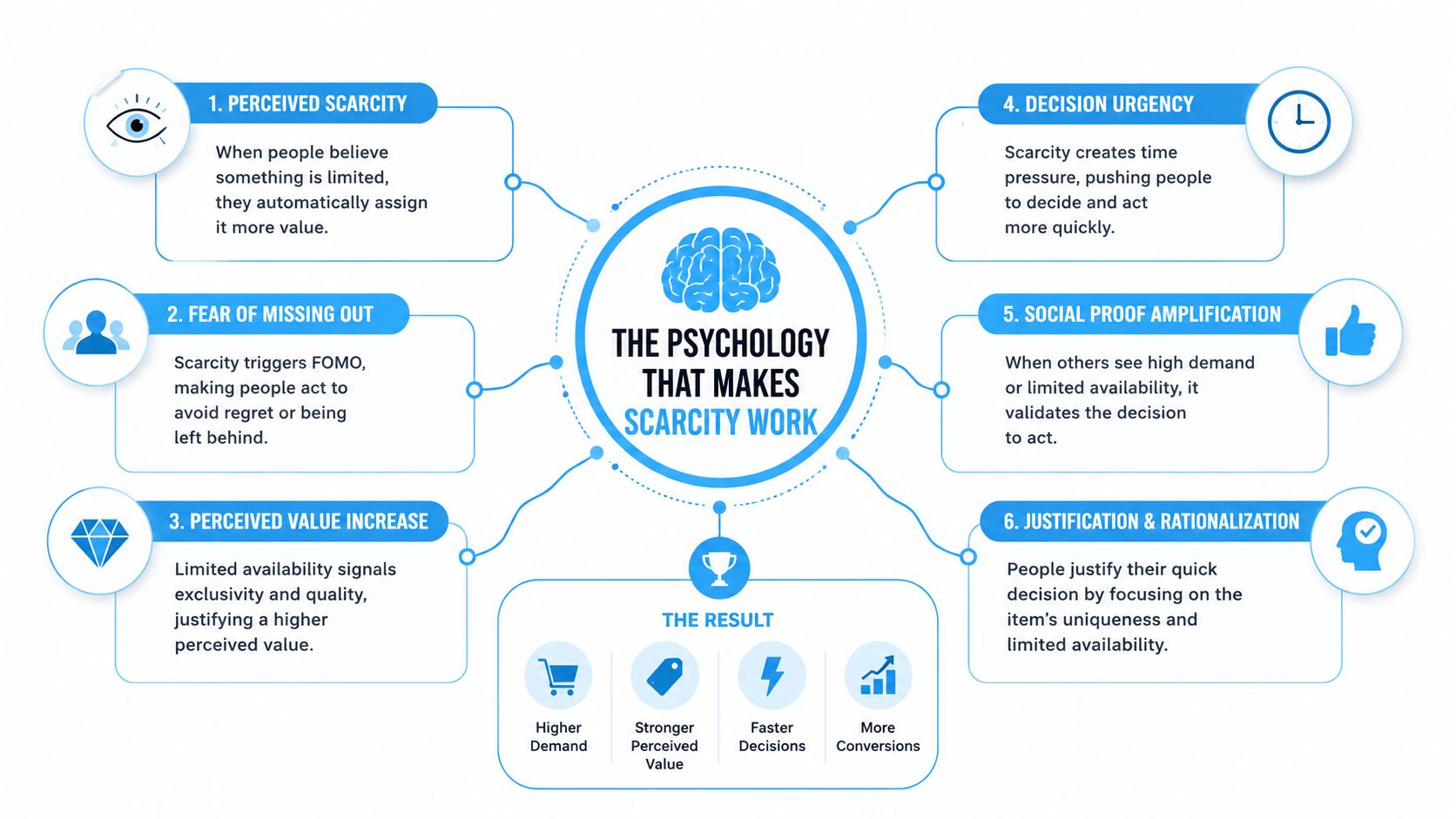
Scarcity works because it changes the decision environment. A shopper who can buy the same item at the same terms whenever they want has little reason to decide today. A credible constraint gives the decision a boundary.
Three behavioral mechanisms matter most.
Loss aversion changes the cost of waiting
Loss aversion describes the tendency to experience a loss more intensely than an equivalent gain. Research associated with David Kahneman and Amos Tversky is commonly used to explain why people work harder to avoid losing an opportunity than to secure an equivalent benefit.
For ecommerce, the relevant loss may be access to a reward, a lower shipping cost, a bonus item, or a limited claim window. The merchant doesn’t need to invent a dramatic threat. The offer needs to make the consequence of waiting clear.
Time boundaries compress decision cycles
A bounded window reduces open-ended deliberation. A shopper can still compare products, but the decision no longer feels infinitely deferrable. Temporal discounting matters here. People tend to value an immediate outcome more than a delayed one, especially when the immediate benefit is concrete and the window is credible.
A visible deadline can interrupt decision inertia, but only if it represents a real campaign rule. A recycled timer doesn’t create useful urgency. It teaches visitors that the deadline has no consequence.
Limited supply can act as social information
Supply scarcity can also signal that other buyers value the product. That cue resembles social proof, but it must be handled carefully. A limited quantity may communicate demand or exclusivity, while a false stock message communicates that the brand is willing to manipulate attention.
A meta-analysis covering 416 effect sizes from 131 studies found that scarcity cues significantly increased purchase intentions. The analysis also found that the strongest scarcity type varied by context, with demand-based scarcity strongest for utilitarian products, supply-based scarcity stronger for experiences, and time-based scarcity stronger for high-involvement products, as reported in the Monash University research paper on scarcity effects.
Credibility protects the mechanism
Scarcity can also reduce careful evaluation. An incentive-compatible experiment with 615 participants found that a scarcity cue lowered processing of textual review information, which increased perceived product value and could worsen the final purchase decision when the scarce product was low quality, according to the published study on scarcity and review processing.
That finding sets a clear operating rule. Use urgency to accelerate decisions on products whose quality, positioning, and proof already hold up. Don’t use it to distract shoppers from weak product information.
For a practical overview of the tactic, scarcity marketing guidance from Quikly offers a useful framing. Scarcity becomes an economically rational challenge to the default when it creates action through credible constraints rather than deeper discounts alone.
The Margin and Conversion Tradeoff in Ecommerce
A blanket promotion treats every visitor as if they have the same intent and price sensitivity. A scarcity-based offer treats the promotion as a controlled intervention, delivered to a defined audience or active decision window.
That difference matters because sales volume isn’t the same as profitable growth. A promotion can increase traffic while lowering the value of each transaction. A Journal of Retailing study summarized by ScienceDaily analyzed about 677,000 transactions, with an average transaction value of $15.44, and found that promotional discounts increased store traffic and overall profits while lowering sales per transaction, as described in the ScienceDaily summary.
The deeper issue is the cost of discount exposure. A Dartmouth retail-promotion profitability model subtracts margin lost through switching, stockpiling, and halo effects from the profit generated by promotional units, as shown in the Dartmouth promotion profitability model.
Two playbooks, different economics
| Dimension | Blanket Discounting | Scarcity-Based Offer Design |
|---|---|---|
| Audience | Every visitor or subscriber | A defined segment or claim window |
| Trigger | Lower price | Time, quantity, access, or action |
| Price exposure | Broad and repeated | Restricted and controlled |
| Customer behavior | Wait for the next sale | Act before the reward changes or ends |
| Brand signal | Price is negotiable | Access or timing has value |
| Main risk | Margin erosion and promo fatigue | Loss of trust if the constraint isn’t real |
The arithmetic is straightforward. Suppose a brand applies a modest reward to a smaller, high-intent group instead of a larger discount across the entire site. The first offer can produce fewer discounted orders but preserve more contribution from shoppers who would’ve paid full price. The comparison should focus on margin per visitor, not only the conversion rate shown in the Shopify dashboard.
This doesn’t mean every scarcity offer should avoid price reductions. It means the discount should have a job. Free shipping, a bonus item, early access, or a claim-based reward may create urgency without resetting the perceived value of the core product.
For merchants evaluating alternatives, this guide to alternatives to discounting provides additional ways to think about the tradeoff. The central principle remains the same: conversion gains that require increasingly deep discounts aren’t a durable growth system.
How Brands Can Challenge the Status Quo Responsibly
A Shopify merchant can test this approach without rebuilding the storefront. Start with one high-intent moment, then make the constraint and measurement precise.
Choose the moment before the incentive
Don’t begin with a sitewide promotion. Choose the audience whose hesitation you understand:
- Cart abandoners: Give shoppers who already selected products a clear reason to complete the purchase.
- New subscribers: Use the first email or SMS window to reward immediate engagement instead of issuing an evergreen code.
- VIP customers: Offer early access or a limited reward that recognizes existing intent.
- Returning visitors: Create a decision window for people who have already viewed the product or category.
Klaviyo can handle the email and SMS audience logic. Shopify’s discount and cart infrastructure can handle redemption rules. The strategic decision comes first: identify where the default path is “wait and see.”
Select a real constraint
A 48-hour limited-quantity reward, or first-to-claim drop can work when the constraint reflects how the campaign operates. If the reward replenishes automatically, don’t present it as inventory-limited. If every shopper receives the same offer indefinitely, don’t call it exclusive.
Make the reward incremental
A reward doesn’t need to reduce the headline price. Free shipping, a bonus product, early access, or a membership-gated benefit can create a reason to act while keeping MSRP visible.
Quikly is one operational example. It enables claim mechanics, thresholds, and urgency timers across storefront, email, social, and SMS, with campaigns styled to match the store. Its mechanics have been refined across more than 60 million consumer interactions, according to the publisher’s provided product information.
The creative presentation also matters. Merchants building campaign assets can use the Kraken Socials design approach to keep the promotion visually intentional rather than bolting urgency onto an unrelated template.
Measure the right outcome
Track margin per visitor alongside conversion rate. Also inspect average order value, full-price purchasing, reward cost, repeat purchase behavior, and performance by audience.
Use this checklist before launching:
- Default: What existing promotional behavior are you replacing?
- Constraint: Is the time, quantity, or access limit real?
- Audience: Why does this segment need a reason to act now?
- Reward: Can the benefit create urgency without unnecessary discount depth?
- Economics: What happens to margin per visitor if the campaign converts?
- Trust: Would a customer understand the rule without feeling misled?
Common Misconceptions and Risks to Avoid
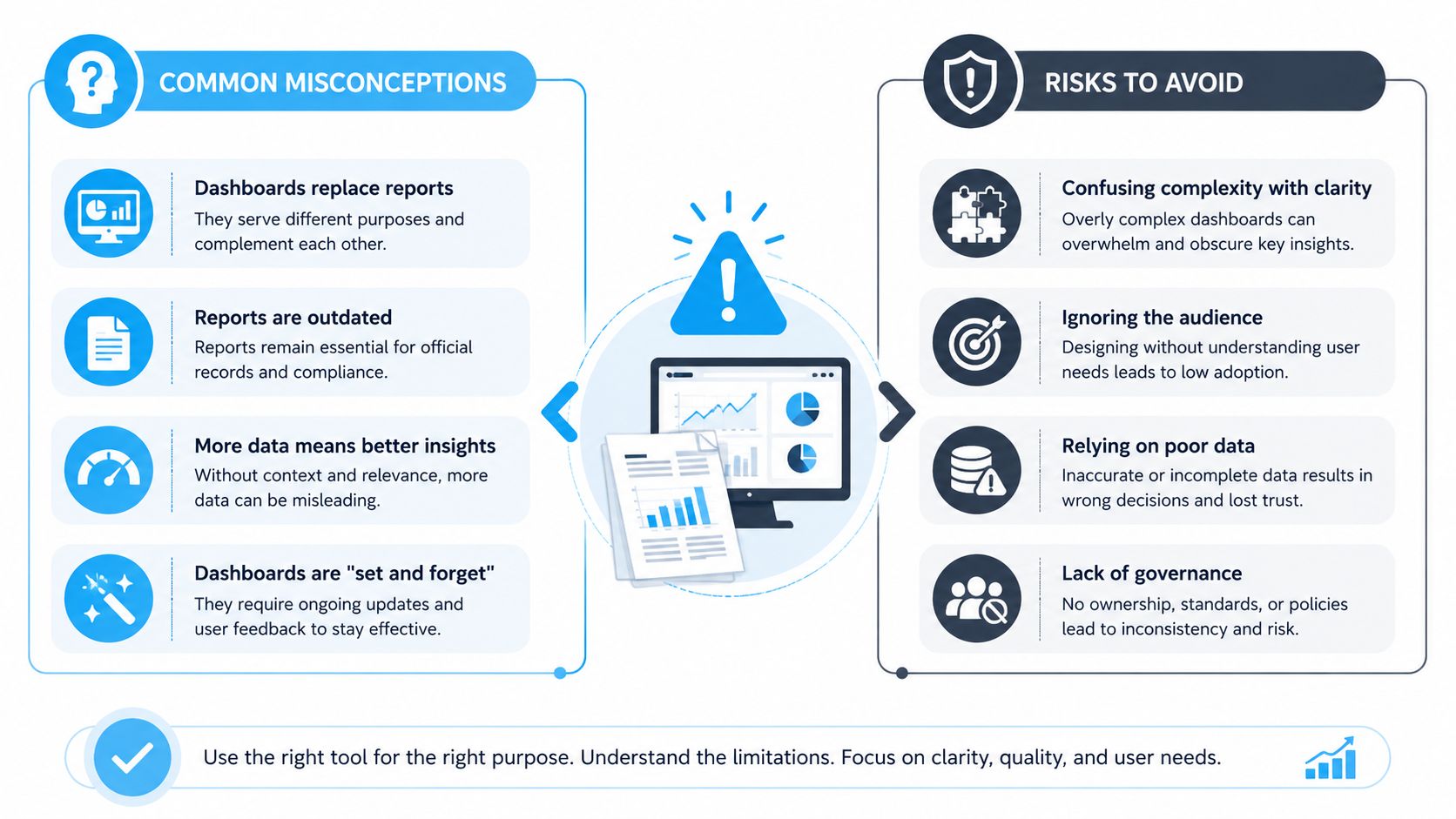
Scarcity isn’t automatically manipulation. It becomes misleading when the claimed constraint is false, opaque, or repeated without consequence. Accurate information about limited inventory, a finite service capacity, a genuine member window, or a campaign that closes at a stated time gives shoppers useful context.
The distinction between urgency and FOMO matters. FOMO hype pushes emotion without improving understanding. Credible scarcity tells the customer what is available, who can claim it, and when the condition changes.
Scarcity also isn’t bad for brand equity. Chronic blanket discounting can teach customers to wait for the next sale, while a limited edition, time-bound service, or member-only release can make access feel more valuable. The mechanism and the credibility determine the signal.
The risks operators should watch
- Overuse: If every campaign demands immediate action, shoppers may stop treating urgency as meaningful. Research on digital commerce reports that scarcity cues can also reduce perceived credibility and increase perceived inconvenience, pushing consumers toward another retailer, as described in the study of scarcity cues and retailer choice.
- Poor product fit: Scarcity can move attention away from reviews and other diagnostic details. That makes weak offers especially risky.
- Segment mismatch: Repeat buyers, first-time visitors, and loyalty members don’t respond to the same reward structure.
- False replenishment signals: A countdown on a product that restocks daily can make the campaign feel theatrical rather than informative.
- Opaque mechanics: Fake stock counts, recycled timers, and unclear eligibility can create complaints that travel beyond the campaign.
A disciplined merchant treats scarcity as an accuracy standard. The offer should explain the constraint plainly, honor its stated rules, and stop using urgency when it no longer reflects reality.
A Sharper Way to Think About Growth
Shopify brands are managing several pressures at once. Acquisition costs make every visitor more valuable, competitor promotions compress margin, and channel noise makes it harder for a brand to preserve distinctiveness through creative alone.
The default response is familiar: a 20%-off coupon, an evergreen free-shipping threshold, or an always-on loyalty loop. Those tools can have a place, but they deserve scrutiny. Ask which default serves the buyer’s decision and which one only makes the spreadsheet look active.
Challenging the status quo means replacing a familiar tactic with a better-matched mechanism. In ecommerce, scarcity-based offer design is one practical expression of that discipline. It gives shoppers a reason to act now, limits exposure to the incentive, and can protect the perceived value of the product when the constraint is real.
That doesn’t make urgency a universal answer. It makes it a testable alternative to discounting more often and more. Brands should compare the offer against the old baseline using margin per visitor, conversion quality, full-price behavior, and customer trust.
The sharpest growth question isn’t “How much should we discount?” It’s “What is stopping this shopper from deciding, and can we remove that hesitation without paying every visitor to do what some were already ready to do?”
Quikly helps Shopify brands turn flat promotions into time- and quantity-bound buying experiences, using claim mechanics, thresholds, and urgency across storefront, email, social, and SMS. Visit Quikly to see how a more controlled promotion can challenge blanket discounting while protecting price integrity.
Topics: challenge the status quo, business innovation, ecommerce promotions, brand strategy, Shopify marketing