For years, the Shopify growth playbook was simple. Buy traffic, then run a promotion to convert it. That still works, but it works worse when every promotion looks like the same sitewide markdown and every customer knows another one is coming.
That’s the part most advice skips. Discounts can absolutely move demand. Research cited by Forbes notes that 77% of shoppers say discounts influence where they shop, but the same Forrester work also found that 66% of consumers have been trained to wait for predictable sales events, which is exactly how brands end up cutting margin just to recover demand they already had in the Forbes coverage of Forrester’s findings.
The issue isn’t promotions. It’s flat, repetitive discounting. It teaches people that waiting pays, lowers perceived value, and pushes brands into a cycle where each campaign has to work harder than the last. If you’re running a Shopify store with rising acquisition costs and low-single-digit conversion pressure, that’s not a growth strategy. It’s a tax on your own brand.
These promotion ideas without discounting aim at a better target. They’re built to create urgency, protect margin, and give customers a reason to act now without making your store feel permanently on sale.
1. Quantity-Based Tiered Rewards
Quantity-based tiers work best when the reward gets weaker as inventory gets claimed. That structure changes the customer calculation. Instead of waiting for a bigger markdown later, shoppers see a reason to buy while the best version of the offer still exists.
Used well, this protects margin better than blanket discounts because you are not giving the same incentive to every order. Early demand earns the strongest reward. Later demand still converts, but at a lower promotional cost. Research from Voucherify on tiered discount campaigns notes that tiered offers can raise average order value because customers add more to qualify for a better tier. The lesson for DTC brands is practical. If the mechanic increases basket size without conditioning customers to wait for 20% off, it is doing two jobs at once.
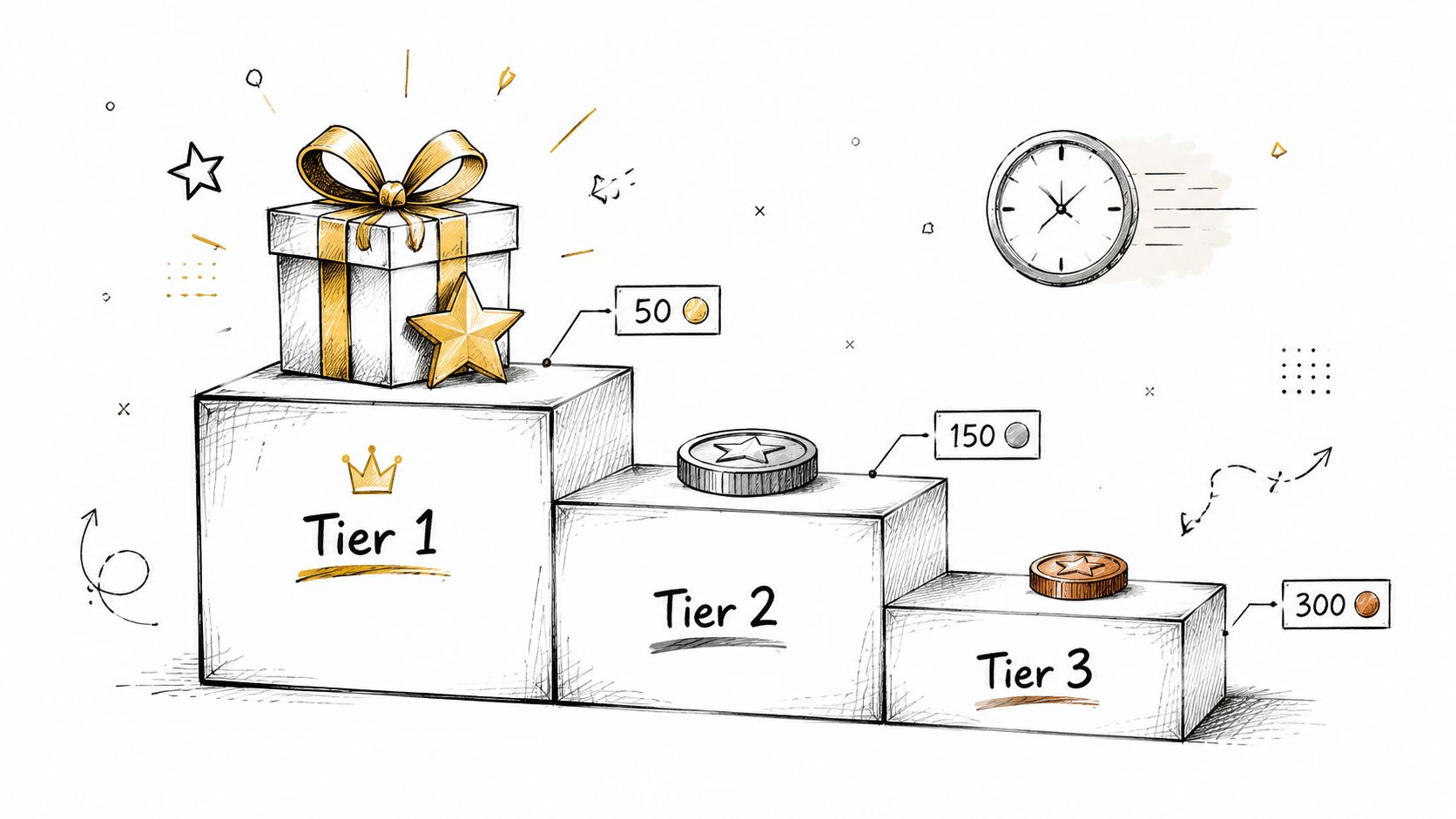
A simple version looks like this. The first 100 orders get a full-size gift. The next 250 get a mini. The final tier gets early access to the next launch or free personalization. The product price stays intact, but the perceived value of acting now stays high.
How to run this on Shopify
Apparel brands can use tiers during a launch weekend to pull demand forward without cutting ticket price. Beauty brands can tie tiers to email or SMS signups so list growth and conversion happen in the same promotion. If the reward is well matched to the product, customers feel they are getting more, not just paying less.
Execution matters more than the concept.
- Show every tier up front: Customers should know the current reward, what comes next, and how many claims are left if you can display that accurately.
- Keep the reward drop realistic: If tier one feels far better than tier two, late buyers will abandon instead of settling for the next-best option.
- Use rewards with high perceived value and controlled cost: Samples, limited add-ons, customization, bonus content, and priority access usually preserve margin better than direct price cuts.
- Keep messaging synced across channels: Your product page, email, SMS, and cart need to show the same live tier. If one says tier one and another says tier two, trust drops fast.
Practical rule: Do not reopen a claimed tier to chase one more day of revenue. The short-term lift is rarely worth the long-term damage to credibility.
If you want examples of how brands structure short, urgency-driven campaigns around these mechanics, this roundup of creative flash sale ideas is useful for shaping the event around the reward.
This is one of the few promotion ideas without discounting that can improve conversion, raise AOV, and protect brand value at the same time. The customer is not being trained to wait for cheaper pricing. They are being asked to act early for a better outcome, which is a much healthier habit for the business.
2. Time-Bound Flash Windows with Real Scarcity
Flash windows are often treated like a faster coupon. That is usually a mistake. If the same offer comes back every weekend, customers learn to wait, margin slips, and the timer starts to hurt trust instead of helping conversion.
A good flash window changes the buying decision without cutting price. The customer is responding to access, timing, and the risk of missing something finite. That preserves brand value because the incentive is tied to action, not cheaper pricing.
What real scarcity looks like
Real scarcity needs a hard edge. A 24-hour Friday drop with 300 gifts, a limited add-on reserved for the first 150 orders, or a members-only product variant that disappears at 6 p.m. can work. The key is that the reward has a defined limit and stays gone once claimed.
This is why these events can outperform broad promos. They create urgency without teaching customers that your products are worth less next week.
A practical setup looks like this:
- Use a fixed cadence: Weekly or biweekly windows train customers to pay attention without conditioning them to expect constant deals.
- Cap the reward, not just the clock: Time matters, but quantity makes the deadline believable.
- Show the reason the event ends: “Sold out” or “window closed” is stronger than pulling the banner.
- Choose rewards with healthy economics: Gifts, exclusive add-ons, early access to a launch, or limited customization usually protect contribution margin better than percent-off offers.
Execution is where teams usually get this wrong. If you reopen the same window on Saturday, extend the deadline by email, or keep serving the offer after the cap is gone, you train customers to call your bluff. Conversion may rise for a day. Credibility drops for much longer.
For merchants planning the format, this guide to creative flash sale ideas is useful because it focuses on how to structure the event so the scarcity feels earned.
If the flash window is announced through email, inbox placement matters more than usual because a delayed send can kill the whole promotion. Before running a tight launch, test email deliverability so your “ends tonight” message does not arrive tomorrow.
Scarcity works when the customer can name exactly what disappears, and believes you will not bring it back next week.
3. Email and SMS Exclusivity with Early Access Tiers
One of the cleanest ways to protect margin is to stop giving everyone the same offer at the same time. Early-access tiers let you reward subscribers first, then widen access gradually. That grows owned channels and makes signup feel valuable instead of transactional.
This works especially well for Shopify Plus brands that already have Klaviyo or another lifecycle stack in place. SMS can open the event first, email can follow, and the public site can get the weakest version later. Your best customers feel rewarded, and first-time visitors have a reason to join the list instead of bouncing.
Why this outperforms a public blanket promo
Research from Harvard Business School in 2024 found that smaller, more precise discounts can increase sales by 15%, and that 68% of surveyed retailers are shifting toward behavior-driven offers to preserve price integrity, as reported by Harvard Business Review. The lesson isn’t “always send a smaller coupon.” It’s that precision beats blunt force.
A practical setup looks like this:
- SMS first access: Best for your most engaged segment when speed matters.
- Email second access: Good for broader reach and richer explanation.
- Public final access: Designed for fence-sitters who need a last push.
If you’re using email exclusivity heavily, it’s worth regularly testing email deliverability so your best segment receives the launch when it matters.
A standing event helps. “Subscriber Tuesday” or “Text Club Early Access” gives customers a habit to remember, and habits reduce the amount of persuasion each campaign needs.
4. Gamified Point or Challenge-Based Rewards
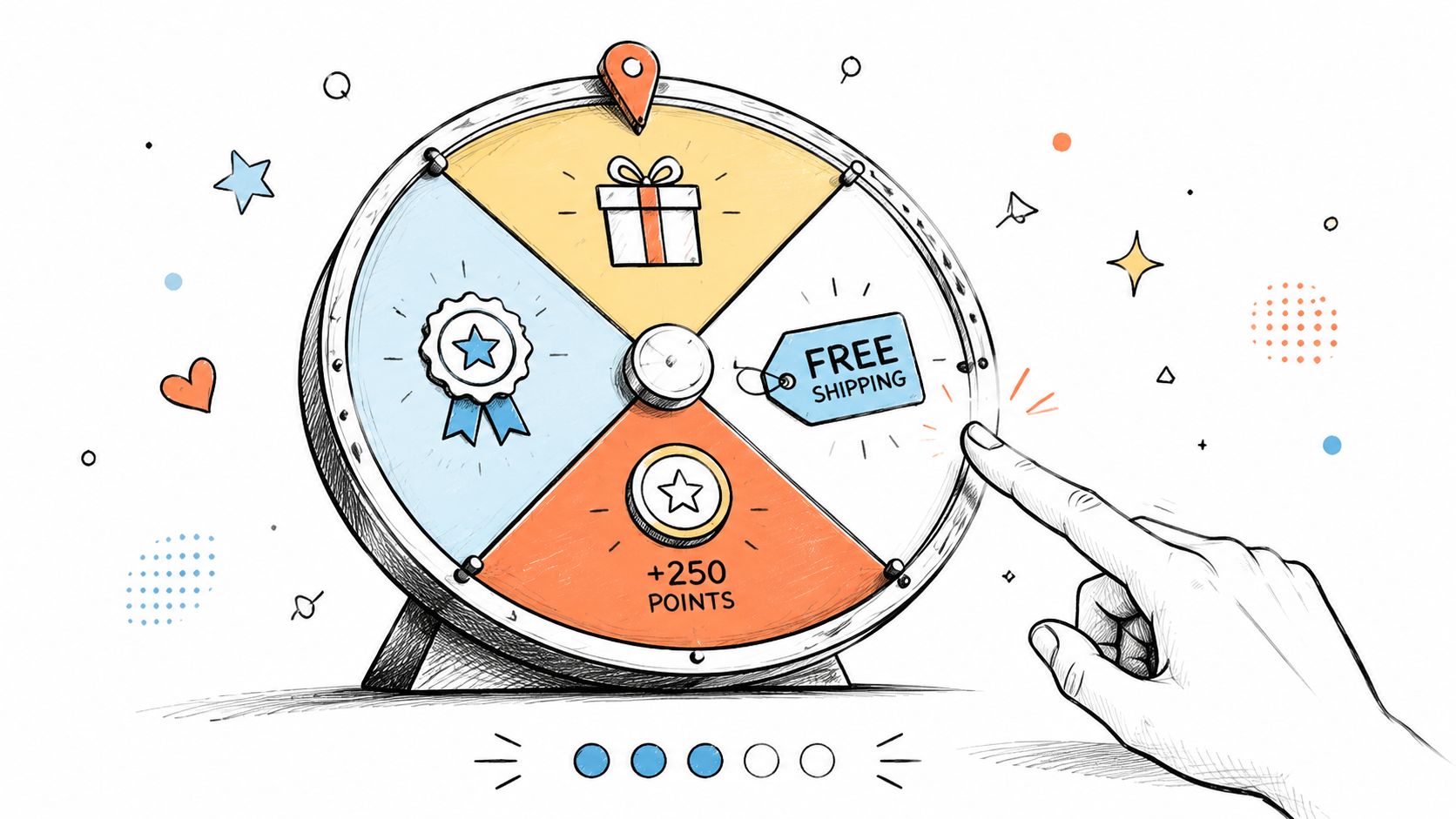
Gamified promotions work when the interaction adds value instead of adding friction. A spin-to-win mechanic, quiz, mystery reward, or challenge ladder gives customers a small sense of agency, and that increases perceived value even when the reward itself is modest.
This is a strong fit for categories where discovery matters. Beauty brands can gate rewards behind a skin quiz. Apparel brands can offer points for building a look or completing a style challenge. The promotion then does two jobs at once. It drives action now and captures first-party preference data you can use later.
Where brands usually get this wrong
They overbuild the game and underthink the reward. If the mobile experience is clunky or the result feels cheap, customers won’t play twice.
A better approach is simple:
- Keep the action short: One spin, one quiz, one reveal.
- Make most outcomes feel useful: Free shipping, early access, bonus points, gift-with-purchase, or a light reward all beat dead-end “try again” results.
- Feed the result into segmentation: If someone selects dry skin, sensitive skin, or men’s grooming, that should shape what they see next.
Quikly’s guide to gamification marketing is relevant here because the strongest version of gamification isn’t decoration. It’s behavior design.
Some brands pair this with lifecycle programs informed by AI loyalty programs, but the core mechanic doesn’t need to be complicated. If the reward feels earned, customers value it more than if you dump a code on the page.
5. Limited-Slot Experiences (Early-Bird, VIP Waitlist, First-Come Claiming)
A slot-based promotion borrows its credibility from ticketing and appointments. There are only so many spots. Once they’re taken, the experience closes. Customers understand that instinctively, which is why this format often feels more believable than an open-ended sale.
This is especially useful when you’re selling something with a considered purchase cycle. For high-ticket ecommerce, the baseline conversion challenge is real. Products priced between $500 and $1,000 typically convert around 1.0% to 1.5%, while items over $3,000 often convert around 0.3% to 0.8%, according to Fyresite’s high-ticket ecommerce conversion benchmarks. In that environment, a generic sitewide discount often isn’t enough to create action.
Better for considered purchases
A premium furniture brand might open a fixed number of design consult slots tied to a launch collection. A supplement subscription brand might cap access to a founder-led onboarding bonus. A beauty device brand might offer a limited number of first-come claims for a bundled training session or personalization perk.
What makes this work:
- Cap the experience, not just the message: The customer needs to believe there are only so many places available.
- Display the remaining slots clearly: This can live on the product page, collection page, or a dedicated launch page.
- Use a waitlist once full: A waitlist captures intent and gives you a pool for the next event without reopening the same one.
The trade-off is operational discipline. If you say there are 100 slots, support, fulfillment, and CRM all need to honor that cap.
6. Referral and Social-Sharing Unlock Mechanics
Referral programs are effective because they attach value to advocacy instead of giving away margin upfront. The customer gets more when they bring someone else into the event, which means the promotion can help acquisition without turning into a broad public markdown.
A simple version is enough. Someone enters a promotion with a base reward, then gets access to a better tier after referring a friend or sharing through a trackable link. That structure gives the customer a sense of progress, and it creates social proof while the campaign is still live.
What to reward
The best benefits aren’t always bigger discounts. In many stores, they’re better access.
- Upgrade the experience: Move the customer into a better claim window, earlier access tier, or higher-status queue.
- Add a perk: Gift-with-purchase, personalization, limited add-on, or shipping upgrade.
- Recognize participation: Leaderboards and visible top-referrer treatment can work for community-led brands if the tone fits.
Stanford Graduate School of Business has reported that promotional price cuts can leave a lingering effect, making shoppers 22% more likely to wait for future discounts after getting a bargain, according to Stanford GSB’s write-up on the lingering impact of price cuts. Referral incentives help avoid that trap because they reward an action, not passive waiting.
The customer who earns a better outcome by sharing behaves very differently from the customer who sits back and waits for your next code.
Keep the tracking honest. If shares don’t produce real visits or conversions, the mechanic becomes noise. Shopify brands should connect referral logic to actual attributed clicks and conversions, not vanity engagement.
7. Bundling and Cross-Category Incentives Without Bundled Discounts
Not every non-discount promotion needs a heavy urgency mechanic. Sometimes the smartest move is to guide basket construction.
Cross-category incentives do that well. Instead of prebuilding a discounted bundle, you reward the behavior you want. Buy from skincare, receive a cosmetic add-on. Add a third item, receive free shipping. Build across categories, earn access to a limited sample set. The result is usually a healthier cart and better product discovery.
Why this helps margin
Traditional bundles can subtly teach customers the “real” price of your hero products. Behavior-based bundling keeps your list price intact while still nudging customers into higher-value carts.
A beauty store might prompt, “Add any cleanser to receive a makeup bag claim.” A fashion brand might message, “Complete the outfit to get free shipping.” Both approaches preserve unit value better than marking down every item in the set.
This format gets even stronger when the cart experience is clean. Maropost reports that enabling one-click checkout on Shopify platforms increases conversion rates by exactly 35%, as covered in Maropost’s ecommerce CRO strategies. If you’re asking customers to add another product, don’t make checkout harder right after they do it.
Use cart messaging carefully:
- Keep the rule understandable fast: If a shopper can’t understand it in a few seconds, they won’t chase it.
- Recommend complements, not random inventory: The offer should feel curated.
- Protect gross margin on the reward: Free shipping or an add-on with strong economics often beats cutting core product price.
8. Dynamic Segment-Based Rewards (Behavioral Targeting Without Personalization Creep)
Dynamic rewards work best when they feel relevant, not creepy. A first-time visitor, a recent purchaser, and an abandoned-cart shopper aren’t in the same decision state. Giving them the same promotion is lazy merchandising.
The key is to segment around observable behavior. Viewed product pages, cart activity, prior purchase timing, loyalty status, and email engagement are all fair game. In Shopify, that can be handled through customer tags, app logic, or lifecycle flows without crossing into invasive one-to-one personalization.
Keep the logic explainable
A practical setup might look like this:
- First-time visitors: Get an onboarding reward tied to a first purchase.
- Recent customers: See access-based perks, not another markdown right after buying.
- Lapsed buyers: Get a stronger reactivation experience tied to timing or exclusivity.
The common mistake is overengineering the model. If your team can’t explain why Segment A got one offer and Segment B got another, you’ll struggle to troubleshoot performance and customer support will hate it.
Aampe’s research found that a 15% discount produced the strongest conversion lift versus control, outperforming larger cuts like 50% off, according to Aampe’s discount testing analysis. The broader takeaway is useful here. Bigger isn’t automatically better. Precision usually beats excess.
That’s why dynamic segment-based rewards belong in any serious list of promotion ideas without discounting. The key skill isn’t offering more. It’s offering the right nudge to the right customer state.
9. Experiential Rewards and Status Tiers (Beyond Product Discounts)
For some brands, price isn’t the main motivator. Access, recognition, and belonging matter more. That’s especially true in categories with strong identity value, such as sneakers, wellness, fitness, collectibles, and premium apparel.
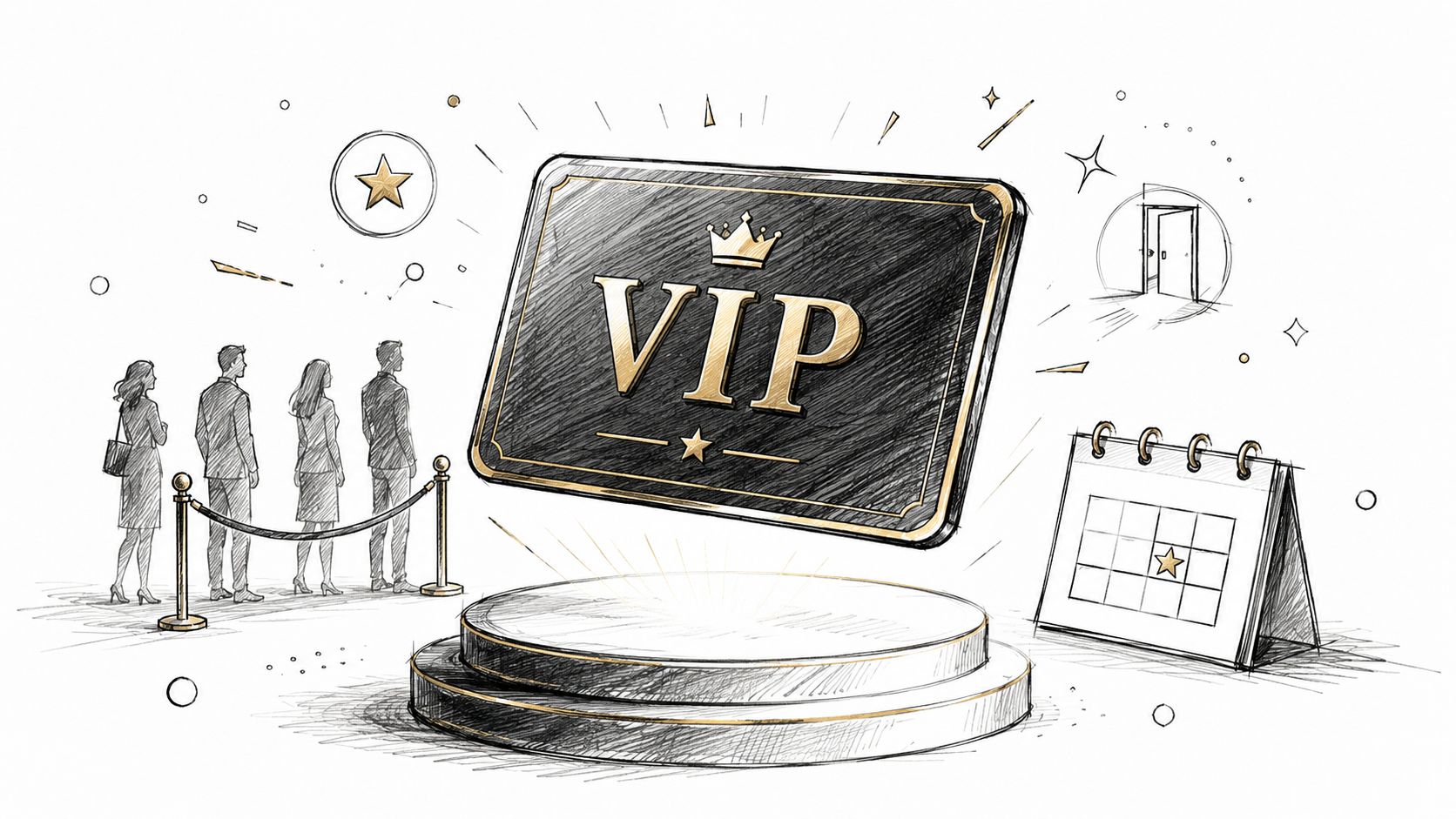
Experiential rewards turn promotion into membership. Early access to drops, private livestreams, founder notes, community badges, reserved inventory, and curated recommendations can all drive action without making the product feel cheaper.
Status has to be earned
If everyone is VIP, nobody is. The strongest programs make status visible but restrained. Think account badges, private collection access, or loyalty-tier invitations. Not splashy popups declaring everyone special.
Quikly’s article on the VIP customer experience gets at the right idea. Exclusivity only works when customers can feel the boundary between public access and earned access.
Salesforce data summarized in a Ripl article noted that 68% of shoppers wait for predictable markdowns, while the same piece argued that many non-discount guides still fail to explain how participation-based scarcity reverses that behavior, in Ripl’s discussion of engaging without discounts. Status tiers help because they replace sale anticipation with membership anticipation.
Operator note: If your community already talks to each other, status will outperform coupons more often than most teams expect.
10. Cause-Aligned and Impact-Based Promotions
Cause-based promotions only work when the connection is real. Customers can spot a random charity tie-in immediately, and superficial campaigns can hurt trust faster than they help conversion.
Done well, though, impact-based promotions are effective because they add meaning without lowering perceived value. A sustainable fashion brand can tie a launch to an environmental partner. A wellness brand can attach early access to a mental health initiative. The customer isn’t just buying a product. They’re participating in a shared outcome.
Keep the campaign concrete
The strongest versions stay narrow and verifiable.
- Choose one cause per campaign: Too many causes makes the promotion feel generic.
- Name the action clearly: What triggers the contribution, a purchase, a claim, or a launch event.
- Report the outcome afterward: Customers should see that the commitment didn’t disappear once the campaign ended.
This format also helps brand perception because it moves attention from price to values. That doesn’t mean every brand should run one. It means the brands that already stand for something should stop treating promotions like detached revenue tactics.
For brands building retention around identity and shared values, Market With Boost’s loyalty program guide offers a useful framing for connecting rewards to longer-term customer relationships.
10 Non-Discount Promotion Ideas Compared
| Strategy | Implementation complexity | Resource requirements | Expected outcomes | Ideal use cases | Key advantages |
|---|---|---|---|---|---|
| Quantity-Based Tiered Rewards | Medium, real-time tier logic and counters | Moderate, UI, inventory/tier tracking, comms | Faster early conversions; lift in AOV; controlled discount exposure | Product launches, DTC apparel, beauty drops | Earned urgency, transparent scarcity, preserves margin |
| Time-Bound Flash Windows with Real Scarcity | Low–Medium, timers + cap enforcement | Low–Moderate, scheduling, inventory limits, marketing cadence | Short, measurable purchase bursts; higher perceived value | Weekly drops, clearance events, time-limited launches | Believable urgency, easy measurement, credibility build |
| Email and SMS Exclusivity with Early Access Tiers | Medium, staggered access windows and gating | High, email/SMS infrastructure, segmentation, timing | List growth, higher conversion from engaged audiences | Brands with subscriber lists, loyalty-focused campaigns | Rewards loyalty, reduces paid spend, drives signups |
| Gamified Point or Challenge-Based Rewards | High, interactive mechanics and state tracking | High, development, design, analytics, mobile UX | Increased engagement, repeat visits, rich first-party data | Engagement-first brands, data capture campaigns | Perceived earned value, strong data capture, repeat behavior |
| Limited-Slot Experiences (Early-Bird, VIP Waitlist) | Low–Medium, slot counters and waitlist flows | Moderate, capacity planning, comms, waitlist mgmt | Strong, fair urgency; waitlist intent capture | Service bookings, trials, limited releases | Transparent scarcity, trust-building, clear FOMO |
| Referral and Social-Sharing Unlock Mechanics | Medium, tracking links and validation | Moderate–High, referral platform, fraud prevention, social assets | Lower CAC, increased acquisition and UGC | Growth-stage brands, community-driven products | Amplifies reach, rewards advocacy, network effects |
| Bundling and Cross-Category Incentives (No Discounted Bundles) | Medium, cart rules and recommendation logic | Moderate, cart UX work, merchandising, simple rules | Higher AOV, product discovery, preserved per-unit margin | Multi-category retailers, complementary product lines | Drives cross-sell, clear value without blanket discounts |
| Dynamic Segment-Based Rewards (Behavioral Targeting) | High, segmentation, rule automation, integrations | High, CDP/analytics, clean data, automation tooling | Improved conversion efficiency; targeted recovery of at-risk users | Larger catalogs, repeat customer programs, recovery campaigns | Efficient spend, defensible personalization, reduced waste |
| Experiential Rewards and Status Tiers (Beyond Discounts) | Medium–High, program design and operations | High, community management, events, exclusive content | Stronger loyalty and LTV; sustained engagement beyond price | Premium, community-driven brands, memberships | Preserves margin, builds community, sustainable loyalty |
| Cause-Aligned and Impact-Based Promotions | Medium, donation tracking and reporting | Moderate, nonprofit partnerships, impact tracking | Emotional engagement, PR lift, conversions from values-driven buyers | Purpose-led brands, sustainability or social-impact campaigns | Builds emotional loyalty, authentic differentiation, PR potential |
Move from Discounting to Behavior-Driven Promotion
The best promotion ideas without discounting don’t remove incentives. They redesign them.
That distinction matters because most Shopify brands aren’t trying to avoid promotions altogether. They’re trying to escape the treadmill of predictable markdowns that compress margin, flatten urgency, and slowly cheapen the brand. A sitewide code can still create a spike, but it often creates the wrong habit too. Customers learn to wait, compare, and come back only when the banner returns.
Behavior-driven promotion changes that pattern. It gives people a reason to act now because the opportunity is tied to time, quantity, access, participation, or status. That aligns with how customers make decisions. Scarcity bias, loss aversion, and commitment all matter more when the promotion is something they can miss, earn, or obtain.
It also creates a healthier commercial outcome. You’re not just trying to lift conversion at any cost. You’re trying to win a profitable conversion from a customer who still respects the value of what you sell. That’s a better lens for every campaign decision. If a promotion boosts orders but trains your list to ignore full-price launches, it isn’t helping as much as the dashboard suggests.
There’s also a practical Shopify angle here. These mechanics are easier to run than many teams assume. Between theme messaging, Shopify Functions, app-based offer logic, Klaviyo flows, and SMS triggers, most brands already have enough infrastructure to test one of these approaches. The challenge usually isn’t tooling. It’s discipline. Teams have to set real caps, close events on time, and resist extending promotions the moment revenue gets soft.
Quikly is one option that fits naturally into this approach because it turns offers into time- and quantity-bound promotional experiences rather than flat discounts. Its mechanics have been refined across more than 60 million consumer interactions, and the campaigns can stay fully on-brand instead of feeling bolted onto the storefront. That’s useful if you want urgency without making the store look like a clearance outlet.
Start with one promotion your team already runs. Then change the mechanic. Cap it by quantity. Add early access. Turn it into a tiered claim. Limit the slots. Reward participation instead of waiting. You don’t need more promotions. You need promotions that protect the business while they convert.
If you want to turn standard offers into urgency- and scarcity-driven campaigns on Shopify, Quikly is worth a look. It’s built for brands that want stronger conversion and healthier margins without relying on deeper, more predictable discounts.
Topics: promotion ideas without discounting, ecommerce promotions, shopify marketing, increase conversion rate, profit margin