Limited edition drops do not fail because scarcity stopped working. They fail because too many brands copy a lazy formula: add a countdown, shave the price, spike conversion for a weekend, then spend the next month repairing margin and retraining customers to wait.
The category is still growing, as noted earlier. The main issue is execution. A weak drop creates urgency without control. That usually shows up in three places fast: lower contribution margin, weaker brand perception, and shoppers who learn that holding out gets them the better deal.
Strong drops are built around behavioral triggers that shape action without cheapening the product. Quantity caps create fear of missing out. Access windows reward commitment. Tier progression makes delay feel costly. Social proof reduces hesitation. VIP gates and referral mechanics turn buying into participation instead of bargain hunting.
That distinction matters.
The 10 ideas below are not generic scarcity tactics. They are specific drop structures you can run, each designed to lift conversion while protecting margin and brand equity. That is the part too much growth-hacking advice skips, and it is usually the difference between a drop that builds demand and one that just borrows revenue from next month.
1. Tiered Reward Descending Drop
A descending drop is one of the cleanest ways to create urgency without relying on fake pressure. The mechanic is simple. Early buyers get the best reward, then the reward gets smaller as claims increase.
For a new-season apparel drop, that might look like this: the first group gets the best discount, the next group gets a smaller one, and the final group gets the lightest reward. Beauty brands can use the same structure on a limited serum launch or holiday set. The point isn’t the exact percentages. The point is that the shopper can see the cost of waiting.
Why this works better than a flat promo
This structure taps scarcity bias and loss aversion at the same time. Shoppers don’t just see a limited product. They see a shrinking opportunity. That changes the decision from “Should I buy?” to “Do I want to lose the better version of this offer?”
Behavior-driven promotions matter because discount fatigue is already a real margin problem. Honeycomb Agency’s summary of research grounded in 60 million consumer interactions notes that 68% of consumers now wait for discounts before buying, and that time-and-quantity-bound promotions can lift conversion and average order value at a lighter average discount.
Practical rule: If your current promo calendar teaches customers to wait, a descending reward structure starts teaching the opposite.
On Shopify, show the current tier clearly on the product page, collection page, and cart. Email and SMS should announce tier movement, not just launch timing. “Tier 1 is gone” is often stronger than “Sale ends tonight” because it proves the drop is moving.
- Use historical demand: Base tier sizes on recent launch traffic and conversion patterns, not wishful forecasting.
- Keep the copy product-led: Lead with the story, colorway, formula, or collaboration. The reward should support exclusivity, not replace it.
- Test tier spreads: Smaller step-downs can preserve margin. Larger ones can create stronger urgency.
2. Category-Exclusive Flash Experience
Storewide drops usually signal one thing. The brand needed volume fast. Customers read that instinctively, and the margin damage often outlasts the sales spike. A category-exclusive flash experience is tighter, easier to merchandise, and far less likely to train shoppers to wait for broad discounts.
Pick a category with enough depth to feel like a curated event, not a random rack. Jackets, clinical skincare, travel accessories, dining chairs, best-selling denim. The customer gets real choice inside a clear frame, which matters psychologically. Too much assortment creates drift. Too little feels restrictive. One focused category sits in the middle and keeps attention on a specific buying occasion.
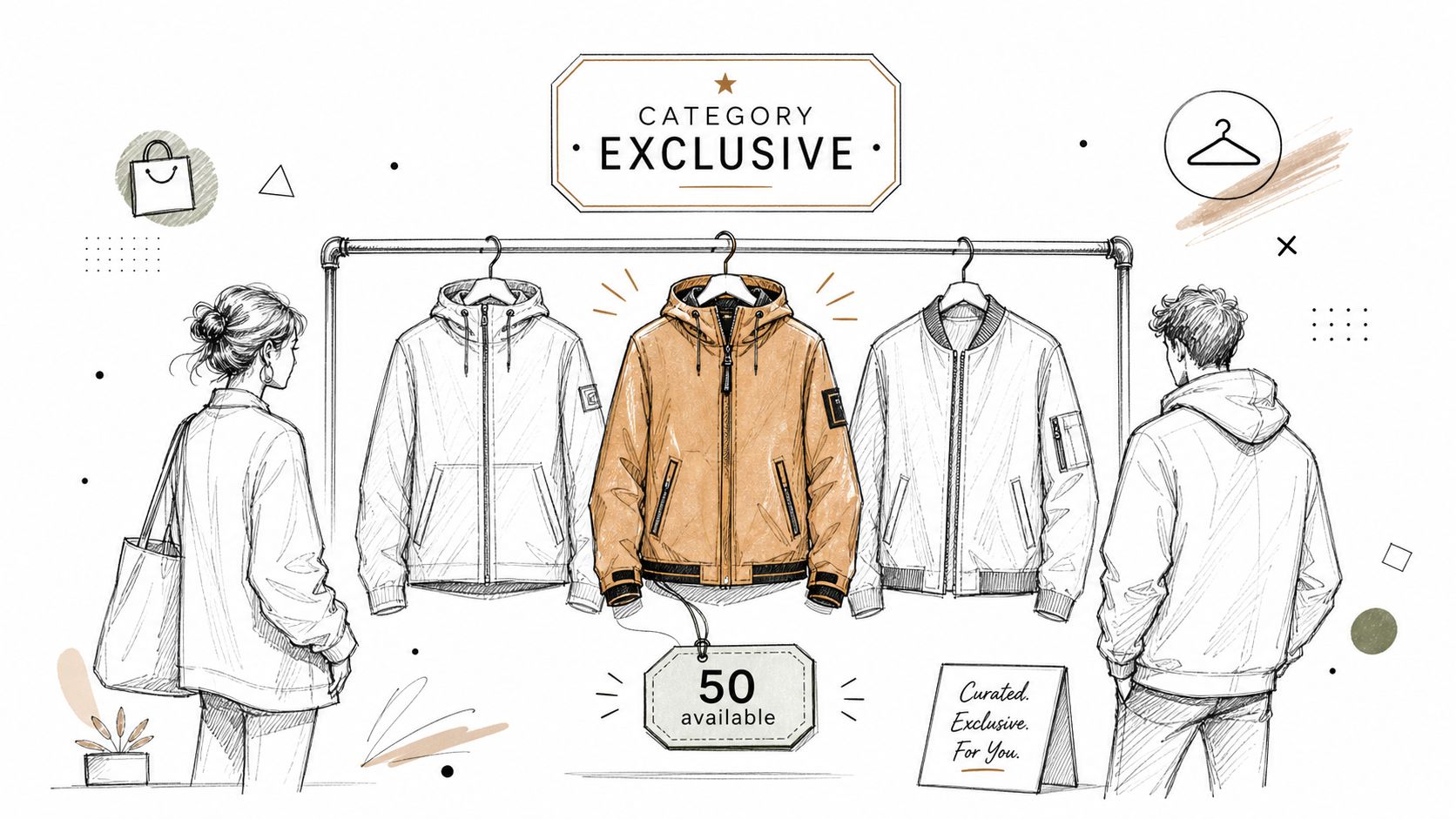
Where category drops outperform blanket promotions
This format works when a category gives you one of three advantages. Better gross margin. A timely seasonal reason to buy. Enough pent-up demand or aging inventory to justify concentrated attention.
The reason it converts is straightforward. Scarcity works better when it feels curated. Shoppers are not reacting to a generic markdown sprayed across the site. They are reacting to a limited-access world with boundaries, social proof, and visible movement across related products. That protects brand perception because the event feels merchandised, not desperate.
It also gives operators more room to steer behavior. A jacket drop can push shoppers toward higher-AOV outerwear while leaving core basics untouched. A skincare brand can feature a clinical-favorites capsule and keep hero SKUs out of a full-site discount cycle. A furniture retailer can use a spring dining edit to create urgency around one room in the house instead of cutting price on evergreen categories.
A few execution details make the difference between a real drop and repackaged clearance:
- Choose a category customers already compare within: The collection needs enough SKUs for shoppers to browse, rank options, and feel urgency when sizes or variants disappear.
- Build the collection page around momentum: Show low-stock states, sold-out variants, waitlist capture, and best-seller badges so customers can see demand forming in real time.
- Segment traffic sources tightly: Send jacket-drop messages to outerwear browsers and past jacket buyers. Broad blasts waste attention and dilute the story.
- Keep the offer architecture controlled: A category event can include exclusive colorways, early access, or a temporary bonus. It does not need a heavy discount to feel compelling.
Social validation can strengthen this format if you bring creators into the merchandising story instead of using them as rented distribution. The psychology behind social proof in influencer marketing applies well here, especially for categories like beauty, apparel, and accessories where demand signals shape perceived desirability. If you’re mapping creator support into the drop, these TikTok Shop creator program insights are useful for structuring participation without turning the event into a coupon chase.
If the category cannot support a real point of view, skip it. “Limited drop on random sale items” is not a category-exclusive experience. It is clearance with better copy.
3. Social Proof Drop with Influencer Unlocking
Most influencer drops fail because the creator is treated like rented reach. The post goes live, traffic spikes, and then you’re back to standard conversion problems. A better structure makes the audience’s engagement part of the reward mechanic.
Start with a limited product or collaboration, then add milestone-based rewards tied to creator engagement. A fitness creator drop might begin with standard access, then offer free shipping, a sample, or a small bundle upgrade if the campaign hits defined engagement thresholds. A beauty collaboration can use the same structure through Instagram or TikTok.
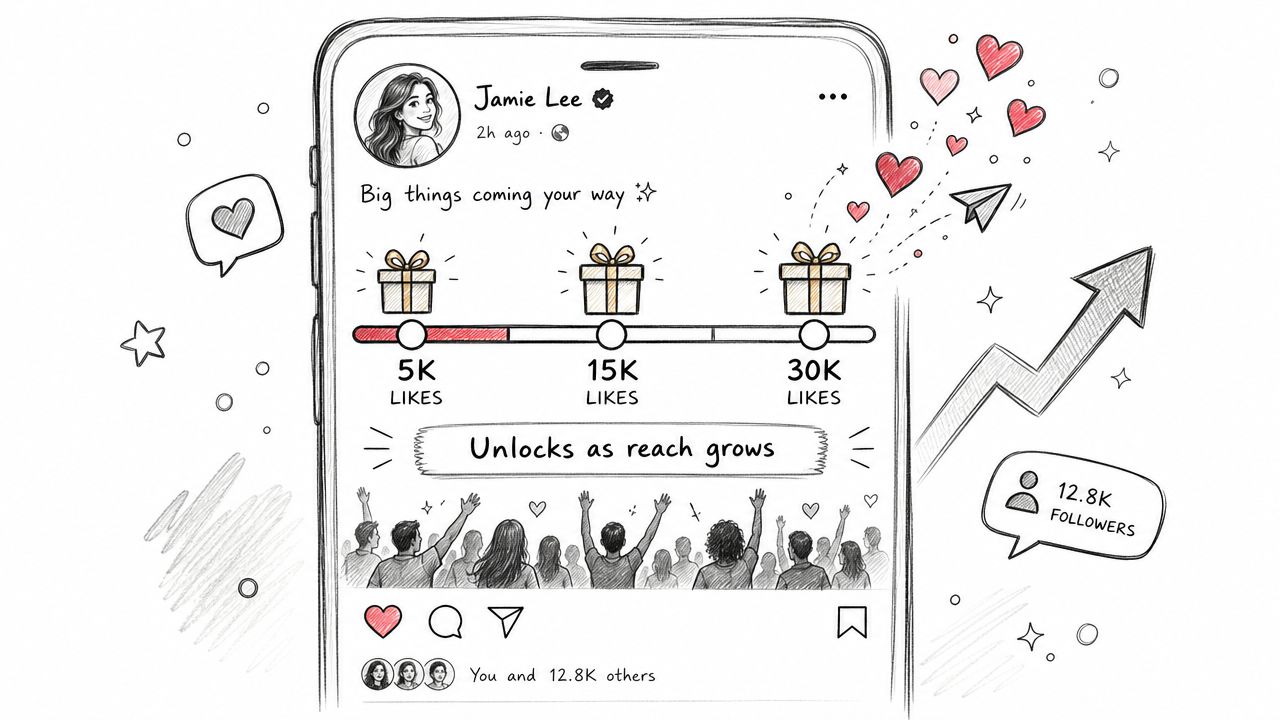
Why the unlock mechanic matters
This combines social proof, competition, and commitment. People are more likely to act when they can see a community building around the drop, and they’re more likely to stay engaged when their own interaction helps improve the outcome.
Quikly has a useful take on social proof in influencer marketing, and it’s directly relevant here. Don’t ask the influencer to announce a static offer. Ask them to drive an escalating event.
Research on urgency marketing from Quikly’s overview of urgency marketing found that adding scarcity cues like “only a few left” increases perceived value by 27%, boosts conversion rates in SMS campaigns by 24%, and generates 2.5x more brand recall and emotional engagement. In practice, that means your creator content shouldn’t just say “shop now.” It should show movement, scarcity, and progress.
If the audience can’t see the unlock getting closer, the mechanic loses force fast.
Use realistic thresholds. If the creator usually drives modest engagement, don’t build a giant reward ladder they’ll never hit. Keep the milestones visible on landing pages, in SMS, and in your campaign emails. Then compare creator-sourced conversions against your owned list.
For brands exploring this channel mix, TikTok Shop creator program insights can help shape creator selection and execution.
4. Bundle Scarcity with Mix-and-Match Flexibility
One of the strongest limited edition product drop ideas for average order value is to cap the bundle, not the individual SKU. That gives shoppers flexibility while keeping the drop finite.
A skincare brand might offer a limited number of “build your own routine” slots where the customer picks a cleanser, serum, moisturizer, and SPF from a curated set. A coffee brand can run a flavor bundle where customers choose from seasonal roasts. A supplement brand can offer a wellness stack built from a shortlist of hero products.
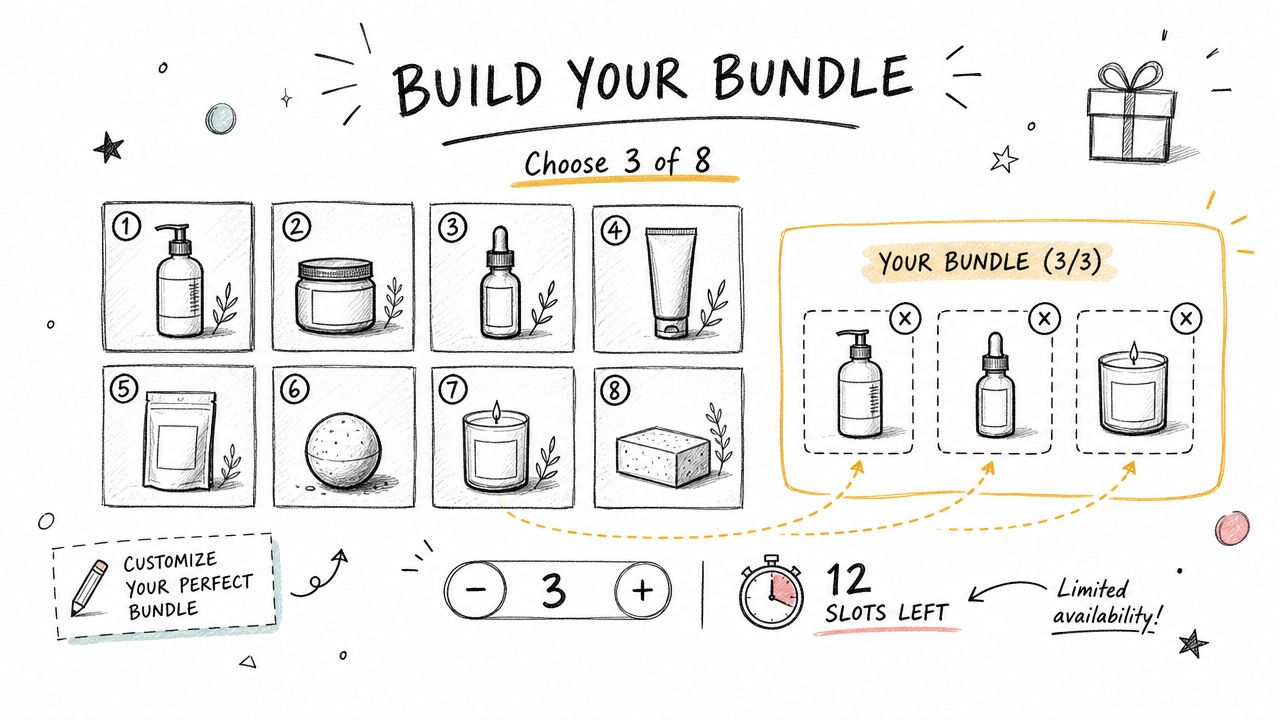
Why this beats fixed bundles
Fixed bundles can feel efficient to the merchant and rigid to the shopper. Mix-and-match bundles preserve customer agency. That matters because a bundle only lifts AOV when the shopper feels they’re building something relevant, not accepting leftovers.
Scarcity still does the heavy lifting. The slot is limited. The customization adds ownership and reduces resistance. On the product page, show the number of bundle claims remaining, not just the number of each item left.
Quikly’s perspective on scarcity marketing fits well here because the best scarcity doesn’t just say “hurry.” It gives the customer a reason to care about acting now.
A few practical constraints keep this model from getting messy:
- Limit the choice set: Eight to twelve options is usually enough. More than that creates decision drag.
- Protect inventory first: Only include products with enough stock depth to support substitution.
- Name the bundle well: “Build Your Routine” sells better than “Bundle Offer.”
- Surface combinations visually: Show the chosen set in real time so customers feel progress.
This model is especially useful on Shopify when you want higher basket values without a sitewide promotion. You control exposure, move curated inventory, and make the drop feel interactive instead of transactional.
5. Time-Window Drop with Staggered Email Reveals
A fixed drop window doesn’t need a single audience blast. In many cases, that’s the worst way to run it. You get a noisy launch, support load spikes, and a lot of buyers receiving the same message with different levels of intent.
A better version uses one offer window and multiple reveal waves. VIPs hear first. Repeat purchasers next. New subscribers after that. SMS can follow the audience most likely to act quickly.
Why staggered access converts better
The psychology here is anticipation plus access-based scarcity. Each group knows there is a finite window, but they also know not everyone got the same entry point. That makes earlier access feel earned, not random.
This also gives you operational control. Shopify stores don’t just need demand. They need manageable demand. If your best customers buy early, you can monitor inventory, support questions, and conversion before broadening the release.
Quikly’s article on creating anticipation for product launches is useful here because strong drop performance usually starts before the drop. The reveal sequence is part of the promotion.
For example, a DTC apparel brand can release a limited colorway to repeat customers in the morning, the general email list later that day, and SMS subscribers in the evening if inventory remains. A subscription brand can give annual members first access, then monthly subscribers, then trial users.
Operator note: Segment order matters more than send volume. Give the earliest access to the people most likely to buy full-price or near full-price.
Use subject lines and preview text that make the access hierarchy obvious. Don’t bury the time sensitivity under branding language. Also track performance by send wave, because staggered reveals often expose which segments deserve better treatment in future drops.
6. Loyalty Tier Unlock Drop
Not every customer should see the same drop at the same time, and not every customer should get the same reward. A loyalty tier-dependent drop makes that difference explicit.
Top customers get earlier access, better bundle additions, or stronger rewards. Mid-tier customers get a smaller version. Newer customers still see the drop, but not the best version of it. That’s a fair trade. They’ve earned less because they’ve committed less.
Why loyalty-gated drops protect the brand
This model works because it ties exclusivity to relationship depth. That activates commitment and consistency. People who’ve already bought from you want their status to matter. People just below the threshold often buy to close the gap.
Quikly’s thinking on how to boost online sales with urgency is relevant here. It notes that psychology-driven limited drops can help brands target specific customer segments, including the top 10% of VIP spenders, with exclusive access windows while protecting margins by avoiding deep sitewide sales.
For a footwear brand, that might mean loyal customers get a 24-hour head start on a limited colorway. For a beauty subscription business, long-term subscribers might receive a bonus product in the drop. For apparel, annual spend can determine who sees the best reward ladder.
Make the loyalty structure visible before the campaign starts. Public tier names, visible thresholds, and reminder messages all matter.
- Show progress to the next tier: If someone’s close, tell them what becomes available when they cross it.
- Message the benefit clearly: “Early access” works better than vague VIP language.
- Keep redemption friction low: Logged-in customers should see the right experience automatically.
This works especially well for Shopify brands with usable first-party data and a repeat purchase cycle. If you already know who your best customers are, stop giving everyone identical access.
7. Location or Market-Specific Drop
Some drops should get smaller, not bigger. A location-specific drop can feel more authentic than a global campaign because the limitation means something.
An outdoor brand can run a Colorado-only drop tied to trail season. An athletic brand can release a Chicago-themed capsule with local creative partners. A beauty retailer can test a city-first launch in a major metro before expanding nationally.
Where geography adds real scarcity
This isn’t just zip-code filtering for the sake of novelty. It works when the market context strengthens the product story. Local weather, regional culture, event timing, and creator partnerships can all make the drop feel native to that audience.
That matters because the broader drop ecosystem is global but uneven. Research Intelo’s report on limited-edition sneaker drop access notes that North America accounted for over 40% of global revenue in 2024, while Asia Pacific is projected to be the fastest-growing region with a 15.8% CAGR. The same report notes that Asia Pacific held a 38.1% revenue share in the limited-edition sneaker market in 2025, generating about $4.7 billion. For brands planning market-specific drops, that split matters. You don’t need one universal playbook.
Use address data, shipping eligibility, and SMS segmentation to keep the experience clean. Then make the local nature obvious in the creative. “Exclusively for Chicago” is stronger than generic regional targeting hidden in the fine print.
A market-specific drop is also a smart test format. You can validate product interest, creative resonance, and operational flow without exposing the full store to promotional risk.
8. Seasonal or Holiday Countdown Drop with Narrative Milestones
Seasonal drops fail when the countdown is fake. Customers can tell when a timer exists to pressure them instead of helping them make a timely decision.
The fix is simple. Tie each milestone to a real-world consequence the shopper already cares about. For gifting brands, that is arrival before the holiday. For apparel, it can be the last chance to get a look before a trip, event, or new-season reset. For home and food brands, hosting dates and holiday prep create the deadline for you.
Build milestones around shrinking certainty, not just shrinking time
This play works because it turns delay into a visible loss. Behavioral psychology matters here, but the commercial point is practical. Conversion improves when the customer can clearly see what disappears next, and margin stays healthier when you remove perks in stages instead of dropping price all at once.
A strong sequence might look like this: early buyers get the best bundle value, the next group keeps guaranteed delivery, the final window keeps the product but loses gift wrap or a bonus item. Each step changes the offer in a way the customer can feel. That makes the countdown credible.
Holiday shoppers do not need more urgency. They need more certainty.
That distinction protects brand perception. A generic “ends tonight” message trains customers to wait for the next forced sale. A milestone-based drop feels more disciplined because the deadline matches the calendar and the trade-off is visible. You are not inventing scarcity. You are structuring demand around a deadline that already exists.
A gift retailer can run a 12-day holiday drop where day 1 through 4 includes personalization, day 5 through 8 includes delivery by the holiday, and the final days keep stock available at full price with no extras. A fashion brand can apply the same logic to a spring break or New Year capsule. The product stays desirable, but the buyer who acts early gets the stronger outcome.
Use email and SMS to mark what changed, not just how many hours remain. Name the milestone. Show what is still available. Show what has already been lost. If you also want customers to spread the drop, Refgrow’s referral program insights are useful for structuring incentives without turning the campaign into a discount spiral.
9. Referral Unlocking Drop
Referral programs usually underperform because they ask customers to do extra work after the emotional peak of purchase. A referral-activated drop fixes that by making the reward immediate, visible, and connected to the drop itself.
The shopper buys into a limited release, then gets the chance to improve their own outcome by bringing in one or two friends. That could mean free shipping, store credit, an added sample, or access to the next tier of the drop.
Why this creates better momentum than post-purchase referral asks
This works because it turns a private transaction into a social event. The customer already has intent. The drop already has scarcity. Referral activation adds competition and progress.
Keep thresholds low. One or two successful referrals feels achievable. Five or ten feels like homework. Show progress inside the experience, then confirm conversions by SMS or email so the customer sees the reward becoming real.
For an apparel brand, one converted referral might grant free shipping on the drop. For a supplement launch, two converted referrals could earn a product credit. For a beauty subscription drop capped at a fixed number of spots, successful referrals can move the customer into a better version of the offer while slots remain.
If you’re designing the mechanics, Refgrow’s referral program ideas offer useful inspiration on reward structure and program design.
The main mistake to avoid is excluding non-referrers from the base experience. Everyone should get a legitimate offer. Referral activity should improve the offer, not create a gated club that only your loudest customers can join.
10. Upsell Momentum Drop Within Checkout
A shopper who’s already in checkout is telling you something important. Intent is high. This is not the moment for broad discovery. It’s the moment for a narrow, relevant, access-based drop.
Offer a limited add-on that only appears in session after cart review. A fashion brand can present matching socks, belts, or jewelry. A skincare brand can offer a mini routine add-on. A home goods brand can show a complementary accessory bundle when the cart reaches a threshold.
Why checkout scarcity works
This isn’t a generic upsell. It’s a session-limited drop. The customer gets access because they’ve already committed enough to enter checkout, and the offer expires quickly or is capped by remaining claims.
That taps commitment and consistency. Once someone has decided to buy, a relevant, constrained add-on often feels easier to justify than a separate purchase later. Social proof helps here too. Quikly’s breakdown of urgency psychology identifies anticipation, scarcity, social proof, and competition as core principles, and checkout drops can combine all four when done well.
Use short copy, clear images, and one obvious action. Don’t clutter the flow. On Shopify, the best checkout upsells feel like a natural extension of the cart, not a detour.
- Keep it adjacent: The add-on should complete the original purchase.
- Cap the access: Show remaining claims or session timing.
- Offer it before payment entry: That’s where intent is strong and friction is still manageable.
- Follow up if needed: If the customer skips it, a post-checkout SMS can re-surface the same add-on briefly.
Used well, this is one of the most practical limited edition product drop ideas because it raises order value without training shoppers to wait for a broader sale.
Top 10 Limited-Edition Drop Ideas Comparison
| Strategy | Implementation complexity | Resource requirements | Expected outcomes | Ideal use cases | Key advantages |
|---|---|---|---|---|---|
| Tiered Reward Descending Drop | Medium (tier tracking + inventory) | Moderate (promo logic, comms) | Early conversion spike; preserved margins | New-season launches; limited SKUs | Quantity-tied scarcity; rewards early buyers |
| Category-Exclusive Flash Experience | Low–Medium (category targeting) | Low (category segmentation, limited stock) | Focused sales lift; clear attribution | Collection drops; category testing | Lower operational risk; easy inventory control |
| Social Proof Drop with Influencer Unlocking | High (social thresholds & tracking) | High (creator coordination, monitoring) | Engagement-driven reach; traffic from creators | Influencer collaborations; awareness campaigns | Leverages social proof; aligns creator incentives |
| Bundle Scarcity with Mix-and-Match Flexibility | High (bundle logic, UI complexity) | High (inventory across SKUs, UX) | Higher AOV; personalized purchases | Starter kits; curated product bundles | Boosts AOV; increases perceived personalization |
| Time-Window Drop with Staggered Email Reveals | Low–Medium (scheduling + segmentation) | Low (email/SMS sequencing) | Extended reach; segment conversion insights | VIP-first promos; timed flash sales | Maintains margins; reduces audience burnout |
| Loyalty Tier Unlock Drop | Medium (loyalty integration) | Moderate (CRM/Shopify data use) | Retention lift; higher CLV | Early-access for repeat buyers; loyalty rewards | Rewards repeat customers; efficient budget allocation |
| Location or Market-Specific Drop | Medium–High (geotargeting & logistics) | Moderate–High (regional inventory, targeting) | Local relevance; increased foot/region traffic | Pop-ups; market launches; city-specific promos | Authentic geographic scarcity; supports localization |
| Seasonal or Holiday Countdown Drop with Narrative Milestones | Medium (timeline + fulfillment planning) | Moderate (fulfillment guarantees, comms) | Timely conversions tied to real deadlines | Gift campaigns; holiday/seasonal promotions | Time-anchored urgency; delivery-aligned guarantees |
| Referral Unlocking Drop | Medium (referral tracking & validation) | Moderate (referral system, incentives) | Viral reach; lower acquisition cost per convert | Referral-driven launches; social amplification moments | Extends reach via trusted peers; scalable amplification |
| Upsell Momentum Drop Within Checkout | Medium (checkout integration, session logic) | Moderate (fast UI, real-time caps) | Increased AOV; high conversion at point of intent | Cart/checkout upsells; complementary product offers | Targets peak intent; minimal friction for claim |
From Idea to Implementation Activating Smarter Scarcity
Most limited-edition drops fail because the mechanic is weak, not because demand is absent.
A countdown timer on its own rarely changes behavior for long. Shoppers learn the pattern. If every promotion is a familiar discount wrapped in urgency, they stop reading it as an event and start reading it as pricing policy. That hurts conversion quality, pressures margin, and teaches customers to wait for the next drop.
The ten ideas above work because each one gives urgency a credible reason. A descending tier reward pushes early action without forcing a heavy markdown. A category-exclusive flash event contains discount exposure inside a controlled part of the catalog. A loyalty-gated release turns access into a benefit customers feel they earned. A checkout upsell drop captures intent at the point where adding one more item feels easy. Each mechanic is tied to a behavioral trigger such as loss aversion, social proof, commitment, progress, or status. That is the difference between a stunt and a repeatable revenue system.
Credibility decides whether scarcity converts or backfires.
The practical starting point is simple. Review the last six months of campaigns and identify which offers trained customers to delay purchase. Then look for places where a tighter rule would have outperformed a richer incentive. Which products could move through a capped bundle instead of a sitewide markdown? Which customer segments should get early access because they buy at full price and return less often? Which launches benefit from social participation, and which need speed? Which categories create support tickets, return risk, or fulfillment strain if demand spikes too fast?
Trade-offs matter here. Vague inventory caps weaken trust. Weak rewards make the experience feel gimmicky. Aggressive offers protect short-term conversion and damage the next launch because customers anchor on the lower price. Strong operators treat scarcity as an operating system across merchandising, lifecycle, paid media, onsite messaging, fulfillment, and support. If one team is improvising, customers notice.
Tools like Quikly help teams run behavior-based promotional experiences across email, SMS, social, and storefront without reducing the campaign to another generic timer or popup. The value is not the countdown. The value is the control. Teams can set clear rules, align channels, and give shoppers a reason to act now that feels believable.
That is the standard to use on every drop. If a customer can answer “why buy now?” in one sentence, the mechanic is probably strong enough to scale. If they cannot, the campaign usually needs a better structure, not a steeper discount.
For brands exploring adjacent merchandise strategies, custom logo promotional products can also inform how exclusivity and brand presentation show up beyond the core catalog.
Topics: limited edition product drop ideas, shopify promotions, ecommerce scarcity, flash sale ideas, product launch strategy