A personalized offer can still be a bad offer. If you give a discount to someone who was ready to pay full price, you’ve made the message more relevant while making the order less profitable. That’s the blind spot in generic personalization advice: showing the right product matters, but so does deciding when an incentive isn’t necessary.
For Shopify brands paying to acquire visitors, flat promotions create an awkward trade-off. You want shoppers to convert while their interest is high, yet predictable markdowns give them a reason to wait. Adding a first name to that cycle won’t fix it.
Personalization means tailoring content, products, or offers to an individual’s behavior or context. A useful example of personalization might remove sizing uncertainty, remember a shopper’s preferred category, or make an existing promotion worth acting on now. The examples below span storefronts, email, SMS, loyalty, and promotional experiences, with each judged on implementation, commercial impact, and whether it protects margin and brand perception.
1. Item-to-Item Product Recommendations (Amazon-Style Collaborative Filtering)
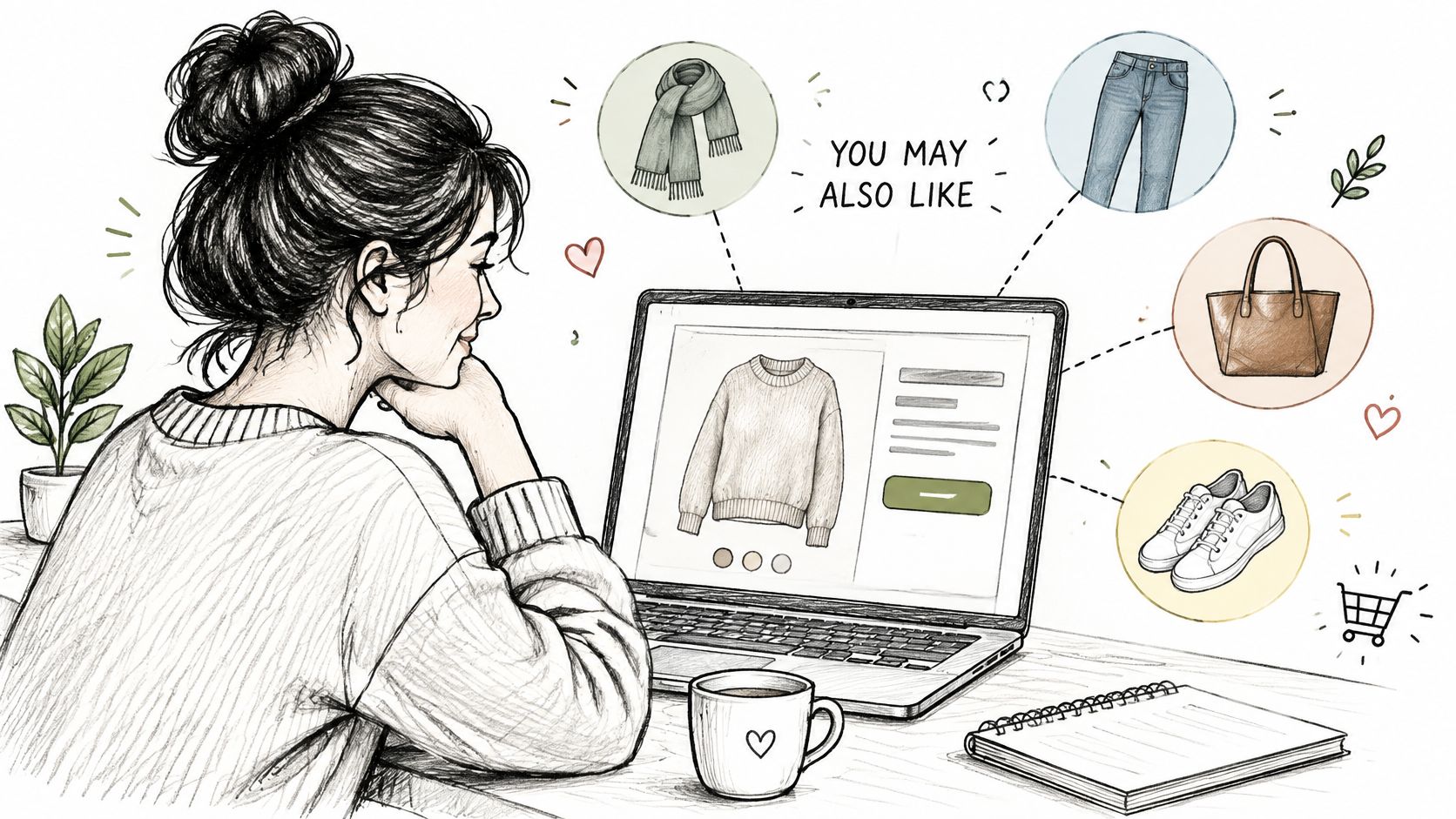
A shopper adds a sweater to their cart. A useful recommendation shows a coordinating shirt in an available size, rather than another sweater competing with the one they’ve chosen.
Amazon-style item-to-item collaborative filtering connects products through shopping behavior. Instead of finding a shopper’s demographic twin, it identifies relationships among items people view, add, and buy. Familiar applications include frequently bought together suggestions and related-product modules.
Build around compatibility and contribution
On Shopify, start with clean product types, tags, variant information, and inventory rules. Place recommendations beneath the add-to-cart button and test a cart placement separately, so you can distinguish discovery from last-minute attachment.
- Exclude poor candidates. Remove unavailable variants, incompatible accessories, and products whose margins don’t support additional handling costs.
- Rank for usefulness. A matching accessory can expand an order without requiring a bundle discount.
- Measure the whole basket. Track attachment rate, average order value, returns, and contribution after fulfillment.
MonAmie reported a 200% increase in users engaging with recommendations and 14% increases in ecommerce revenue and average order value in its Amazon Personalize case study. Those vendor-published results illustrate what to measure, not what another store should forecast.
The behavioral principle is choice architecture: make a relevant next purchase easier to find without overwhelming the main decision. Build your product recommendation strategy around that distinction, and improve clothing recommendations with fit data when compatibility depends on more than style.
Margin verdict: Strong when recommendations add useful products at full price. Weak when the module becomes a clearance rack beneath every product.
2. Shade and Skin-Tone Matching (Sephora Color IQ)
Beauty shoppers don’t always need a stronger incentive. Sometimes they need confidence that the foundation won’t look wrong when it arrives.
Sephora’s Color IQ illustrates attribute-based personalization: use information about skin tone to narrow foundation and concealer choices. The transferable idea is to personalize the decision shoppers struggle to make, rather than decorating the entire shopping journey with recommendations.

Remove uncertainty before adding an incentive
Say a Shopify cosmetics brand asks shoppers about undertone, preferred coverage, and their current shade. The result should explain why a product fits those answers, show alternatives, and make correction easy. A confident recommendation doesn’t need to pretend it’s infallible.
This applies ambiguity aversion, the tendency to avoid decisions with uncertain outcomes. A discount changes the price of a possible mismatch. A useful matching tool addresses the mismatch itself.
Practical rule: Personalize the answer to the shopper’s hardest question before personalizing the price.
For implementation, store shade, undertone, finish, and skin-type attributes consistently in product metafields. Connect quiz answers to those attributes, and let shoppers edit their answers without restarting.
Collect only what the recommendation needs. Explain how answers affect results, avoid retaining images unnecessarily, and offer a preference-reset path. A shopper should understand the recommendation without wondering what else the brand knows.
Margin and brand impact: Judge the tool on purchase conversion alongside shade-related return reasons, exchanges, and support contacts. If more people buy but more people return, you haven’t solved the problem. A brand earns credibility by acknowledging uncertainty and helping shoppers correct a match.
3. Personal Styling Profiles and Curated Boxes (Stitch Fix Model)
Stitch Fix’s model makes personalization part of the service itself. A style profile captures fit, budget, preferences, and feedback, while stylist judgment helps turn those inputs into curated selections.
The important distinction is learning from correction. A shopper who returns trousers because the rise feels wrong has given you a more useful signal than someone who merely clicked a product photograph.
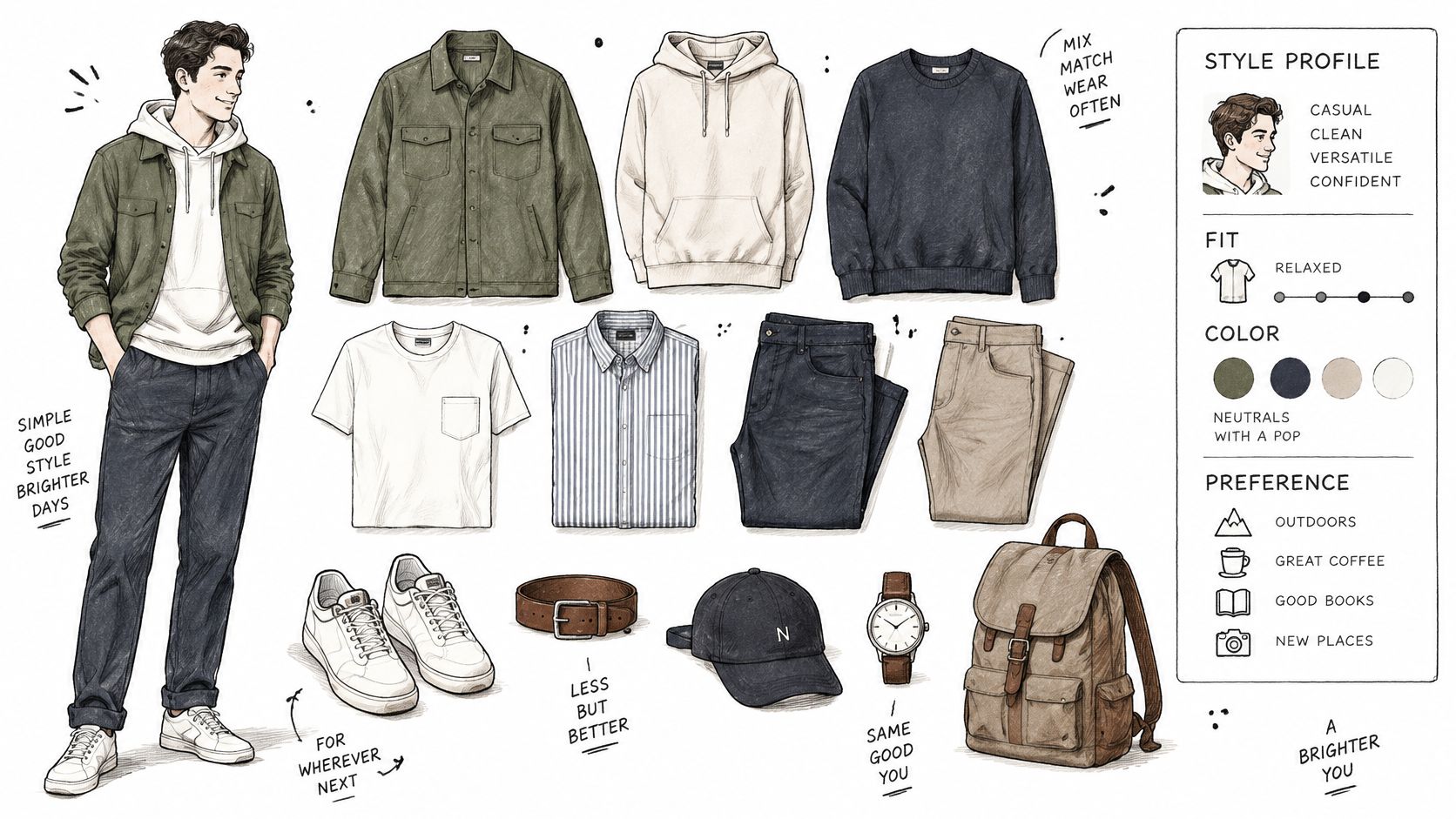
A Shopify apparel brand can apply this without launching a subscription box. Ask about preferred silhouettes and budget, recommend a small edit, then use keep, exchange, and return feedback to refine the next selection.
Make feedback visibly useful
- Separate fit from taste. Too tight and not my style should trigger different recommendation changes.
- Sequence the assortment. Lead with familiar fits before introducing experimental pieces.
- Reward useful participation. Offer early access or styling assistance rather than automatically issuing a coupon.
Commitment and consistency helps explain why voluntary profile participation can support continued engagement. Keep that participation worthwhile: don’t make customers complete a long questionnaire only to show the same bestsellers everyone sees.
The same approach can help shoppers choose skincare for their skin type, provided the questions map to meaningful product differences rather than unsupported diagnostic claims.
Margin verdict: Curation can support full-price purchasing, but styling labor, shipping, and returns belong in the calculation. Track the cost of producing a retained order, not just the value of the box shipped. The brand benefit depends on remembering feedback accurately, including when a customer’s preferences change.
4. Made-to-Order Product Customization (Nike By You)
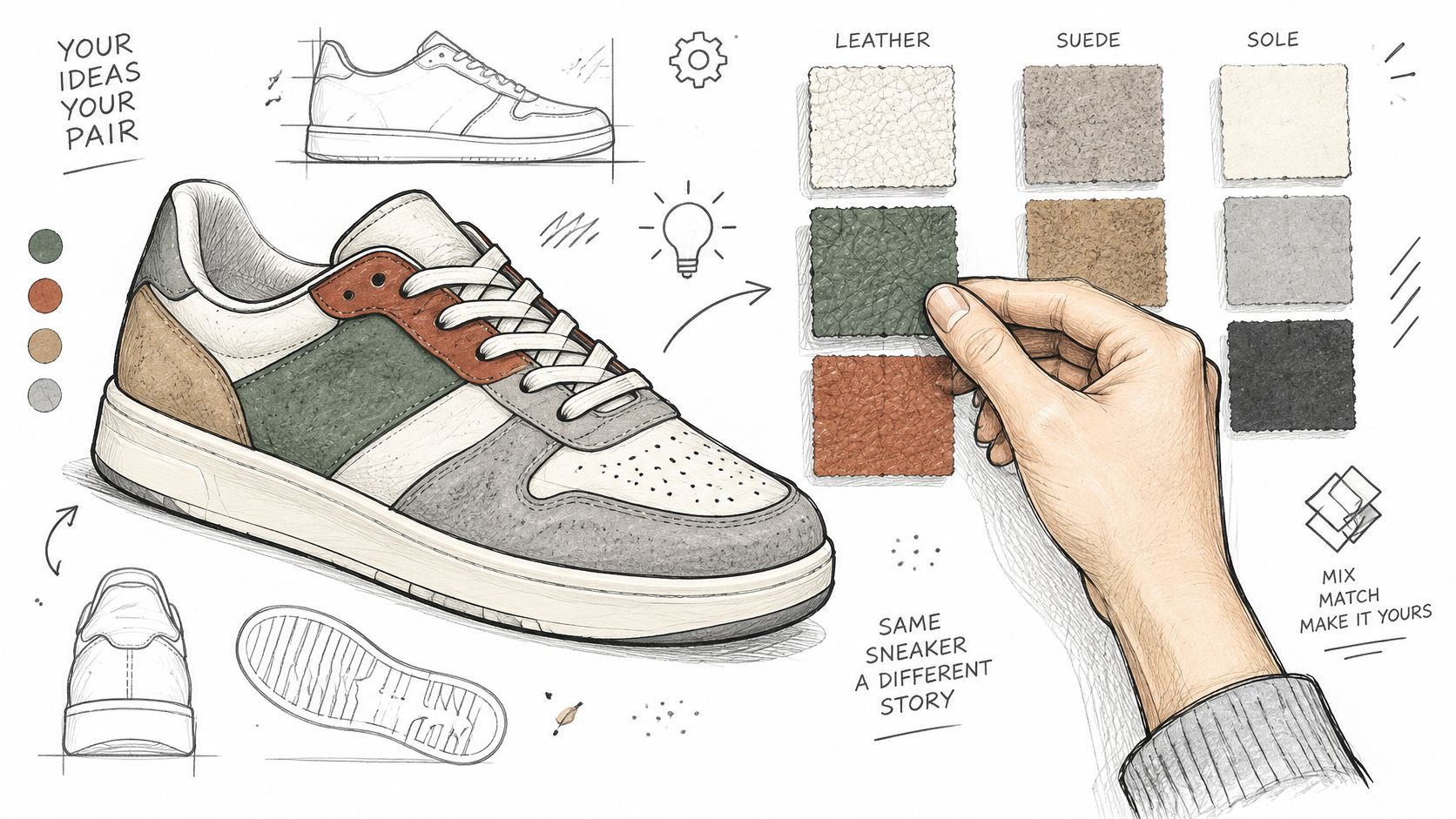
With Nike By You, shoppers participate in designing the product through choices such as colors, materials, and details. This example of personalization changes what the customer buys, rather than changing the advertising around it.
For a Shopify bag brand, the equivalent might be a curated choice of leather, strap, lining, and monogram. The customer’s finished configuration should appear clearly on the product page, in the cart, and in the order confirmation.
Sell ownership without creating operational chaos
The relevant principle is the endowment effect: people can attach greater value to something they experience as their own. Participation in a design can strengthen that feeling, but don’t assume customization guarantees willingness to pay.
Too many options introduce choice overload and production complexity. Limit combinations to ones your team can make reliably, and test digital previews against finished products under ordinary lighting.
- Make lead times visible. Show production and shipping expectations before the shopper commits.
- Specify the final design. Save the configuration with the order so fulfillment staff don’t have to interpret free-text notes.
- Explain restrictions early. Put applicable cancellation and return terms beside the configuration controls.
A custom product loses its premium feel when the customer has to chase support to discover what they ordered.
Brands exploring how to personalize golf apparel face the same practical test: customization must survive production, not just look appealing in a preview.
Margin and brand impact: Include setup labor, materials waste, remakes, and customer-service time in product profitability. Customization can make comparison shopping less direct, but inaccurate previews or missed delivery promises can undermine the value customers helped create.
5. Tiered Loyalty Rewards Based on Purchase Behavior (Starbucks Rewards Model)
A loyalty customer who repeatedly buys coffee shouldn’t receive the same prompt as someone who only visits for seasonal drinks. The useful lesson from the Starbucks Rewards model is to connect recognition and offers to actual ordering behavior, with visible progress toward rewards.
For Shopify merchants, combine a points-based loyalty program with behavioral relevance. A repeat skincare customer could receive access to a replenishment bundle, while a customer exploring a new category might receive a sample aligned with that interest.
Reward the next valuable behavior
The goal-gradient effect describes how people can become more motivated as they approach a goal. Visible progress matters, but the reward must be understandable and attainable without pushing shoppers into purchases they don’t need.
Build the economics before choosing point values. Include redemption cost, shipping, reward liability, and the possibility that loyal customers would have purchased without an incentive.
- Keep early progress meaningful. Don’t make the first useful reward feel impossibly distant.
- Reward more than spending. Consider referrals, profile completion, or honest reviews, without conditioning rewards on positive sentiment.
- Protect recognition. Use access, convenience, and service benefits where an ongoing discount would dilute perceived value.
A points balance alone isn’t personalization. Use purchase history to determine which reward is relevant, and let customers choose alternatives when your inference is wrong.
Margin verdict: Compare rewarded customers with a suitable holdout, not with less-engaged shoppers. Otherwise, you may mistake preexisting loyalty for incremental growth.
Brand verdict: A program should make customers feel recognized, not make regular pricing look like a penalty for nonmembers. Avoid stacking so many benefits that shoppers need a spreadsheet to understand the purchase price.
6. Behavior-Triggered Email and SMS Flows (Klaviyo-Style Personalization)
A cart reminder that shows the exact product left behind is useful personalization. A reminder that immediately adds a discount may be an unnecessary concession.
Klaviyo-style flows use Shopify browse, cart, and purchase events to determine the message and timing. Replenishment reminders apply the same logic after purchase, using product consumption patterns and the customer’s actual ordering cadence rather than a universal calendar.
In a consumer survey across the United States, United Kingdom, and Australia, 96% said they were likely to purchase from brands that personalize their messaging, according to Attentive and CITE Research. Purchase intent isn’t proof of incremental sales, so test the message against a control.
Recover intent before paying for it
Start with a cart reminder containing the selected items, a clear return path, and relevant delivery or return information. For browse abandonment, keep the language helpful rather than announcing exactly how closely you tracked someone.
Your marketing automation workflows should also suppress messages when someone purchases, opts out, or receives an overlapping campaign. Audit them quarterly for discontinued products, broken links, and stale offers.
Margin test: Compare a reminder-only flow with an incentive flow. Attribute the additional discount cost to the additional retained orders, not every recovered cart.
Temporal discounting matters because a distant purchase can lose appeal relative to an immediate competing priority. Timely reminders reduce that distance without automatically changing price.
For replenishment, let customers postpone or stop reminders. Measure conversion, revenue per recipient, unsubscribes, realized discount, and order contribution. A flow that sells more by exhausting the audience isn’t a durable improvement.
7. Earned Time-and-Quantity Rewards (Quikly Behavior-Driven Promotions)
A flat discount gives shoppers the same reason to buy today or tomorrow. A time- or quantity-bound reward makes the timing matter: shoppers who act while the offer is open can claim the available reward, while waiting may mean a lower tier or no reward.
Quikly is a Shopify app for urgency and scarcity promotions. Brands can offer a single reward or a descending tier that steps down as shoppers claim, across the storefront, email, social, and SMS. Campaigns are styled to match the store, and the approach has been refined across more than 60 million consumer interactions.
Match the constraint to the behavior
A Shopify apparel brand could replace a recurring blanket sale with a descending reward tier. Early participants receive the strongest available reward; as shoppers claim it, the offer steps down. Set the rules before launch and apply them consistently so customers understand what they can earn and when.
Scarcity bias helps explain why a limited opportunity can attract attention. Time and quantity communicate different things: a study of online scarcity messaging describes limited quantity as a signal of exclusivity and limited time as a signal of urgency.
- Set economically defensible caps. Align availability with inventory, campaign budget, and margin.
- Explain eligibility. State the qualifying action and redemption conditions clearly.
- Keep the experience consistent. Carry the same creative and reward rules across the storefront and messaging channels.
The personalization comes from the shopper’s context and decision to participate, not necessarily from a hidden individual price. Customers choose whether to act, and the reward structure recognizes that action.
Margin verdict: Compare profit per order, profit per eligible visitor, and average realized discount with the existing promotion. A lighter incentive matters only if the overall economics improve. Don’t restart an expired offer or suggest scarcity that isn’t real.
8. Location, Currency, and Returning-Visitor Storefront Personalization (Shopify Markets)
A customer shouldn’t need a discount to tolerate the wrong currency or discover that a featured product can’t ship to their country. Fixing those problems is personalization with a direct service benefit.
Shopify Markets and localization tools support market-specific storefront experiences, including currency, language, pricing, and availability where configured. Returning-visitor modules solve a different continuity problem by helping shoppers recover recently viewed products or a saved cart.
Remove friction without taking away control
Say a Shopify merchant serves customers across several countries. The store suggests a market based on visitor context, displays the relevant currency and shipping information, and lets the visitor change that selection immediately.
For a returning visitor, show a recently viewed section without assuming the prior session represents permanent preferences. Someone shopping for a gift shouldn’t be assigned that recipient’s tastes indefinitely.
- Keep the switcher visible. Automatic localization should be a suggestion customers can correct.
- Surface delivery costs early. Show useful shipping estimates and explain what’s included.
- Respect availability. Don’t promote region-restricted products and disclose the restriction only at checkout.
Cognitive fluency is the relevant principle: familiar language and clear costs make information easier to process. That convenience disappears when the store guesses incorrectly and hides the controls.
Use your website personalization approach to separate market rules from individual behavior. Shopify Plus merchants and smaller teams should verify the capabilities of their current plan, payment setup, theme, and localization apps before promising a particular experience.
Margin and brand impact: Compare conversion, shipping subsidies, cancellations, and contribution by market. Regional revenue can look attractive while fulfillment costs erase the gain. Helpful localization makes the purchase clearer; intrusive personalization makes customers wonder why the store won’t let them browse normally.
8 personalization examples at a glance
| Channel | Best for | Behavioral principle | Margin impact |
|---|---|---|---|
| Item-to-item product recommendations | Increasing basket size across large catalogs | Use co-purchase and co-view patterns to suggest relevant next items | Supports higher order value without discounting |
| Shade and skin-tone matching | Reducing hesitation and returns for shade-sensitive products | Match products to a shopper’s individual skin tone | Protects revenue by improving conversion and reducing mismatches |
| Personal styling profiles and curated boxes | Building apparel loyalty and reducing fit-related returns | Refine selections using shopper preferences and keep-or-return feedback | Can reduce returns, but stylist and curation costs are high |
| Made-to-order product customization | Differentiating products and encouraging full-price purchases | Let shoppers shape a product to increase ownership and perceived uniqueness | Supports full-price sales; fulfillment complexity may raise costs |
| Tiered loyalty rewards based on purchase behavior | Encouraging repeat purchases and stronger customer habits | Use points, status, and tailored perks to reward ongoing behavior | Avoids reliance on discounts, but rewards and redemptions require cost control |
| Behavior-triggered email and SMS flows | Recovering browsing, cart, and replenishment intent | Send timely, relevant messages based on shopper actions | Can recover sales while reserving discounts for shoppers who need them |
| Earned time-and-quantity rewards | Prompting timely purchases with controlled promotions | Reward action with genuine time or claim limits | Can lift profit with lighter average discounts; requires disciplined campaign limits |
| Location, currency, and returning-visitor storefront personalization | Reducing international and repeat-visit shopping friction | Adapt pricing, content, availability, and saved items to shopper context | Reduces dependence on promotions to offset avoidable friction |
Choosing Personalization That Protects Margin
The strongest personalization examples share a practical trait: they reward action and relevance instead of relying on deeper discounts. Recommendations make an additional item useful. Matching tools make a purchase less uncertain. Behavioral messages reconnect customers with an existing intention.
That doesn’t mean every tactic needs an incentive, an AI model, or an extensive customer profile. Sometimes the most valuable change is removing an irrelevant product, suppressing an unnecessary message, or letting a shopper correct the store’s assumptions.
Trust belongs in the operating model. In a survey of consumers across the United States, United Kingdom, Canada, and Australia, only 33% trusted companies with data collected through AI, according to Attest’s Consumer Adoption of AI Report. Collect understandable signals, explain how they affect the experience, and provide a straightforward preference or opt-out path.
Start where you currently give margin away
Audit your active promotions and automated flows. Identify where customers receive incentives before you’ve established that an incentive is necessary, especially welcome offers, cart recovery, loyalty redemptions, and recurring sales.
Choose a bounded change:
- Improve recommendation rules. Favor compatible, available products with sound contribution margins.
- Remove the first cart discount. Test a useful reminder before introducing an incentive.
- Constrain an existing promotion. Replace automatic availability with a clearly explained claim limit or redemption window.
Preserve a randomized holdout where practical, and compare outcomes across new, returning, and high-intent shoppers. Measure conversion alongside average order value, returns, discount cost, and contribution after fulfillment. Don’t accept a revenue lift as sufficient evidence if you’ve paid more to generate every order.
Time- and quantity-bound earned rewards offer a way to address conversion, margin, and brand-perception pressures together. A small team can convert an existing promotion into a claim-limited experience, coordinate it across storefront, email, social, and SMS, and evaluate whether shoppers act sooner without requiring a deeper markdown.
The question isn’t how to add more personalization everywhere. It’s which moments deserve a personalized reason to act now, and which need a clearer path to buying at the price you intended.
Quikly turns existing promotions into on-brand, time- and quantity-bound reward experiences across your storefront, email, social, and SMS. Visit Quikly to explore converting one recurring promotion into a claim-limited test, then judge the result on conversion, realized discount, and profit rather than revenue alone.
Topics: example of personalization, ecommerce personalization, Shopify marketing, urgency marketing, behavioral triggers