A bigger discount is rarely the fastest route to engagement. It can create a short burst of orders, but it also teaches customers to wait for the next markdown, pressures margin, and makes every future promotion harder to justify.
Effective viral SMS messages give subscribers a reason to act now through credible scarcity, social proof, exclusivity, progress, or rewards the customer already owns. The offer still needs to be specific and easy to redeem, but the motivation comes from the structure, not from making the discount deeper for everyone.
The seven examples below turn those principles into practical templates for Shopify and DTC teams. Each one connects the message itself to psychology, storefront execution, and distribution across SMS, email, social, and the site. The standard is simple: use real limits, make the next action obvious, and protect customer trust. If your post-purchase strategy also includes asking customers for feedback, a tool for requesting reviews by text can extend the conversation beyond the sale.
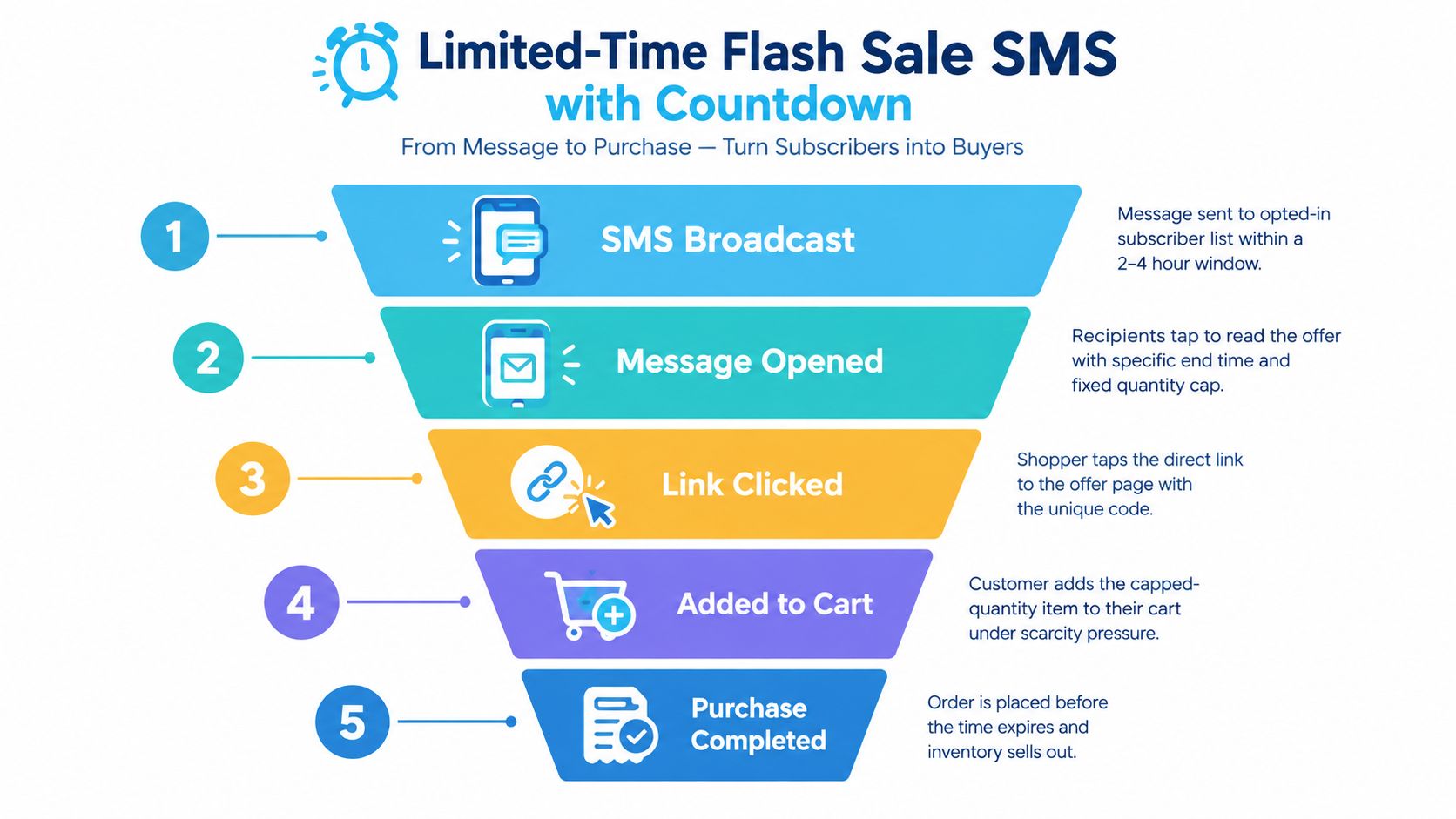
1. Limited-Time Flash Sale SMS with Countdown
A flash sale works when the deadline is believable. “Save today” is ordinary promotional language. “This offer closes at 6 p.m. or when the allocated stock is claimed” gives the shopper a concrete reason to decide.
The psychology is loss aversion. People often respond more strongly to the possibility of losing a good opportunity than to receiving an equivalent benefit later. A short window also counters temporal discounting, the tendency to value an immediate benefit more than a future one.
Keep the window short enough to create a real decision. A two-hour sale feels materially different from a promotion that runs for several days. Pair the time limit with a quantity limit only when the inventory or reward allocation can support it.
Practical rule: If the offer still works exactly the same way after the deadline, the deadline is probably decoration.
A usable message might read:
“SMS early access. The 100-pair sneaker drop is open now. Your price ends at 8 p.m. or when the allocated stock is gone. Shop: [direct product link]”
The Shopify execution matters as much as the copy. Send shoppers directly to the product or campaign page, not the homepage. Make the expiration visible in the storefront, keep the redemption path short, and ensure the discount logic works in cart before sending the message.
For implementation details around storefront urgency, see this guide to a countdown timer for Shopify. Use SMS for the alert, email for the product story, social for broader awareness, and the storefront for the live offer status. After expiration, a genuine “sold out” or “offer closed” update can reinforce credibility. For abandoned carts, pair the campaign with cart recovery using creative texts, but don’t send a second blast that repeats the same pressure without new information.
2. Tiered Reward SMS with Descending Value by Claim Order
A tiered reward lets early action earn the best value without giving every customer the deepest discount. The structure might be simple: the first group receives the strongest reward, the next group receives a lighter one, and later claimants receive the closing offer.
This format combines scarcity bias with loss aversion. Customers can see that waiting has a cost, but the campaign still preserves a path to purchase after the top tier disappears. That balance is useful when a blanket discount would put too much pressure on margin.
A fashion brand could send:
“Your early-access reward is live. First 15 shoppers get free shipping plus 25% off. The next 30 get 20% off, then the final tier receives 15%. Claim yours: [offer link]”
The offer page should show the tiers clearly. Don’t hide the step-down in terms and conditions. Shoppers need to understand what they can earn, what has already been claimed, and what happens when a tier changes.
Set the strongest tier small enough to deplete visibly, while reserving enough inventory or reward capacity to keep the campaign commercially useful. A single campaign deadline is usually clearer than separate timers for every tier. Multiple countdowns can turn a simple decision into a rules exercise.
Use follow-up SMS selectively. An update that the first tier has closed can create momentum, but constant status messages can feel like noise. Email can explain the mechanics in more detail, while social posts can announce the public stage of the campaign after SMS subscribers receive early access.
This kind of participation is closely related to gamification marketing for Shopify. The value isn’t the game language itself. The value is giving customers a visible reason to act sooner while keeping the average incentive under control.
3. Exclusive SMS Subscriber-Only Offer
Exclusivity gives the SMS list a job. If subscribers receive the same promotion as everyone else, the list becomes another broadcast channel. A private offer, early product access, or SMS-only drop gives people a reason to stay opted in.
The main behavioral principle is identity and belonging. Customers aren’t only evaluating the financial value of an offer. They’re also responding to the feeling that they have access to something not available to the general audience. That can strengthen list loyalty without requiring the most aggressive discount your store can afford.
A beauty retailer launching a new product could send:
“SMS subscribers get first access to the new serum. Shop before public launch: [direct product link]. Your private access closes tomorrow night.”
Make the promise at signup. The opt-in flow should tell new subscribers what they’ll receive, such as early access, private drops, or member rewards. Then deliver one of those benefits soon enough that the expectation feels justified.
Keep the offer premium rather than desperate. An exclusive experience can be an early shopping window, limited colorway, free sample, or reserved inventory. A discount can help, but repeating large reductions trains subscribers to wait for the next private code.
Use Klaviyo or another SMS platform to separate active subscribers, recent purchasers, VIP customers, and people who haven’t engaged recently. The same exclusive offer shouldn’t necessarily go to every segment. A recent buyer may respond better to access, while a dormant customer may need a reward tied to a relevant product category.
The creative SMS messages guide can help translate the concept into variations that sound like your brand. Distribute the launch through SMS first, then use email and social to build anticipation without exposing the private redemption path. The storefront should make the subscriber experience feel intentional, not like a public sale with a hidden code.
4. Urgency SMS with Remaining Inventory Count
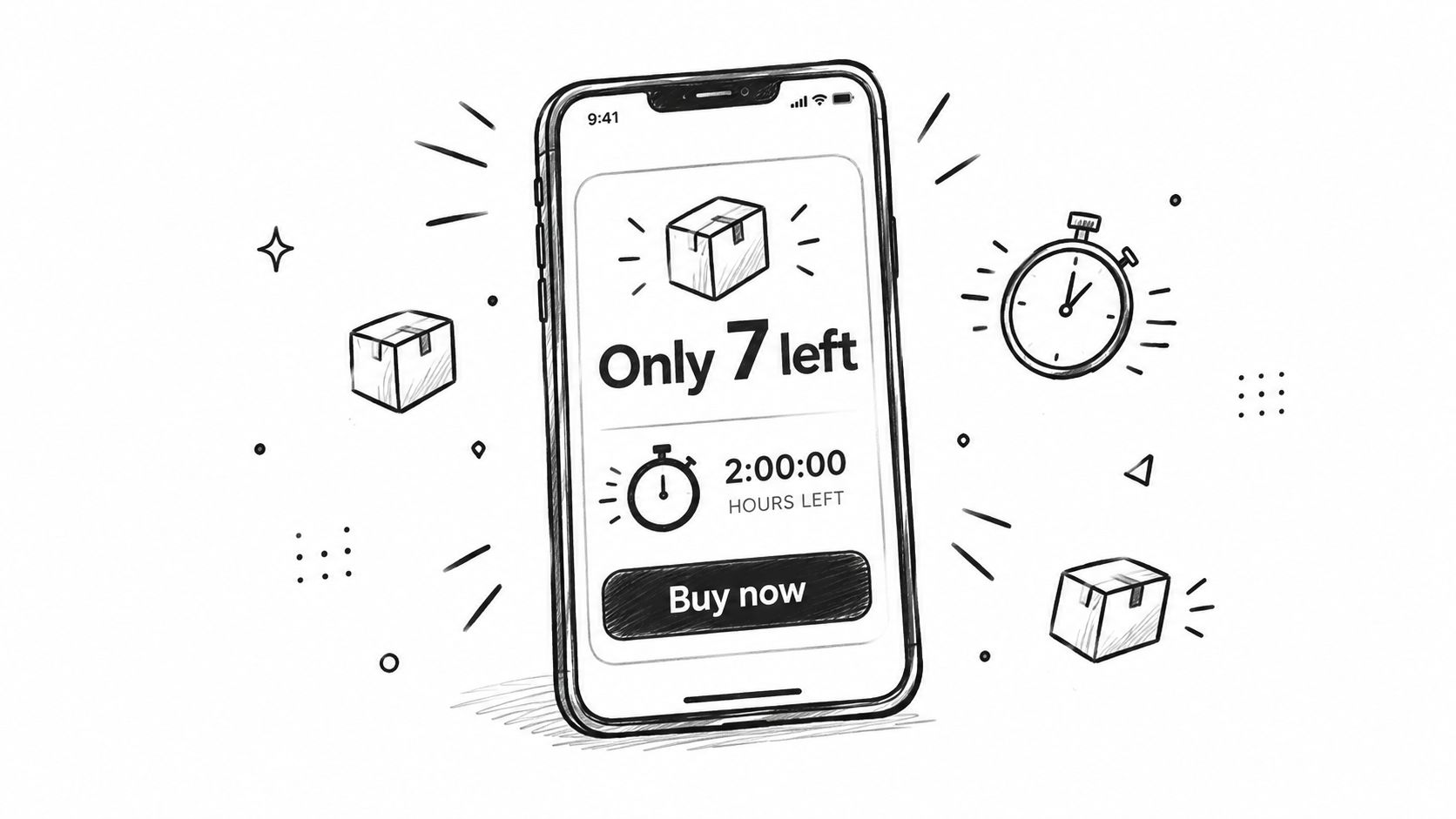
Specific inventory creates a stronger signal than generic urgency. “Hurry, limited stock” could describe almost any ecommerce promotion. “Only seven remain at this price, and the offer closes in two hours” gives the shopper two concrete constraints.
This format uses scarcity bias and loss aversion together. The inventory count makes the limit tangible, while the deadline prevents customers from assuming they can return later. It works best for products that are constrained, such as a limited-edition apparel release, a meal delivery slot, or a sneaker resale listing.
A message might read:
“Only six units remain in the limited-edition jacket drop. Your current price closes at 8 p.m. Shop the final inventory: [product link]”
The count must come from a reliable source. Shopify inventory, campaign allocation, and the landing page need to agree. If the SMS says six remain while the product page shows a different status, customers will notice the inconsistency and question the entire promotion.
Don’t resend the same count repeatedly. Update the audience only when the inventory meaningfully changes or the offer reaches a new stage. A follow-up message can confirm that the allocation sold through, but it shouldn’t claim scarcity that the merchandising team can’t verify.
Use the product page as the destination. Sending shoppers to a category page makes them search for the item while the clock runs, which wastes the urgency you created. Email can provide fit, materials, or product details, while SMS should handle the immediate alert. Social distribution is useful when the product is intended to sell through publicly, but keep subscriber-only access separate if that distinction matters to your list.
5. SMS Reward or Point-Redemption Offer
Owned rewards are often more efficient than a new discount. A customer who has accumulated points, loyalty credit, or a stored benefit already has a reason to return. The message reminds them that value is waiting in their account.
That changes the psychology of the offer. The customer isn’t being persuaded to accept a markdown. They’re being prompted to use something they perceive as theirs, which can activate endowment effects and reduce the psychological cost of purchasing.
A personalized message could say:
“You have points available for your next order. Redeem them before your reward expires: [account or product link]”
Personalization is essential. Pull the actual balance, eligible products, and expiration date into the message. A generic “you have rewards waiting” text makes the customer do unnecessary work and can feel like a routine broadcast.
The redemption path should be nearly automatic. Use a single-use code, logged-in account state, or direct link that applies the benefit correctly. Test the flow on mobile, especially if the customer moves from SMS to a Shopify checkout with a discount parameter.
“A reward reminder should remove uncertainty, not create another task.”
Segment customers by reward balance, recent purchase behavior, and product interest. Someone with a small unused balance may need a low-friction product recommendation, while a higher-balance customer may be ready for a broader assortment. Don’t force every recipient toward the same product or minimum spend.
Use a sequence with restraint. An initial reminder can explain the available reward, a later message can make the deadline clearer, and the final notice can focus on expiration. Email can show the account balance and eligible products in more detail. The storefront should display the reward at the moment of purchase, so the customer understands the benefit before checkout.
This approach protects brand perception because it recognizes existing customer value instead of announcing another blanket sale. It can also reactivate dormant customers without making a permanent public offer that trains the entire audience to wait.
6. Social Proof SMS with Real-Time Purchase or Signup Count
Social proof works when it reports real customer behavior. A message that says many shoppers have claimed an offer can reduce uncertainty, especially for a new product, presale, event, or unfamiliar brand. It becomes stronger when the activity is paired with a real remaining limit.
A practical example:
“Shoppers are joining the founding-customer offer. The current reward tier is nearly claimed. See what’s available: [offer link]”
The psychology combines conformity bias with loss aversion. Customers use other people’s actions as a signal that an offer is worth considering, then notice that waiting may reduce their access. The two cues support trust and action, but only when they reflect reality.
Don’t fabricate counts or inflate them with vague definitions. Decide whether the number represents purchases, claims, registrations, or completed signups, then label it accurately. A count that changes unpredictably can undermine confidence instead of building it.
The Shopify execution should connect the event stream to the storefront and campaign logic. If the SMS says a reward tier is almost gone, the landing page needs to show the same state. If the count is based on signups, don’t present it as purchases. Accuracy matters more than making the number sound impressive.
Use real-time social proof during periods of genuine activity, then stop sending once movement slows. Email can provide customer reviews, product education, or founder context. Social can broaden awareness, while SMS reaches the opted-in audience that has already asked for direct updates. If you use reviews in the campaign, select feedback that addresses the actual purchase hesitation rather than adding praise without context.
This message type is useful for brands with a story customers want validated, but it shouldn’t replace product proof. Social activity may earn the click. Clear merchandising, credible delivery information, and a straightforward checkout still earn the order.
7. SMS Offer Tied to a Specific Action or Milestone
A milestone offer turns promotion into progress. The customer may be close to free shipping, a loyalty reward, a profile completion benefit, or a cart threshold. The SMS tells them exactly what remains and what they gain by finishing.
This uses goal-gradient effects, the tendency to increase effort as a goal feels closer. Progress also supports commitment and consistency. Once a customer has started toward a reward, completing the final step can feel more satisfying than abandoning the effort.
A cart message might say:
“You’re close to free shipping. Add an eligible item to reach the threshold for your order: [cart link]”
For a loyalty program, the message could focus on the remaining activity needed to gain the next reward. For onboarding, it might direct the customer to complete a profile or preference step before receiving a benefit. The action has to be specific. “Engage more to earn rewards” is too vague to change behavior.
The destination should match the task exactly. Send cart customers to the cart, new members to the profile page, and loyalty customers to products that count toward the milestone. Don’t make shoppers search through the storefront to discover what qualifies.
Use progress visually when the campaign supports it. A bar, remaining amount, or completed-step indicator can make the goal easier to understand. Keep the threshold close enough to feel achievable, but don’t recommend an item that adds unwanted cost or creates buyer’s remorse.
This format can increase order value, but the trade-off must be managed. Free shipping thresholds and add-on prompts may produce a larger basket while reducing margin if the recommendation is poorly chosen. Use products with healthy contribution margins, genuine customer relevance, and a clear role in the shopper’s purchase.
7 Viral SMS Tactics Comparison
| SMS Format | Implementation complexity | Resource requirements | Expected outcomes | Ideal use cases | Key advantages |
|---|---|---|---|---|---|
| Limited-Time Flash Sale SMS with Countdown | Medium, schedule windows and enforce caps | SMS platform, timed links/codes, inventory coordination | Short-term conversion spike, rapid redemptions, margin-friendly | Short windows, clearance or impulse-driven promotions | Genuine scarcity, drives immediate action with lighter discounts |
| Tiered Reward SMS (Descending Value by Claim Order) | High, tier logic and real-time tier updates | Inventory allocation, dynamic messaging (Quikly-style), real-time tracking | Higher avg. conversion with controlled margin erosion, staged momentum | Product drops, limited launches, campaigns needing progressive incentives | Progressive incentives, preserves margin, motivates early buyers |
| Exclusive SMS Subscriber-Only Offer | Low–Medium, segmentation and unique codes | Subscriber segmentation, unique codes/URLs, channel discipline | Increased list growth and engagement, lower overall volume | Building loyalty, testing offers with engaged audience | Drives opt-ins, feels premium, limits channel arbitrage |
| Urgency SMS with Remaining Inventory Count | High, requires live stock sync and accuracy | Real-time inventory integration, accurate stock feeds, direct links | Credible urgency, higher trust-based conversions, sensitive to errors | Limited-edition items, seasonal low-stock products | Concrete, believable scarcity; reduces buyer remorse |
| SMS Reward or Point-Redemption Offer | Medium, personalization and loyalty integration | Loyalty platform, customer data, personalization engine | Very high conversion among engaged users, reactivation, increased CLV | Loyalty redemptions, re-engagement, expiring-reward prompts | Targets high-intent customers, margin-friendly, leverages ownership |
| Social Proof SMS with Real-Time Purchase/Signup Count | High, real-time counts and dynamic updates | Real-time analytics, dynamic messaging platform, synced channels | Boosts trust and urgency when activity is fast, improves conversion | High-velocity sales, presales, events with visible momentum | Combines social proof + scarcity, increases perceived popularity |
| SMS Offer Tied to Specific Action or Milestone | High, behavior triggers and progress tracking | Behavioral triggers, progress indicators, link-to-action flows | Drives targeted behaviors, increases AOV and repeat actions | Cart recovery, profile completion, spend-threshold incentives | Turns offers into achievable goals, raises engagement and LTV |
Make the Message Earn the Click
The right viral SMS message depends on the behavior you want to create and the cost you’re willing to carry. Use real inventory counts for products with genuine stock constraints. Use tiered rewards when early action matters but a blanket discount would erode margin. Use exclusivity when the priority is growing and retaining the SMS list.
Use owned rewards to reactivate customers who already have value in an account. Use social proof when customer activity is real and verifiable. Use milestones when you want a higher-value action, such as completing a cart, reaching a shipping threshold, or moving toward a loyalty reward. A flash sale belongs on products where a short decision window is commercially credible, not as a daily substitute for merchandising.
SMS is only one part of the distribution plan. Map each campaign to a specific Shopify audience, a relevant landing page, and a redemption path that works on mobile. Decide which channel gets priority, which channel explains the offer, and which channel confirms the status. SMS may create the immediate action, email may provide product detail, social may create broader awareness, and the storefront must make the campaign state unmistakable.
Performance also needs to be judged beyond clicks. A large SMS audience can produce visibility without producing profitable orders. A large benchmark across more than 246 million SMS sends found a 12.39% click-through rate for standard SMS campaigns, but an average conversion rate of only 0.12% according to Omnisend’s SMS marketing benchmark. That gap is why landing-page relevance, offer specificity, inventory truth, and margin should sit beside click rate in the campaign review.
Klaviyo classifies 8.9% to 14.5% as a good campaign click rate and 1.0% to 2.0% as a good conversion rate, while 14.6% or higher click rate and 2.1% or higher conversion rate are considered great in its benchmark guidance for SMS and MMS campaigns. The practical lesson is straightforward. A click is permission to continue the selling job, not proof that the promotion worked.
Quikly can turn promotions into on-brand experiences bounded by time, quantity, or both, and distribute them across the storefront, email, social, and SMS. Its campaign mechanics have been refined across more than 60 million consumer interactions with leading brands, but the durable principle is broader than any platform. Reward customers who act without teaching everyone else to wait for another blanket discount.
Quikly helps Shopify brands create time- and quantity-bound promotional experiences that customers can participate in through SMS, email, social, and the storefront. Visit Quikly to see how your next viral SMS campaign can create urgency while protecting margin and brand trust.
Topics: viral SMS messages, SMS marketing, DTC marketing, Shopify marketing, urgency marketing