The strongest Halloween marketing campaigns combine a clear seasonal offer with real time or quantity limits, then coordinate the experience across email, SMS, storefront, social, and post-click measurement. For Shopify brands, the practical goal is immediate action without automatically sacrificing margin.
Seasonal traffic can look healthy while predictable discounts train shoppers to wait. Once customers expect the same promotion every October, brands often respond with deeper markdowns, which can lift short-term revenue while weakening profit and perceived value.
Halloween has become a major commercial window. The National Retail Federation projects $13.1 billion in U.S. Halloween spending for 2025, including $4.3 billion for costumes, $4.2 billion for decorations, and $3.9 billion for candy. That breadth matters for Shopify merchants. The opportunity isn’t limited to novelty products or costume stores, and the competition isn’t limited to one channel.
The best Halloween marketing campaigns create a reason to act now without making urgency feel deceptive. The seven options below cover offer architecture, lifecycle messaging, onsite conversion, mobile activation, merchandising, loyalty, and measurement. Evaluate each against conversion rate, margin, average order value, list growth, repeat behavior, and brand perception, not revenue alone. If your team is planning seasonal commerce beyond Halloween, this guide to ecommerce events to attend in October can help place the campaign in a wider calendar.
1. Quikly
A flat Halloween discount tells a shopper, “Buy whenever.” A behavior-driven drop gives that shopper a more specific decision: claim the strongest available reward before time or quantity runs out.
Quikly is built for Shopify urgency marketing. Merchants can turn a familiar promotion into a time-limited or quantity-limited drop, either with one reward or with descending tiers. For example, a campaign might offer 30% off to the first 100 orders, 25% off to the next 75, and 20% off after that. Those figures describe the campaign mechanic, not a performance forecast.
The distinction matters for margin. Blanket discounts give the highest available incentive to everyone, including customers who would’ve purchased without additional pressure. A capped or tiered reward concentrates the strongest offer among shoppers willing to act first. That creates a clearer relationship between customer behavior and promotional cost.
Why the mechanic fits Halloween
Halloween shopping isn’t confined to the final days of October. NRF reported that 49% of consumers planned to begin shopping before October in 2025, while PwC found that 16% were shopping as early as July or August. Early planners need a reason to commit before the seasonal noise peaks. A drop can provide that reason without keeping the deepest discount active for the entire campaign.
Quikly campaigns can appear across the storefront, email, social, and SMS, while matching the store’s visual identity. That native presentation helps the promotion feel like part of the shopping experience rather than an intrusive overlay. The approach supports scarcity bias, because customers respond to a limited opportunity, and loss aversion, because waiting can mean losing the best available reward.
Practical rule: Set the quantity or time boundary from inventory, margin, and operational capacity. Don’t publish scarcity you can’t defend.
Quikly says its mechanics have been refined across more than 60 million consumer interactions. It also offers tools such as AI Marketing Intelligence, a Store Analyzer, an ROI Calculator, a Promo Intelligence Report, and a Competitor Email Tracker. Those tools are useful when the team needs to model a seasonal offer before pushing it across the Shopify theme and lifecycle stack.
The trade-off is platform fit. Quikly is designed for Shopify stores, so it isn’t the right choice for a merchant using another commerce platform. Pricing isn’t displayed as a public line-item schedule beyond the 14-day free trial, and advanced or enterprise campaigns may require coordination with inventory and operations. For merchants focused on protecting margin while improving conversion and average order value, the behavior-driven model deserves a serious test. Quikly’s discussion of seasonal promotion mechanics offers another useful example of how event-based offers can move beyond automatic markdowns.
2. Klaviyo
Halloween email and SMS campaigns work best when the message changes with customer intent. A VIP customer shouldn’t receive the same launch message as someone who browsed a seasonal collection and left without adding anything to cart.
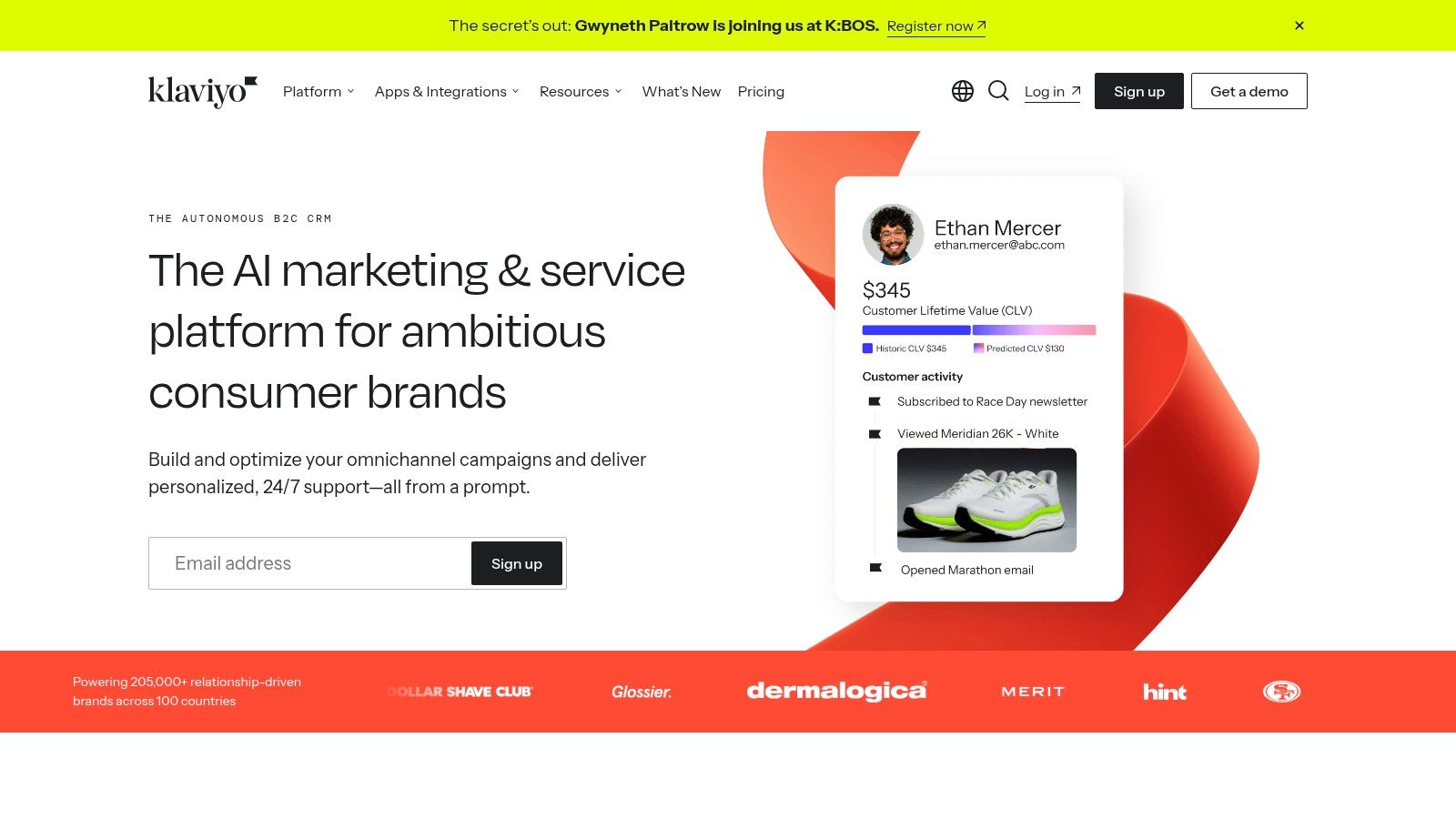
Klaviyo gives Shopify and Shopify Plus brands the segmentation and automation needed to make those distinctions. Its Halloween templates include countdown elements, RSVP and call-to-action blocks, and reminder structures. Those templates reduce production time, but the value comes from connecting the seasonal message to unified customer profiles and behavioral flows.
A practical Halloween sequence might begin with early access for high-value customers, followed by a collection launch for engaged subscribers, then an abandonment reminder for shoppers who viewed seasonal products. A win-back path can target customers who bought during a previous seasonal period but haven’t returned. The offer should remain consistent with the customer’s position in the buying journey.
Where Klaviyo earns its place
Klaviyo supports email, SMS, and WhatsApp, which makes it useful for coordinating a campaign without treating every channel as a separate broadcast. Email can carry product education and bundles. SMS can announce a limited-quantity drop or a last-chance window. A reminder flow can suppress buyers automatically, reducing unnecessary sends and promo fatigue.
The platform’s strength is also its burden. Advanced flows and personalization require disciplined event tracking, clear naming conventions, and someone who understands Shopify data. Contact and message-based costs can rise as a list expands, so a large audience shouldn’t receive every seasonal message by default.
The best Halloween flow doesn’t send more messages. It sends different messages to people with different reasons to buy.
Klaviyo is strongest when the offer architecture already has a meaningful distinction, such as early access, a reward tier, a bundle, or an inventory boundary. It can’t rescue an undifferentiated sale by itself. Use it to coordinate the customer experience, then judge the program by incremental contribution, unsubscribe behavior, margin, and repeat purchase quality. Merchants building the email layer can also review this guide to ecommerce email marketing. For teams polishing campaign communications, a resource on the best ChatGPT email signature may help with sender presentation, though the promotion strategy still matters more than decorative copy.
3. Omnisend
Omnisend is a practical choice for Shopify teams that need to launch Halloween email and SMS campaigns quickly without building every automation from scratch. Its ecommerce orientation, seasonal templates, and prebuilt flows make it suitable for smaller teams with limited design or lifecycle resources.
Omnisend includes Halloween email and SMS templates, campaign examples, and seasonal checklists. Its automation library covers abandoned cart, browse abandonment, and post-purchase messaging. Native Shopify data syncing lets merchants connect product and customer activity to those flows without building a separate data layer.
The most useful deployment is usually simple. Announce the seasonal collection to engaged subscribers, follow browse activity with product-specific reminders, and use post-purchase messaging to support the order and create a reason to return. Halloween shoppers may buy decorations, candy, gifts, or accessories, so product relevance matters more than repeating the same spooky creative everywhere.
Strengths and limitations
Omnisend publishes pricing tiers and offers a free plan, which makes budgeting easier for a small or mid-size Shopify brand. That predictability is valuable during a season when paid media, inventory, creative, and fulfillment costs are already competing for attention.
Its trade-off is depth. Merchants needing highly advanced analytics, complex experimentation, or enterprise-grade personalization may find some capabilities lighter than those of a top-tier lifecycle platform. The templates can also feel generic if the team doesn’t adjust typography, imagery, product hierarchy, and tone to match the brand.
A stock Halloween template often produces stock Halloween marketing. Use the structure for speed, then customize the decision path. Put the actual offer, eligibility, expiry, and product fit above the decorative elements. A customer should understand what they can claim and why it matters before the email asks them to admire the design.
4. Justuno
Onsite messaging has a narrow margin for error. A well-timed banner can clarify an offer or capture an engaged visitor. A blanket popup can interrupt product discovery, repeat itself to returning shoppers, and make a premium store feel like a clearance aisle.
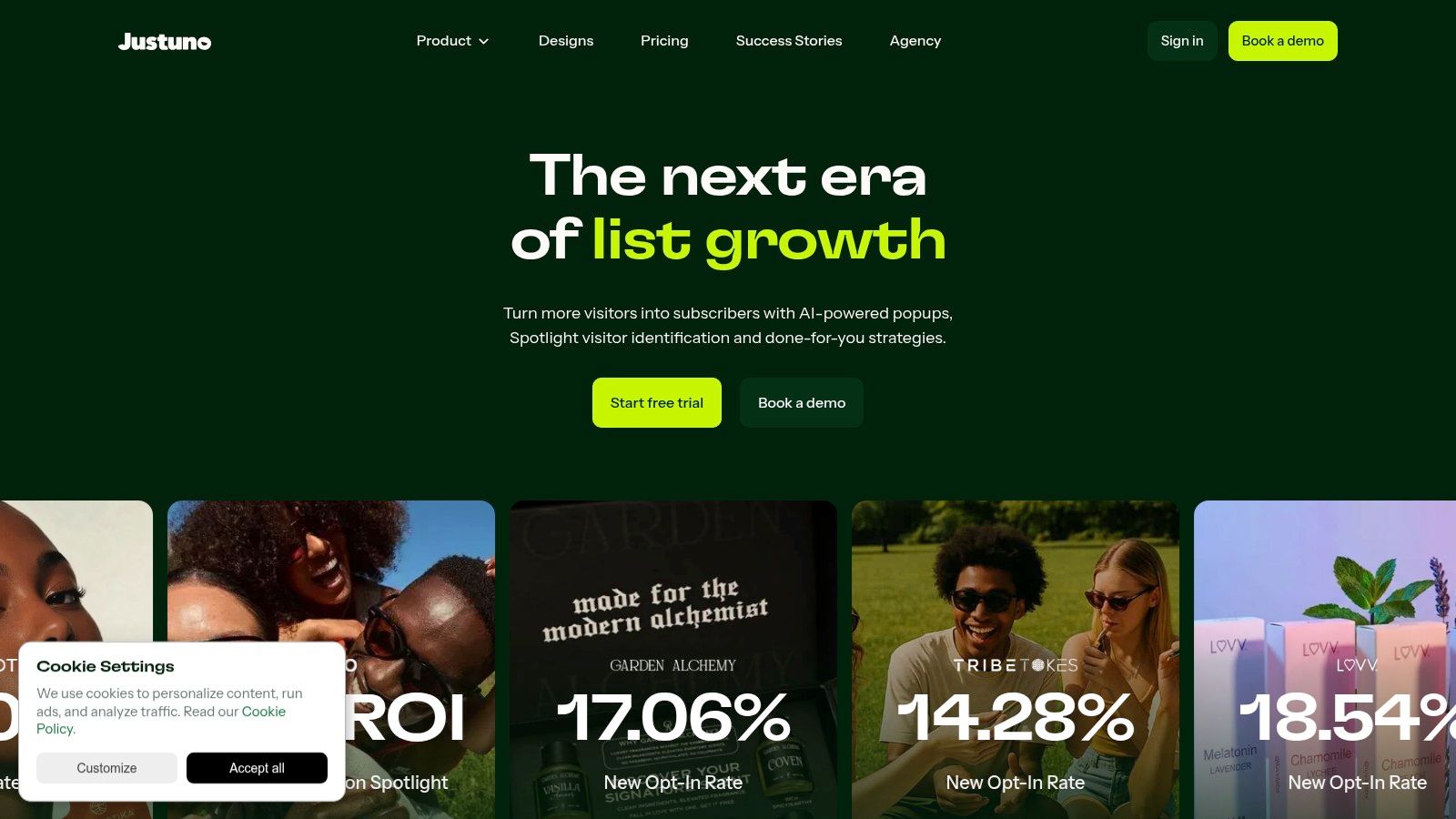
Justuno supports seasonal popups, fly-outs, banners, embedded widgets, and spin-to-win experiences. Its responsive design studio and template library help merchants create Halloween-specific assets without waiting for engineering. Integrations with Klaviyo, Omnisend, Attentive, and other email and SMS systems let an onsite action trigger a relevant follow-up.
Use the format to answer intent
A first-time visitor may need an email or SMS signup incentive. A returning customer who has already engaged with a seasonal product may need a concise reminder about the offer boundary. A cart visitor may need shipping or fulfillment clarity, not another discount wheel.
That distinction protects user experience and margin. Spin-to-win mechanics can be entertaining, but they also introduce random rewards that may train customers to wait for a chance at something better. Test the experience against a direct, clearly explained offer. If the wheel creates engagement but attracts low-value signups and little purchase intent, it isn’t doing useful commercial work.
Onsite standard: Every seasonal overlay needs a trigger, a suppression rule, and a job that can be measured.
Justuno’s Shopify installation documentation can help teams move quickly, but speed doesn’t replace frequency control. Set rules for buyers, subscribers, cart holders, and repeat visitors. Keep mobile layouts readable, make the close control obvious, and don’t place a countdown where the underlying availability isn’t real.
The platform is a good fit for merchants that need onsite capture and messaging without custom development. The downside is the risk of overuse. Premium brands may also need to redesign template-based assets so the experience feels considered rather than assembled.
For a deeper look at the distinction between useful onsite capture and intrusive interruption, see this guide to Shopify popups.
5. Attentive
SMS is a strong channel for Halloween moments that need a fast response, such as early access, a limited-quantity product release, or a final shipping reminder. It also creates fatigue quickly when every message uses the same “last chance” language.
Attentive focuses on mobile messaging across SMS and MMS, with email coordination, campaign composition tools, audience capabilities, and seasonal playbooks. Its Campaign Composer can support a multi-message sequence, while visual MMS gives the team more room to show a seasonal product or collection before the click.
The sensible use case is a short, purposeful sequence. Build anticipation with an opt-in message, release the offer to the right audience, and reserve the final reminder for customers who haven’t purchased or claimed the reward. Coordinate suppression across email and SMS so buyers don’t continue receiving the same urgency message after checkout.
Mobile urgency without subscriber fatigue
Mobile urgency depends on clarity. State the product or collection, the reward, the boundary, and the destination. Avoid sending a vague teaser that forces the subscriber to click merely to discover whether the offer applies to them.
Attentive’s compliance-aware sending and offer-code orchestration are important for merchants operating at scale. Enterprise support and strategy resources can reduce planning friction for U.S. brands, but the platform is quote-based and may cost more as the program expands. It also requires a healthy list and strong creative discipline.
A useful test compares a direct offer message with a story-led MMS or product-focused message. Track not only clicks and purchases, but also opt-outs, revenue after reward cost, and whether the channel generates customers who return without another aggressive incentive. SMS can produce immediate conversion, but careless frequency can damage the list that makes future seasonal campaigns possible.
6. Nosto
Halloween merchandising becomes difficult when the store has several relevant product groups and every visitor sees the same seasonal collection. A shopper looking for decorations may not want the same recommendations as a customer searching for a gift or a limited-edition item.
Nosto uses AI-driven recommendations, content personalization, merchandising, and search tools to change what shoppers see in real time. Shopify and Shopify Plus merchants can use Theme App Extensions to place seasonal widgets, banners, and recommendation areas without rebuilding the entire theme.
The commercial case is straightforward. Put complementary products together, surface higher-margin bundles where they fit, and make seasonal navigation easier for shoppers who arrive through a campaign landing page. Personalization can support average order value when recommendations reflect the shopper’s current purpose rather than displaying bestsellers.
Protect the economics behind the recommendation
Personalization doesn’t automatically improve a weak offer. It can also expose low-margin products more efficiently if the merchandising rules ignore contribution, inventory, fulfillment complexity, or return risk.
Set product rules before launch. Exclude items with supply constraints, prioritize bundles that make operational sense, and define what should happen when a seasonal product sells through. Recommendation logic needs clean product data and reliable event tracking, so Nosto may be excessive for a very small catalog.
The platform is better suited to mid-market and Shopify Plus merchants that need dynamic onsite control. Quote-based pricing and implementation requirements make it less attractive for a lean store with a narrow assortment. For the right catalog, though, it can turn Halloween traffic into a more relevant shopping path instead of relying on one generic collection page.
7. Yotpo Loyalty & Referrals
Loyalty gives Halloween campaigns another incentive besides a sitewide markdown. A seasonal points drop, referral boost, or VIP access window can reward existing customers and create urgency while preserving more control over who receives the benefit.
Yotpo Loyalty & Referrals supports configurable points, rewards, referral mechanics, seasonal earn and redemption rules, tiering, and VIP perks. Shopify and major email and SMS platforms can connect the loyalty activity to campaign announcements and follow-up flows.
A useful Halloween application is early access for a high-value tier, followed by a limited-time points opportunity for members who purchase from a seasonal collection. Referrals can extend reach, but the reward should be designed around contribution margin rather than the excitement of acquisition alone. A reward that attracts one low-value transaction and creates a large future liability isn’t a successful promotion.
Loyalty needs a liability plan
Points are a promise. Before launch, calculate the cost of redemption, define expiration or eligibility rules where appropriate, and decide whether the seasonal reward applies to every product. A “double points on everything” message may be easy to communicate, but it can over-incentivize customers who would’ve purchased without it.
Yotpo offers a free entry tier, while advanced features and branding controls require paid tiers. Setup also takes strategy. The team needs to explain the reward plainly, connect it to a real seasonal behavior, and make redemption easy after purchase.
The strongest loyalty campaigns create a reason to return after October. Post-purchase communication can remind customers about unused rewards, introduce a related collection, or grant early access to the next seasonal moment. That supports customer value rather than treating Halloween as a one-time extraction event.
Halloween Marketing: Top 7 Tools Comparison
| Product | Implementation complexity | Resource requirements | Expected outcomes | Ideal use cases | Key advantages |
|---|---|---|---|---|---|
| Quikly | Low, fast Shopify install (may need ops coordination) | Shopify store, minimal design, analytics; trial then paid plans | Immediate conversion lift, higher AOV, more email/SMS signups; margin protection | Shopify DTC brands running time/quantity‑limited drops across channels | AI Marketing Intelligence, native multi‑channel drops, proven case studies |
| Klaviyo | Medium–High, powerful platform with learning curve | Contact data, creative assets, integration work; cost scales with list size | Sophisticated lifecycle automation, better segmentation and targeted sends | Mid‑to‑large ecommerce brands running coordinated email/SMS/WhatsApp campaigns | Robust automation & segmentation, extensive templates, deep Shopify integration |
| Omnisend | Low, ready templates and prebuilt automations | Design assets, basic list management; transparent pricing and free plan | Fast seasonal launches, reliable email+SMS performance | Small–mid Shopify merchants needing quick holiday/email+SMS campaigns | Fast deployment, clear pricing, ecommerce‑focused automations |
| Justuno | Low–Medium, template driven with on‑site design studio | Design/time for on‑site creatives; integrations with ESPs/SMS | Increased list capture and on‑site conversions from pop‑ups/widgets | Brands needing on‑site lead capture, urgency messaging and seasonal creatives | Large template library, responsive design studio, ESP integrations |
| Attentive | Medium, SMS/MMS setup and compliance considerations | SMS‑capable list, MMS creative, strategic planning; quote pricing | High mobile engagement and timely conversions from push alerts | Brands using SMS/MMS for drops, limited‑quantity alerts, last‑chance messages | 1:1 mobile messaging, MMS creative support, seasonal playbooks & audiences |
| Nosto | Medium–High, requires quality product data and tracking | Product feed, merch resources, implementation effort; quote pricing | Personalized onsite recommendations, higher conversion and AOV | Mid‑market and Shopify Plus merchants seeking AI personalization | Real‑time AI recommendations, visual merchandising, margin‑aware strategies |
| Yotpo Loyalty & Referrals | Medium, configure points, tiers and earn/redemption rules | Program design, ongoing management, integrations; paid tiers for advanced | Increased repeat purchases, retention and urgency via loyalty incentives | Brands focused on retention and referral growth during seasonal events | Flexible points/referral mechanics, “points drop” campaigns, ESP/SMS integrations |
Make the Offer Earn the Click
The tool matters less than the behavior the campaign is designed to produce. Start with one seasonal objective. That might be moving a limited collection, increasing the value of decoration orders, growing an owned audience, or bringing previous customers back. If the campaign has no primary objective, every channel will optimize for a different result.
Set a defensible boundary next. Use time when the offer has a real launch or closing moment. Use quantity when inventory or fulfillment capacity is limited. Use both when customers can understand the relationship between acting early and receiving the strongest reward. A false countdown may create a click once, but it weakens trust when shoppers see the same deadline reset.
Build the storefront experience around the decision. The landing page should show the seasonal collection, the reward, eligibility, availability, and fulfillment expectations. Product pages should reinforce the same message. Cart and checkout should not introduce surprise restrictions that make the offer feel less credible.
Then coordinate the channels:
- Email: Use segments for early access, browse abandonment, VIP communication, and post-purchase follow-up.
- SMS: Reserve high-urgency messages for customers who have opted in and have a clear reason to act.
- Social: Show the product, experience, or seasonal story. Don’t make every post a discount announcement.
- Storefront: Keep the offer visible without allowing overlays to dominate the shopping experience.
- Measurement: Connect every campaign link and reward to a post-click outcome, not just an engagement metric.
Halloween demand starts earlier than many teams expect. Epsilon found that 61% of respondents began Halloween shopping between April and June 2025, while NIQ reported that 75% of U.S. adults still planned to complete Halloween shopping by mid-October in 2025. Those patterns support a staged plan: capture intent early, convert high-intent shoppers during the core window, and use late reminders selectively.
Track conversion rate, revenue, average order value, reward cost, gross margin impact, list growth, engagement, opt-outs, and repeat behavior. Revenue alone can hide a campaign that sold heavily at an uneconomic discount. A high conversion rate can also conceal low-quality orders, excessive returns, or customers who now wait for the next promotion.
The better standard is simple. Customers should understand what is available, why acting early matters, and what the brand will protect after Halloween ends. That means protecting price integrity, respecting channel fatigue, and designing urgency around real customer decisions instead of decorating a blanket sale with a countdown.
Quikly helps Shopify merchants turn Halloween promotions into branded, time- and quantity-limited experiences that reward customers who act instead of training them to wait. Test a seasonal drop across your storefront, email, social, and SMS, then visit Quikly to explore the platform and start a 14-day trial.
Topics: halloween marketing campaigns, Halloween ecommerce, Shopify marketing, SMS marketing, urgency marketing