A national food holiday doesn’t require the deepest promotion of the year. That advice is popular because a markdown is easy to explain, easy to build in Shopify, and easy to push through email. It also creates a familiar problem. Predictable discounts compress margin, weaken full-price perception, and teach shoppers to wait for the next sale instead of buying when intent is highest.
A better campaign gives customers a reason to act now without making the product permanently cheaper. National food holidays are recurring food-focused occasions that help DTC brands plan timely merchandising, content, and promotional experiences. They aren’t automatic permission for a sitewide sale. Their value depends on the category, the customer occasion, and the behavior your offer is designed to create.
The calendar below treats each holiday as a practical campaign playbook. Every entry pairs the occasion with a behavioral trigger, a Quikly mechanic, a launch window, channel execution, sample copy, creative direction, and an operational risk to manage. If you also use creator partnerships, this creator campaign for DTC growth can help extend the campaign beyond owned channels.
1. National Pizza Day February 9
Pizza is familiar, craveable, and easy to merchandise across frozen pizzas, pizza kits, dough mixes, sauces, toppings, and sides. That familiarity creates demand, but it also makes the category vulnerable to discount conditioning. If customers see the same percentage-off offer every February, they learn that waiting is part of the buying process.
Use quantity scarcity to make the reward feel earned. A frozen pizza brand could offer a free topping kit to the first 500 customers during a two-hour window, then move to a smaller reward once the first tier is claimed. A specialty dough company could cap a 48-hour reward behind email signup, building its list while giving fast responders access to the best benefit.
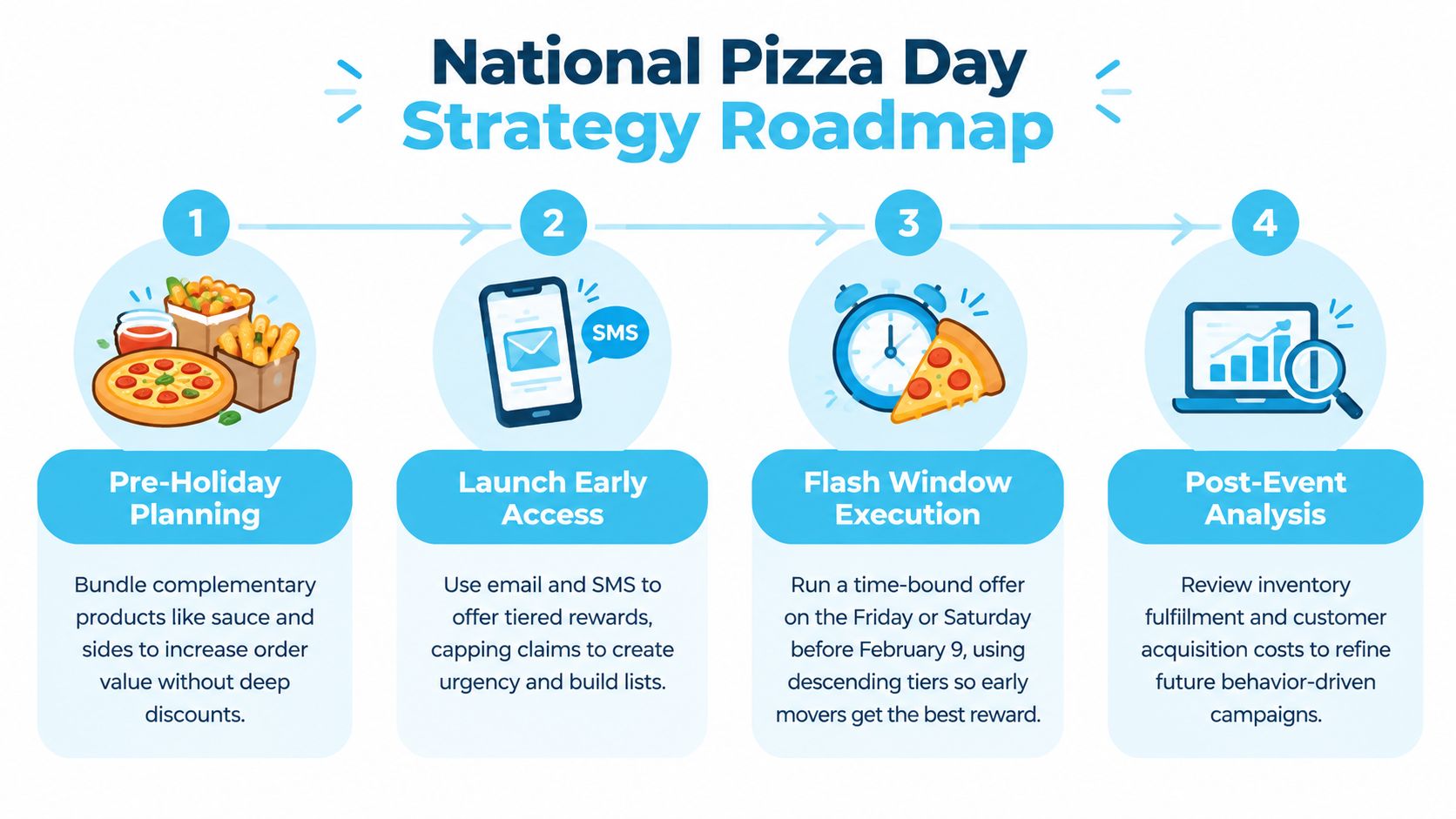
Campaign setup for pizza brands
Launch toward the Friday or Saturday before February 9, when shoppers are thinking about weekend meals. Use email for the reveal, SMS for the flash window, and the storefront for live claim messaging. Stagger the sends so the campaign doesn’t exhaust a limited reward before your highest-intent audience sees it.
- Protect the core SKU: Attach the reward to sauce, cheese, frozen sides, or toppings instead of cutting the pizza price.
- Use descending tiers: Give early buyers the strongest reward, while later customers still receive something useful.
- Raise basket value: Build a pizza-night bundle around complementary products rather than deepening the discount.
- Set the fallback clearly: Tell shoppers what remains after the first tier fills.
Sample copy: “Pizza night starts early. Claim your free topping kit while the first reward tier lasts.”
Creative should show the complete meal, not only the hero pizza. A top-down pizza-night spread, a visible claim counter, and a simple “first tier claimed, next reward active” message make the mechanic understandable without clutter.
Operational risk: Don’t promise a reward your fulfillment team can’t separate, pack, or replenish cleanly during a short window.
For a related loyalty example, see how a top pizza chain scored 20K loyalty program members in one week. The lesson for a Shopify brand is simple. The holiday should create participation around the meal, not train customers to wait for cheaper pizza.
2. National Donut Day First Friday in June
Donut campaigns win when they turn participation into the occasion. Nostalgia, visual appeal, and social sharing give bakeries, doughnut shops, and packaged snack brands plenty to work with, but a flat discount or buy-one-get-one offer can make the holiday feel like a predictable clearance event.
A better mechanic uses claim-based scarcity. An artisanal doughnut brand might cap the offer at 300 claims across a four-hour window. The first 100 customers receive a free specialty flavor, and the next 200 receive a free classic. The reward changes as participation grows, which gives shoppers a reason to act before the best tier disappears.
Turn the donut offer into a social event
Start the conversation on Tuesday or Wednesday with a preview of the flavor or reward. Reserve the live claim window for Friday, then use SMS to reach subscribers when the offer opens. A packaged snack brand can require SMS signup for access to exclusive flavors, turning the holiday into a list-growth campaign instead of a margin sacrifice.
Add a light user-generated content prompt, such as “Post your holiday box and tag us for a chance to be featured.” Keep the purchase reward separate from the social action unless you can moderate and fulfill the experience reliably.
Sample copy: “The first 100 claims get our new strawberry-glazed flavor. Donut Day access opens at noon.”
The creative direction should feel hand-made and celebratory. Use frosting details, box-opening footage, flavor cards, and a clear tier indicator.
A B2B version can position the offer as team morale or corporate gifting. Quantity thresholds help protect economics, since a business buyer is purchasing an occasion rather than chasing a single-item markdown.
Don’t let the promotion run longer than the operational moment can support. Fresh products have a narrow quality window, and a campaign that creates demand after inventory or staffing has peaked can damage trust faster than it creates revenue.
3. National Taco Day October 4
Taco Day can sell more than tacos. Taco kits, seasonings, sauces, fresh ingredients, and serving accessories all fit the occasion, giving DTC brands room to build a meal rather than mark down one SKU. The cultural relevance also raises the bar. Treating October 4 as a generic discount day can weaken the product’s year-round appeal.
A stronger campaign uses earned access and complementary rewards. For example, the first 1,000 taco-kit orders could receive a specialty salsa and hot-sauce sampler. The next 1,000 could receive salsa alone, creating urgency without extending the most expensive reward to every buyer. A fresh-ingredient brand could give subscribers two hours of early access to a limited-edition flavor, then open the offer publicly.
Build the campaign around taco night. Start in early October with recipes, serving ideas, and the featured flavor so customers have time to plan. Hold the clearest urgency mechanic for October 4, using a two-to-four-hour SMS claim window to give subscribers a concrete access benefit. The short window works because it turns browsing into a decision while protecting the rest of the week from promo fatigue.
Bundle seasoning, hot sauce, lime, salsa, and serving accessories around one meal occasion. This can raise order value without reducing the price of every product.
- Lead with flavor: Show the recipe, heat level, or regional inspiration before presenting the reward.
- Reward subscribers first: Give them earlier access rather than automatically offering a deeper discount.
- Choose creators carefully: Work with food bloggers or culturally relevant creators who can explain the food with context.
- Make the rules visible: Display the claim cap, opening time, and fallback reward on the landing page.
Sample copy: “Taco night gets first access. Subscribers can claim the limited salsa sampler before everyone else.”
Use ingredient assembly, recipe steps, and serving moments in the creative, not only a product pack. Restaurant and QSR operators can also apply the psychology of holiday promotions to choose whether speed, loyalty, or group ordering should drive the reward.
4. National Chocolate Day October 28
Chocolate buyers often pay for the moment of giving, not only the product. Presentation, personalization, limited releases, and confidence that the recipient will enjoy the gift can support urgency without making price the headline. Frequent percentage-off promotions can train luxury shoppers to wait, while a service-based reward preserves more of the product’s perceived value.
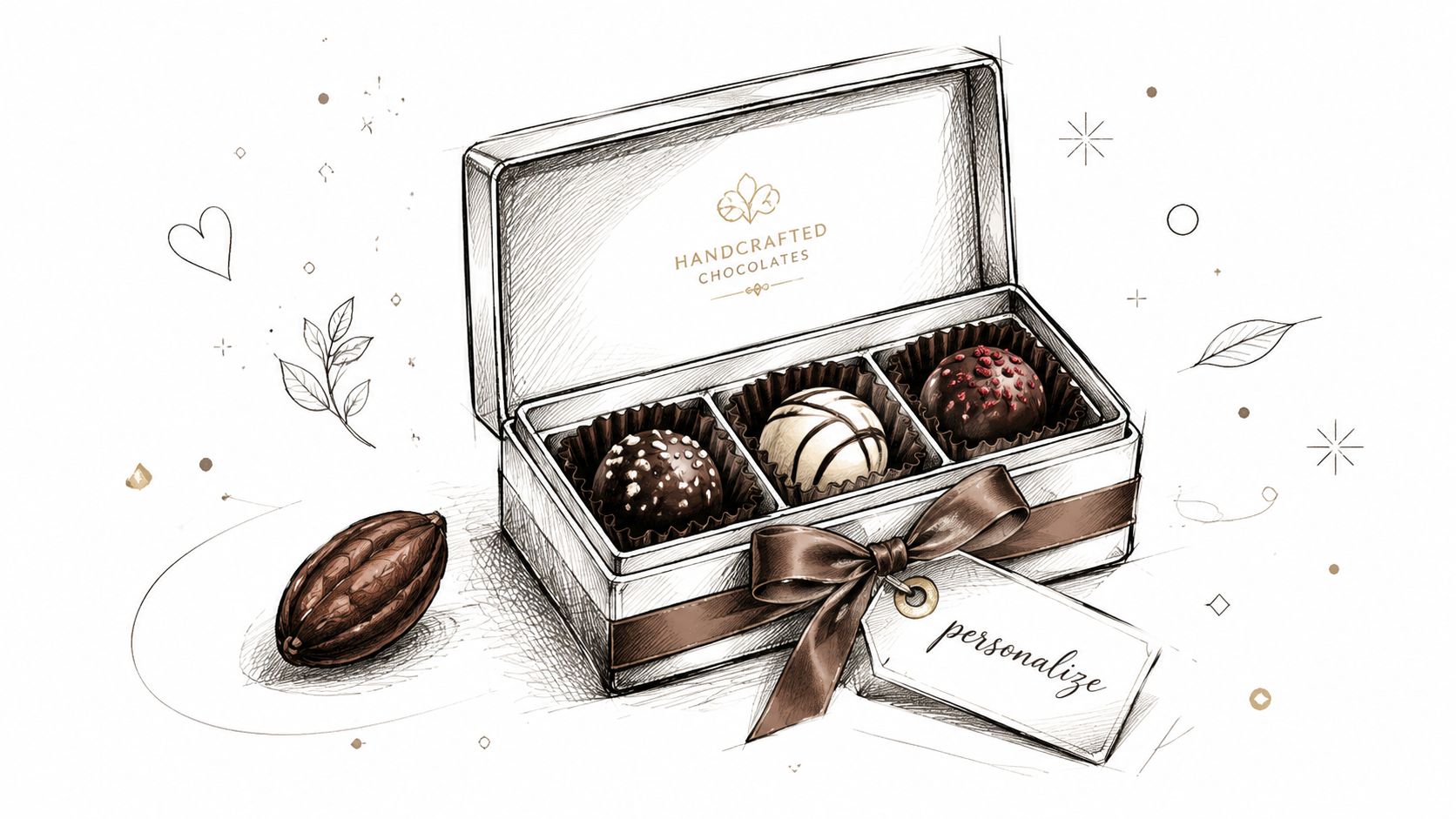
Build the offer around experience scarcity. A luxury chocolate maker could cap 200 claims for free personalization and gift boxing, then switch to gift boxing alone after the first tier fills. A premium confectionery brand could give SMS subscribers early access to a limited flavor or seasonal collection before the general audience sees it.
Make the reward feel like gifting value
Start two weeks before October 28, when corporate and group-gift buyers need time to choose quantities and packaging. Near the holiday, run a shorter flash window for individual shoppers who are ready to decide. Tie corporate bundles to minimum order values or packaging benefits, rather than relying on a deeper unit discount.
Sample copy: “Make the box personal. Complimentary gift wrapping and personalization are reserved for the first holiday claims.”
Show the ribbon, tactile packaging, personalization tag, and close-up product details. This creative helps shoppers picture the handoff and gives the reward a purpose. Keep countdown language restrained so urgency supports the premium tone.
- Protect limited editions: Put the strongest reward on products that can absorb handling and packaging costs.
- Give subscribers first choice: Let loyalty or SMS members shop early without changing the public price.
- Sell the occasion: Frame the campaign around gifting, hosting, and presentation.
- Set a production cutoff: Personalization adds a separate queue and requires a firm fulfillment deadline.
The operational risk sits after checkout. If the team cannot guarantee personalization accuracy and dispatch timing, a free add-on can create avoidable support work and damage trust. Confirm capacity before opening claims, then make the cutoff and fallback reward visible on the landing page.
5. National Chicken Wing Day July 29
Chicken wings are high-velocity and price-sensitive, which makes blanket discounting especially dangerous. Restaurants, frozen-food brands, and meal-kit companies often compete on the same visible lever, the price per wing. That makes it harder to preserve margin and easier for customers to delay a purchase until the next offer.
Use access scarcity around the bundle. A frozen wing brand could cap the campaign at 750 claims, offering a sauce sampler to the first 250 orders and a smaller sauce reward to the next 500. A meal-kit brand could give SMS subscribers 24-hour early access to a wing-night bundle before opening a shorter public window on July 29.
Trade wing price for wing-night value
Inventory planning matters more here than clever copy. A stockout during a high-intent food holiday can turn urgency into frustration, especially when the campaign has already encouraged customers to plan a meal.
Use free sauce, dipping kits, celery, or blue cheese rather than discounting the wings themselves. For B2B buyers, minimum case quantities can create a meaningful basket while preventing customers from over-ordering at a loss.
Sample copy: “Wing night access opens for subscribers tomorrow. The first reward tier includes our full sauce flight.”
Segment the audience by behavior. Repeat buyers can receive early access through SMS, while new customers see a shorter, simpler offer. The reward should be easy to explain in one screen, and the product page should make substitutions and delivery timing clear.
Scarcity is only credible when the customer can understand what is limited, who qualifies, and what happens next.
The creative should show sauce variety and serving context. A box of wings alone communicates commodity value. A complete game-night spread communicates the experience you want customers to buy.
6. National Hamburger Day May 28
Burger shoppers respond to price, but repeated markdowns can weaken full-price demand. Protect the burger’s price position by making the reward improve the meal rather than reduce every item’s cost.
Start with the build customers want. A specialty sauce brand could give the first 500 purchasers a complete burger kit, then offer sauce and toppings to the next 500. A fresh-meat delivery service could give subscribers early access to premium bundles, followed by a standard holiday reward for the wider audience.
Sell the complete burger occasion
A stronger offer reads “The first 300 orders get a premium topping kit,” not “20% off burgers.” The customer gets a clear reason to act, while the core product keeps its regular value.
Build a vertical bundle with the burger, premium topping, specialty sauce, and fries. Customers buy a more useful meal, and the brand gains several margin controls instead of applying one discount across every SKU.
Use a three-to-five-hour flash window on May 28 to capture impulse demand. Begin email education earlier with recipes, grilling guidance, and bundle previews. Early content gives planned shoppers a reason to prepare, while the shorter purchase window prevents the offer from becoming background noise.
- Make the reward visible: Place the topping kit beside the burger in primary creative so shoppers understand the value immediately.
- Step down carefully: Keep the later tier appealing without giving away the highest-cost accessory.
- Use subscriber access: Give the email or SMS list an earlier shopping window in exchange for attention and list growth.
- Watch fulfillment: Fresh meat, buns, and produce may have different shipping and shelf-life constraints.
Sample copy: “Build the better burger. Premium topping kits go to the first holiday orders.”
Check bundle availability before launch. If one component sells out, do not replace it with a lower-value item. Publish the fallback reward in advance, then update the storefront as each tier changes. That clarity keeps scarcity credible and reduces support requests when demand arrives faster than inventory.
7. National Seafood Day October 12
Seafood buyers are paying for confidence as much as the product. Sushi, wild-caught fish, premium shellfish, and chef-led meals all depend on clear provenance, freshness, preparation, and reliable delivery. A broad markdown can weaken those signals and train customers to question the regular price.
Build the campaign around a limited-access premium experience. A sushi delivery brand could give the first 100 orders a specialty roll or pairing experience, then offer a smaller side reward to the next 200. A fish subscription service could let current subscribers shop a limited regional catch before the public offer opens. The reward adds discovery without cutting the price of every item.
Turn provenance into urgency
Use the holiday to make expertise visible. Feature chef selections, regional exclusives, tasting notes, preparation guidance, and pairing suggestions. A restaurant can present a special tasting menu. A subscription brand can give high-value customers the first purchase window, then bring new buyers into a separate, controlled release.
Sample copy: “A limited catch, prepared for the occasion. Subscribers receive first access before the holiday release.”
The urgency must match a real constraint. Seasonal catch volume, a limited menu, or finite kitchen capacity gives shoppers a credible reason to decide promptly. A decorative countdown without a genuine inventory or service limit can reduce trust.
Launch with a short early-access window for loyal customers, followed by public availability while the catch or preparation capacity remains. Email should explain sourcing and serving details. SMS can announce the access moment. Creative for Quikly can show the chef preparing the item, the regional source, and the reward tier in one frame.
- Protect the promise: Confirm supply before naming a catch or fixed quantity.
- Show the experience: Use preparation video, tasting notes, and pairing guidance.
- Set delivery boundaries: State order cutoffs, service areas, and freshness expectations.
- Prepare the fallback: If availability changes, describe the substitute experience before checkout rather than hiding the change.
Supply volatility is the main operational risk. Keep the offer specific enough to feel valuable, but flexible enough for sourcing changes. That balance protects margin, credibility, and customer support capacity.
8. National Coffee Day September 29
Coffee is habitual, which makes discount conditioning expensive over time. A customer who buys repeatedly may represent strong lifetime value, but a holiday markdown can teach that customer to postpone a subscription, refill, or equipment purchase. The campaign should reward the next commitment rather than make the regular product cheaper.
Use access scarcity and accessory rewards. A roaster could cap the offer at 300 claims, giving the first 100 an equipment bundle and the next 200 free shipping. A coffee subscription brand could give current subscribers 24-hour early access to a limited seasonal roast before opening the offer to everyone else.
Turn a coffee holiday into a retention event
Equipment and accessories work well because they add utility without forcing a lower price on the coffee itself. A new subscription can receive the strongest reward, while one-time buyers receive a smaller benefit that doesn’t undermine the recurring offer.
Use a narrow three-to-six-hour flash window on September 29 for existing customers. Email can explain the roast, brew method, and origin story. SMS can deliver the access moment. The storefront should show what remains without making the page feel like a clearance board.
Sample copy: “Your next brew starts here. Subscribers get first access to the limited seasonal roast.”
A coffee campaign also needs preference-based merchandising. Send espresso buyers espresso-friendly products, filter customers filter recommendations, and equipment shoppers a useful accessory. Generic holiday creative wastes the behavioral signal you already have in Shopify and Klaviyo.
For broader planning, keep the promotional calendar connected to subscription renewals, product drops, and replenishment cycles.
The operational risk is overselling a limited roast before production and fulfillment are ready. Confirm roast dates, inventory visibility, and subscription compatibility before setting the claim cap.
9. National Pasta Day October 17
Pasta Day works best as a merchandising test, not a race to the lowest price. The category is familiar and comparison-heavy, so specialty brands need to make shape, texture, sauce pairing, and the finished meal matter at the point of purchase.
Start with the dish customers want to cook. A specialty pasta brand can run a 48-hour campaign capped at 500 claims. The first 200 orders receive a premium sauce and cheese bundle, while the next 300 receive sauce. This tiered reward protects margin after the premium allocation fills and gives late shoppers a clear reason to act. A fresh pasta company can give subscribers 24-hour early access to limited seasonal shapes, then open the remaining offer publicly.
Make the pairing do the selling
A complete meal increases basket size because the customer no longer has to solve the sauce and serving decision separately. Pair pasta with sauce, cheese, herbs, and a recipe card, keeping the core pasta price intact. Limited shapes or seasonal flavors provide genuine scarcity, so the urgency comes from the product rather than a decorative countdown.
Segment email by buying preference. Customers who repeatedly purchase a particular sauce should see a pasta pairing built around it. Fresh pasta buyers may need preparation instructions and serving ideas, especially when the product has a shorter usable window.
Build the campaign around four practical choices:
- Create a tasting bundle: Pair several shapes with complementary sauces.
- Set a claim cap: Limit the highest-value tier and state the fallback reward clearly.
- Reward subscribers first: Use early access to support retention and list growth.
- Keep the recipe central: Show how the bundle becomes dinner.
Sample copy: “Choose your shape, match your sauce, and claim the first tasting-tier reward while it lasts.”
Creative should connect the dry shapes to the cooked dish and explain why each pairing works. Confirm production capacity, cold-chain or shipping timing, inventory visibility, and delivery promises before launch. Freshness is the operational constraint, and a successful campaign can create disappointed customers if fulfillment cannot match the urgency.
10. National Chili Day February 22
Chili creates a group occasion. Customers may be buying for family meals, game-day gatherings, meal prep, or winter entertaining, which gives spice brands, chili kits, fresh-ingredient sellers, and specialty meat companies room to build larger baskets.
A spice brand could cap a 36-hour offer at 400 claims, giving the first 150 a premium chili-blend kit with a recipe card and the next 250 the blend alone. A fresh-ingredient delivery service could give subscribers 24-hour early access to a curated chili-night bundle before opening the standard offer.
Make the bundle specific
Avoid one generic chili kit if your audience has clear preferences. Build distinct themes such as Texas red, Cincinnati three-way, and vegetarian chili. The goal is to increase relevance and order value, not to force every shopper into the same flavor profile.
Support the promotion with a recipe or entertaining guide. Content gives the premium bundle a reason to exist, while the limited reward gives the customer a reason to decide now. For restaurants and caterers, minimum bulk orders can support seasonal menu adoption without requiring deep discounting.
Sample copy: “Chili night has three directions. Choose your style and claim the premium blend tier before it fills.”
Use email for recipe education and SMS for the final access window. Show the reward beside the finished bowl, not only beside the spice jar. The operational risk is inventory fragmentation. Several themed bundles can create pick-and-pack complexity, so limit the number of variants your team can fulfill accurately.
10 National Food Holidays Comparison
| Item | Implementation complexity | Resource requirements | Expected outcomes | Ideal use cases | Key advantages |
|---|---|---|---|---|---|
| National Pizza Day (Feb 9) | Medium, tiered time windows and caps | Inventory for spikes, email/SMS, fulfillment | Short-term volume spike, higher AOV, list growth | Frozen pizza, pizza kits, specialty toppings | Urgency-driven buys; bundle-friendly; exclusive feel |
| National Donut Day (First Fri in June) | Medium, flash windows + social mechanics | Fresh inventory, social media, in-store staff | Rapid footfall/online orders, shareable moments | Bakeries, packaged snacks, limited editions | Scarcity prevents race-to-zero discounts; social reach |
| National Taco Day (Oct 4) | Medium–High, heavy promotion and partnerships | Inventory, influencer spend, email/SMS, fulfillment | Predictable sales lift, higher bundle AOV | Meal kits, seasoning brands, QSRs | Broad appeal; strong UGC potential; bundle upsells |
| National Chocolate Day (Oct 28) | Medium, personalization and gifting logistics | Gift packaging, fulfillment, longer lead times | Protected margins, gift sales, higher ASPs | Premium chocolatiers, gifting, subscriptions | Reinforces premium positioning; non-price rewards |
| National Chicken Wing Day (July 29) | High, volume management and supplier planning | Large inventory, supplier contracts, staffing | Massive volume spike, repeat purchase potential | Restaurants, frozen wings, meal kits | Counters price race; drives list growth via participation |
| National Hamburger Day (May 28) | Medium, tiered rewards and flash windows | Fresh ingredients, fulfillment, promo channels | Volume lift, AOV increase via bundles | QSRs, specialty burger brands, meat suppliers | Protects margin with experience-led offers |
| National Seafood Day (Oct 12) | High, quality control and limited editions | Premium inventory, sourcing, targeted marketing | Higher-margin sales, loyalty among quality buyers | Sushi, subscription seafood, fine dining | Preserves premium perception; experience-first rewards |
| National Coffee Day (Sept 29) | Medium, subscription and tiered mechanics | Inventory, equipment rewards, email/SMS | Subscription growth, LTV lift, limited-edition interest | Roasters, subscriptions, equipment sellers | Drives long-term value; trade discounts for accessories |
| National Pasta Day (Oct 17) | Medium, bundling and tiered offers | Large inventory, sauce/cheese partners, fulfillment | Volume spike with protected SKU margins | Pasta brands, sauce makers, meal kits | Bundles increase AOV; avoids blanket percent-offs |
| National Chili Day (Feb 22) | Medium, themed bundles and recipe content | Ingredient stock, recipe assets, email/SMS | Group/order-size growth, increased AOV | Spice brands, chili kits, meal services | Themed bundles drive specificity and higher spend |
Build the Calendar Around Better Decisions
A national food holiday calendar is useful only when it improves decisions. The date itself doesn’t create demand, and a discount doesn’t automatically convert demand profitably. Brands need to decide what behavior they want, which customers should receive the first opportunity, and what the business can fulfill without damaging margin or trust.
That distinction matters because food holidays have never been one standardized institution. National Raisin Day began in 1909 when California raisin growers publicized it in newspapers and encouraged restaurants to serve raisins, while National Walnut Day became official on May 17, 1958, through President Dwight Eisenhower, and National Catfish Day became official on June 25, 1987, through President Ronald Reagan. Other observances came from associations, nonprofit efforts, or marketing departments. National Pie Day was created by the American Pie Council in 1986, while National Donut Day traces to a Salvation Army effort during World War I. This history of food holidays helps explain why some dates feel culturally meaningful and others feel like content clutter.
The practical test is consumer behavior. Thanksgiving shows what happens when a food occasion becomes culturally embedded. It was first declared by George Washington in 1789, and Congress fixed it as the fourth Thursday in November in 1941. In 2012, around 254 million turkeys were raised in the United States, about 46 million were served on Thanksgiving tables, and the occasion represented roughly 736 million pounds of turkey meat. One industry estimate said 77% of all turkeys were sold in November. National Geographic’s Thanksgiving history illustrates the difference between a symbolic date and a genuine demand signal.
Match the mechanic to the economics
Commodity products need a different offer from premium products. Pasta, pizza, burgers, and wings often benefit from bundles, sauces, toppings, accessories, and recipes that increase the perceived value of the basket without cutting the hero SKU. Chocolate and seafood are better suited to early access, limited editions, personalization, premium packaging, and chef-led experiences. Coffee can use accessories and subscription rewards because the goal is to protect recurring value, not cheapen the daily habit.
Subscriber-first windows are especially useful when list growth or retention is part of the objective. A customer who joins SMS for access has made a commitment that can support future communication, but the reward must be clear and the consent experience must be handled properly. Klaviyo email and SMS can carry the announcement, reminder, and final-window messages, while the Shopify storefront carries the live offer state.
Use real urgency, not decorative pressure
Scarcity affects how people value an offer. A meta-analysis of product scarcity effects found that scarcity tactics raise purchase intentions, with the strongest evidence for supply-based scarcity rather than purely time-based scarcity. Research on perceived scarcity also describes urgency to buy and possible hoarding or hiding behavior, while research on quantity scarcity and time restrictions connects these cues with pressure, urgency, deal evaluation, and buying behavior. The meta-analysis on product scarcity effects supports a useful operating rule: a claim cap and a countdown are not interchangeable.
Use a quantity cap when the reward is limited. Use a time cap when staffing, delivery, production, or a campaign window creates the limit. Use both only when both are real. A timer that resets or runs after the reward has sold out teaches shoppers to distrust future campaigns.
Repeated discounting creates a second problem. A 2025 industry analysis describes promotion fatigue caused by aggressive discounting and repetitive deals, with diminishing incremental gains, margin erosion, and customers trained to wait for the next offer. Deep discounts and multi-buy offers can create a brief volume spike while weakening baseline sales. The analysis of promotion fatigue and discount dependence is a useful warning for any Shopify operator building a holiday calendar.
Follow a controlled launch sequence
Before you publish the campaign, complete the operational work in order.
- Forecast inventory: Confirm the hero product, reward inventory, packaging, and shipping capacity.
- Set a defensible cap: Choose a claim limit or time window that reflects what your team can fulfill.
- Define the fallback reward: Decide what customers receive after the first tier fills, and write it before launch.
- Prepare Shopify infrastructure: Test product eligibility, discount logic, cart behavior, subscription compatibility, and theme presentation.
- Coordinate Klaviyo: Build the email and SMS announcement, reminder, claim update, and final-window messages.
- State the rules plainly: Explain who qualifies, when the offer opens, how rewards change, and when the campaign ends.
- Review the full result: Evaluate conversion, average order value, margin, repeat behavior, and email or SMS list growth together.
The National Retail Federation’s benchmark for U.S. Independence Day in 2026 shows why short-duration food occasions deserve serious planning. It reported that 87% of consumers planned to celebrate, average food spending reached a record $94.41 per person, and total food outlays were about $9.4 billion. The reported NRF Independence Day figures provide context for the scale a high-intent occasion can reach, but they aren’t a reason for every brand to copy the same promotion.
Holiday shoppers remain value-sensitive and operationally cautious. FMI reported that 39% of holiday shoppers were extremely or very concerned about out-of-stocks for key ingredients, rising to 44% among families with children. The FMI holiday grocery findings reinforce the need to localize offers for ingredient availability, price pressure, and market context. A promotion that works in one country may feel irrelevant or overpriced in another, especially when calendars remain heavily U.S.-centric.
Promotional mechanics also influence channel behavior. Kantar reported that promotions and deals represented 33.3% of sales during Britain’s four-week Christmas grocery period ending December 28, 2025, up from 32% the prior year and the highest share since December 2019, while discounters captured a record 16.8% share. The holiday promotion analysis points to a clear implication for operators. Deal mechanics matter, but the answer isn’t always a deeper discount. The offer needs to fit the channel, category, and shopper’s reason for buying.
Quikly can turn an existing holiday promotion into an on-brand, participation-based experience across the storefront, email, social, and SMS. Rewards can be capped by quantity, time, or both, and descending tiers can give early shoppers the strongest benefit without requiring a blanket markdown. The approach has been refined across more than 60 million consumer interactions, and Jordan Craig reported roughly a 20% lift in profit with incremental lift visible immediately on activation. Those outcomes don’t replace sound merchandising or inventory planning, but they show how a controlled reward can address conversion and margin together.
A strong calendar doesn’t ask, “Which food holiday can we discount?” It asks, “What decision should this occasion help the customer make, and what limit makes that decision credible?” Choose the mechanic according to category economics, make the reward useful, and let urgency reflect a real constraint. That protects the sale you’re trying to win without weakening the full-price demand you need after the holiday.
For more planning inspiration, these seasonal campaign ideas for startups can help you turn isolated dates into a broader promotional rhythm.
Quikly helps Shopify brands turn national food holidays into quantity-bound and time-bound promotional experiences instead of predictable markdowns. Use it to coordinate on-brand rewards across your storefront, email, social, and SMS, then visit Quikly to plan a campaign that gives customers a clear reason to act now.
Topics: national food holiday, food holiday marketing, DTC food marketing, Shopify promotions, urgency marketing