Most ecommerce email advice still pushes the same playbook. Send more campaigns, stack on bigger discounts, and call it lifecycle marketing. That can lift revenue in the short run, but it also teaches shoppers to wait, trims margin, and weakens the brand people are supposed to trust.
That tension is why ecommerce email marketing deserves a more disciplined approach in 2026. Email is still a serious channel, with 4.59 billion global users projected in 2025 and 376 billion business and consumer emails estimated per day in the same year, according to Dash’s roundup of email statistics. In retail and ecommerce, 78.76% of marketers use email, 71.56% say it’s their most effective channel, and the average conversion rate sits at 2.68% (Dash email marketing statistics). The channel works. The problem is how often brands use it in a way that trains customers to wait for markdowns instead of acting on intent.
Why Most Ecommerce Email Marketing Underperforms
The average Shopify brand doesn’t fail at email because email is weak. It fails because the program is built around batch sends and flat offers, not shopper behavior. That’s a big difference, and it shows up in margin pressure long before it shows up in dashboards.
The real issue is discount dependence
A blanket promotion is easy to launch, easy to understand, and easy to overuse. The first few sends may look good because people respond to the offer, not because the brand built durable demand. Over time, shoppers learn the pattern, open less urgently, and hold back until the next code lands in their inbox.
That’s why the default advice falls apart. It treats conversions as an automatic win, when the core question is whether those conversions were earned at a healthy margin and without training bad buying behavior. If the only lever is deeper discounting, the brand is paying more to get the same outcome.
Practical rule: if an email program only performs when a code is attached, the program is teaching customers to pause, not to buy.
Automation changed the game for a reason
The strongest ecommerce programs stopped sending generic newsletters as the primary revenue driver and moved toward triggered flows. Omnisend’s 2025 data shows automated emails generated $3.41 per email sent, compared with $0.155 for campaign emails, and automated ecommerce emails converted at 1.49% versus 0.08% for batch campaigns (Omnisend benchmark data). That gap explains why the smart question isn’t how to send more. It’s how to send with better timing, stronger relevance, and less margin leakage.
The same shift shows up in broader targeting data. Targeted emails had open rates 36.69% higher and click-through rates 267.21% higher than non-targeted campaigns in the same Omnisend dataset (Omnisend benchmark data). Brands aren’t winning because they’re louder. They’re winning because the message fits the moment.
The Metrics That Define Email Performance
A lot of teams still judge email by opens alone, then wonder why the revenue doesn’t match the dashboard. Opens matter, but they only show that the subject line and sender name earned attention. They do not show whether the message moved someone closer to a purchase.
Benchmarks worth tracking
For ecommerce, Mailchimp’s benchmark table shows an average 29.81% open rate, 1.74% click rate, and 0.19% unsubscribe rate (Mailchimp ecommerce benchmarks). The gap between opens and clicks is the part worth paying attention to. It shows how much attention never turns into action, which means the message has to do more than get opened.
MailerLite’s broader benchmark data shows the same pattern, with an average 43.46% open rate, 6.81% click-to-open rate, 2.09% click rate, and 0.22% unsubscribe rate (MailerLite benchmarks). The practical takeaway is simple. Clicks are a small slice of opens, so subject lines and offer framing matter more than many teams want to admit.
The comparison is how different email types behave once they hit the inbox. Omnisend’s 2025 benchmark data shows automated emails generated $3.41 per email sent, while campaign emails generated $0.155. It also shows automated ecommerce emails converted at 1.49% versus 0.08% for batch campaigns (Omnisend benchmark data). If you want to raise conversion without pushing harder on discounting, that is the metric gap that matters.
For a practical companion on the onsite side of the same problem, drive revenue with better conversions is worth a look. Email performance and conversion rate work are connected, even if they show up in different reports.
Benchmarks that matter in practice
A healthy program does more than post a decent open rate. It earns clicks, recovers revenue, and keeps unsubscribes low enough that the list stays usable. If opens are high and clicks stay flat, the issue is usually relevance density, too many ideas, too many links, or an offer that feels generic instead of timely.
That is why urgency and scarcity need to be used carefully. A coupon can create a spike in activity, but it can also teach shoppers to wait for the next code. The better move is to build urgency around real limits, like inventory, time-bound access, or a clear reason to act now, while keeping the offer strong enough to convert without training people to stall.
A useful test is simple. If a message only performs when the discount gets deeper, the program is rewarding hesitation. If it still converts with a lighter incentive or a well-timed reminder, the email is doing the job without eroding margin.
Email performance gets misread when teams celebrate attention without checking action. The inbox is not the win, the purchase is.
Essential Automated Flows Every Shopify Brand Needs
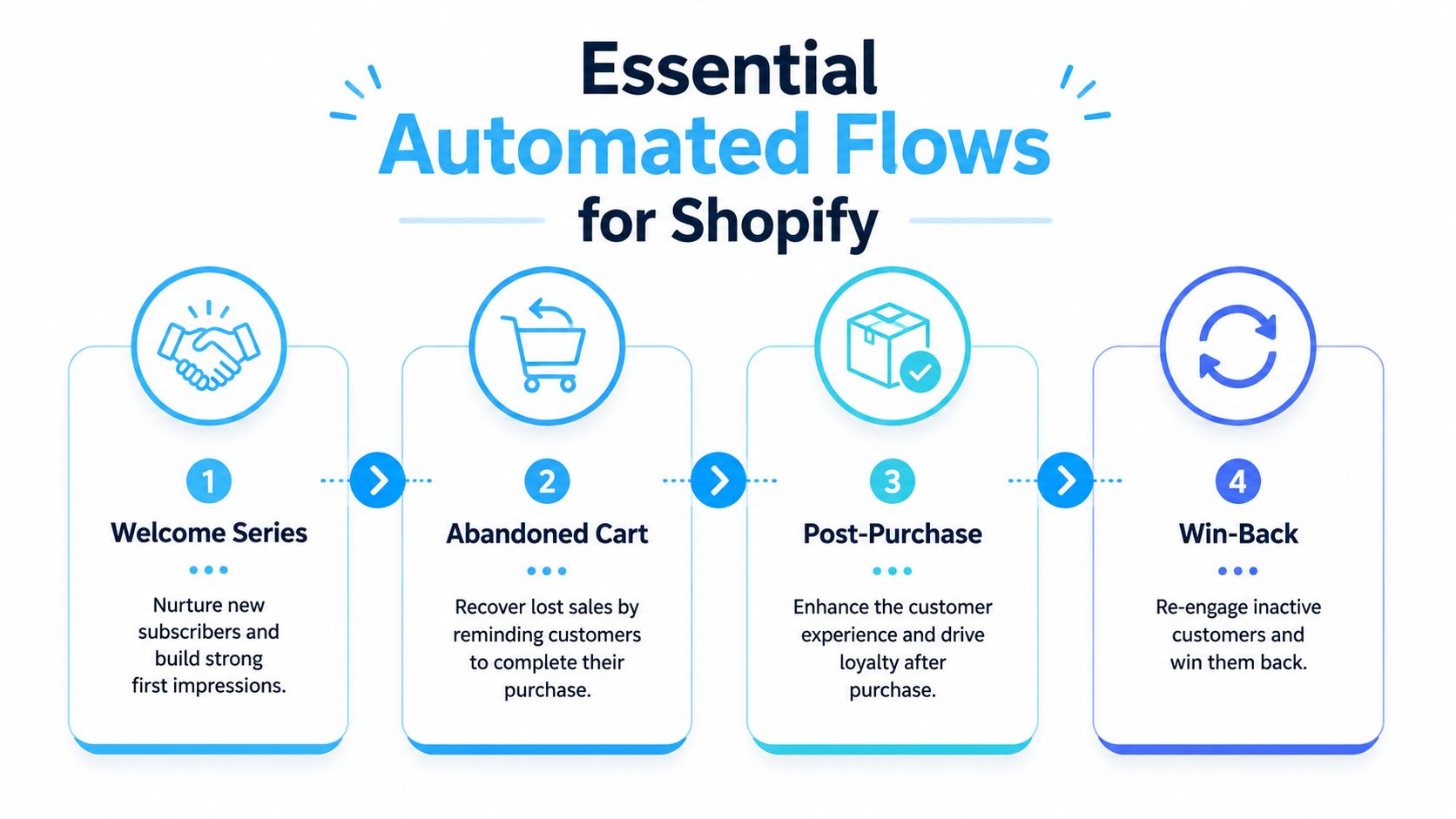
The highest-return email programs are built around a few flows that respond to real shopper behavior. These are the sequences that work because they meet the customer at a moment with context, not because they shout louder than every other brand in the inbox.
The core flows and why they work
Welcome series. This flow is about converting intent while it’s fresh. Someone has just raised their hand, so the message should introduce the brand, set expectations, and only then make the ask. If you lead with a discount too fast, you can train the subscriber to ignore everything until the coupon appears.
Abandoned cart. This is the most obvious recovery flow, and for good reason. It catches shoppers after they’ve shown purchase intent but before they’ve finished the job. A reminder often does the work that a bigger discount doesn’t need to do, which protects margin and keeps the offer from becoming the only reason people buy. A detailed example of that approach is in this abandoned cart email example.
Post-purchase. A lot of brands leave money and loyalty on the table here. The customer has already bought, so the job shifts from persuading to supporting. That means order confidence, product use, review prompts, and thoughtful cross-sell timing.
Win-back. Lapsed buyers are different from new prospects because they already know the brand. The message has to restart relevance, not just push an incentive. If the relationship has gone quiet, the flow should feel like a clean re-entry rather than a desperate discount blast.
Common mistakes that drag these flows down
- Too many welcome emails: A long welcome series can become inbox clutter if every message says roughly the same thing.
- Discounting too early in cart recovery: Some shoppers needed a reminder, not a coupon.
- Selling too hard after purchase: Post-purchase emails that act like promos can feel premature.
- Ignoring suppression logic: A shopper shouldn’t get multiple high-priority flows at once.
For teams using Shopify and Klaviyo, these flows are where the operational payoff starts, because they run continuously and don’t require a weekly campaign to generate revenue. A practical set of reusable flow structures is also why many marketers keep a library of tested sequences instead of reinventing each send.
Segmentation and Personalization Beyond the Basics
Basic segmentation gets you part of the way there, but not far enough. Demographics and broad purchase history can help, yet they rarely explain why someone is ready to buy now, why they’re hesitating, or why they stopped paying attention in the first place.
Segment by behavior, not just by identity
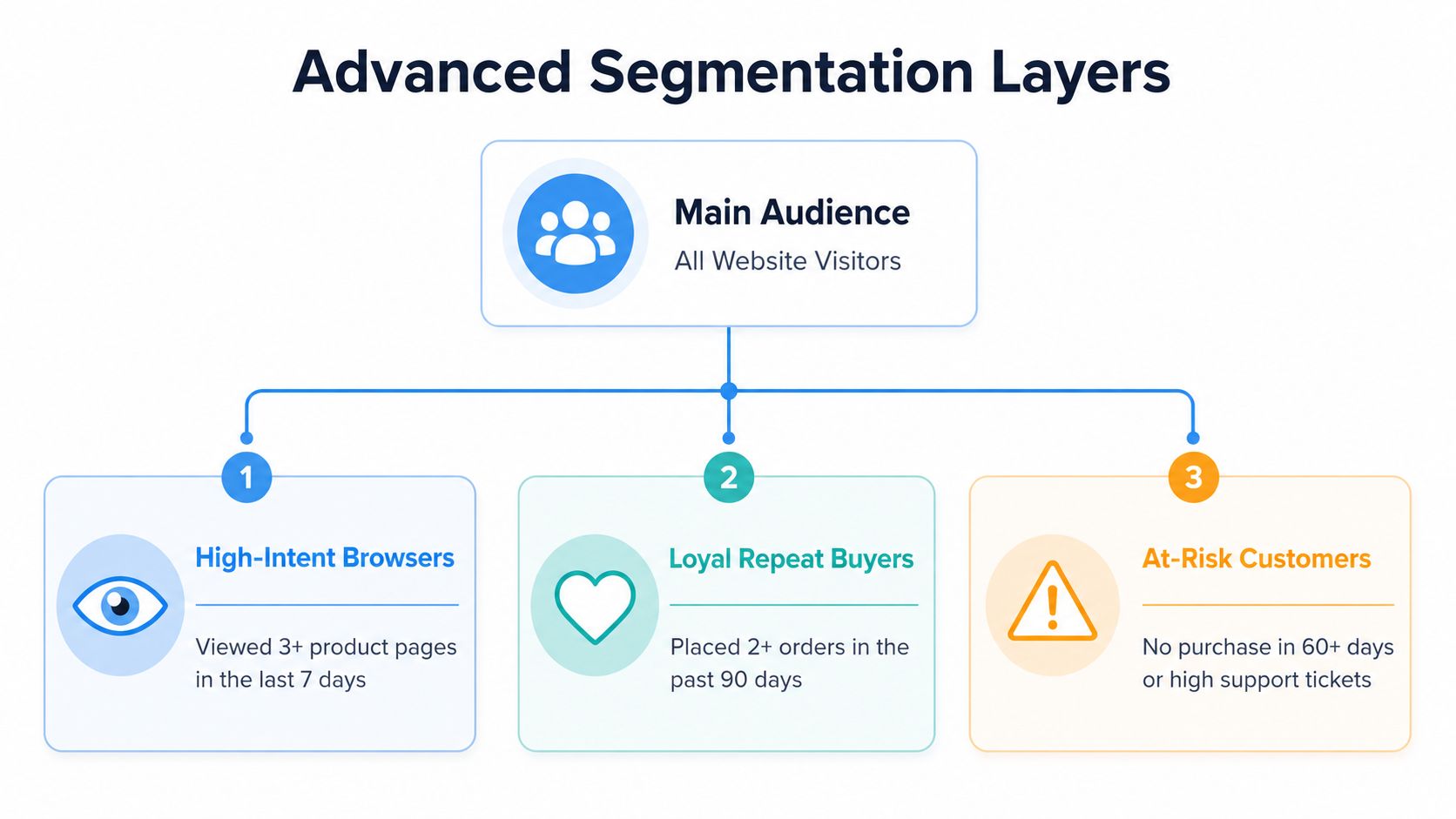
The most useful segments are the ones tied to shopping intent. Browsers who’ve viewed multiple product pages without converting need different messaging than repeat buyers who already trust the brand. Customers who buy but never open email are a separate problem again, because the issue might be content fatigue, timing, or channel preference rather than product interest.
Email Marketing has called out how often valuable groups such as browsers who haven’t converted and customers who buy but ignore email get overlooked in standard models (Holistic Email Marketing via Klaviyo’s angle guide). That matters because behavior reveals readiness more clearly than a profile field ever will.
Personalization should change the message, not just the greeting
Putting a first name in the subject line isn’t personalization. It’s decoration. Real personalization means changing the product references, the send timing, and the offer logic based on what the customer did, where they are in the journey, and how they’ve engaged before.
A few practical ways to do that:
- Browse-driven content: Show the product or category the shopper viewed.
- Lifecycle-aware messaging: Don’t send the same creative to a first-time buyer and a three-time repeat buyer.
- Engagement-aware timing: Send when that contact tends to open, not when the calendar says it’s convenient for your team.
- Value-based prioritization: High-value customers should get different treatment than dormant subscribers.
One overlooked trade-off
More segmentation can improve relevance, but only if the team can maintain it cleanly. Too many tiny segments create brittle campaigns that nobody wants to manage. The point isn’t to build the most complicated system possible, it’s to build the smallest useful set of segments that map to real buying behavior.
That’s also where Shopify brands start to see the benefit of a behavior-first stack, because the data already exists in the store, the email platform, and the purchase history. The work is deciding which signals are predictive, then acting on them with restraint.
Using Urgency and Scarcity Without Eroding Margins
Urgency works in ecommerce because people don’t decide in a vacuum. They respond to loss aversion, scarcity bias, and temporal discounting, which all describe the basic tendency to act faster when an option feels limited, fading, or at risk of disappearing. Used well, those principles can move a shopper now without forcing the brand into a permanent discount spiral.
What urgency should and shouldn’t do
Urgency should help the right shopper decide faster. It shouldn’t pretend that every product is always in danger of disappearing, because manufactured pressure gets old quickly. Buyers are smart enough to tell the difference between real constraint and recycled countdown copy.
That’s why blanket discount codes are such a blunt instrument. They reward waiting as much as action, and they blur the line between a genuine opportunity and another routine sale. Over time, the brand’s pricing becomes part of the problem.
Better ways to create action
You don’t need to push the deepest possible code to get movement. Time-bound access windows, limited-quantity drops, and staged offer tiers can create a real decision point without making the brand look like it’s in permanent clearance mode. Early access for loyal customers is especially useful because it gives the best buyers a reason to act promptly without teaching everyone else to wait.
Behavior-driven promotions are the cleanest version of this idea. They reward action instead of passivity, and they make the incentive feel earned rather than automatic. That difference matters for both margin and brand perception, because the customer experiences the offer as participation, not as a routine markdown.
Practical rule: urgency works best when the customer feels the clock or the inventory, not when the brand just repeats the same timer everywhere.
Quikly fits here as one option for Shopify brands that want urgency and scarcity built into promotions rather than layered on top as a fake deadline. It supports email-based campaign mechanics and lets the reward be tied to how many shoppers claim it or how long it stays open, so the message rewards action without defaulting to a flat discount. The urgency psychology guide goes deeper on the behavioral logic behind that approach.
Subject Line Templates and Creative Examples That Convert
Subject lines carry more weight in ecommerce than many teams want to admit. If the subject is vague, the email never gets a chance. If it sounds like every other promo in the inbox, it gets ignored before the offer can do any work.
Templates that map to shopper intent
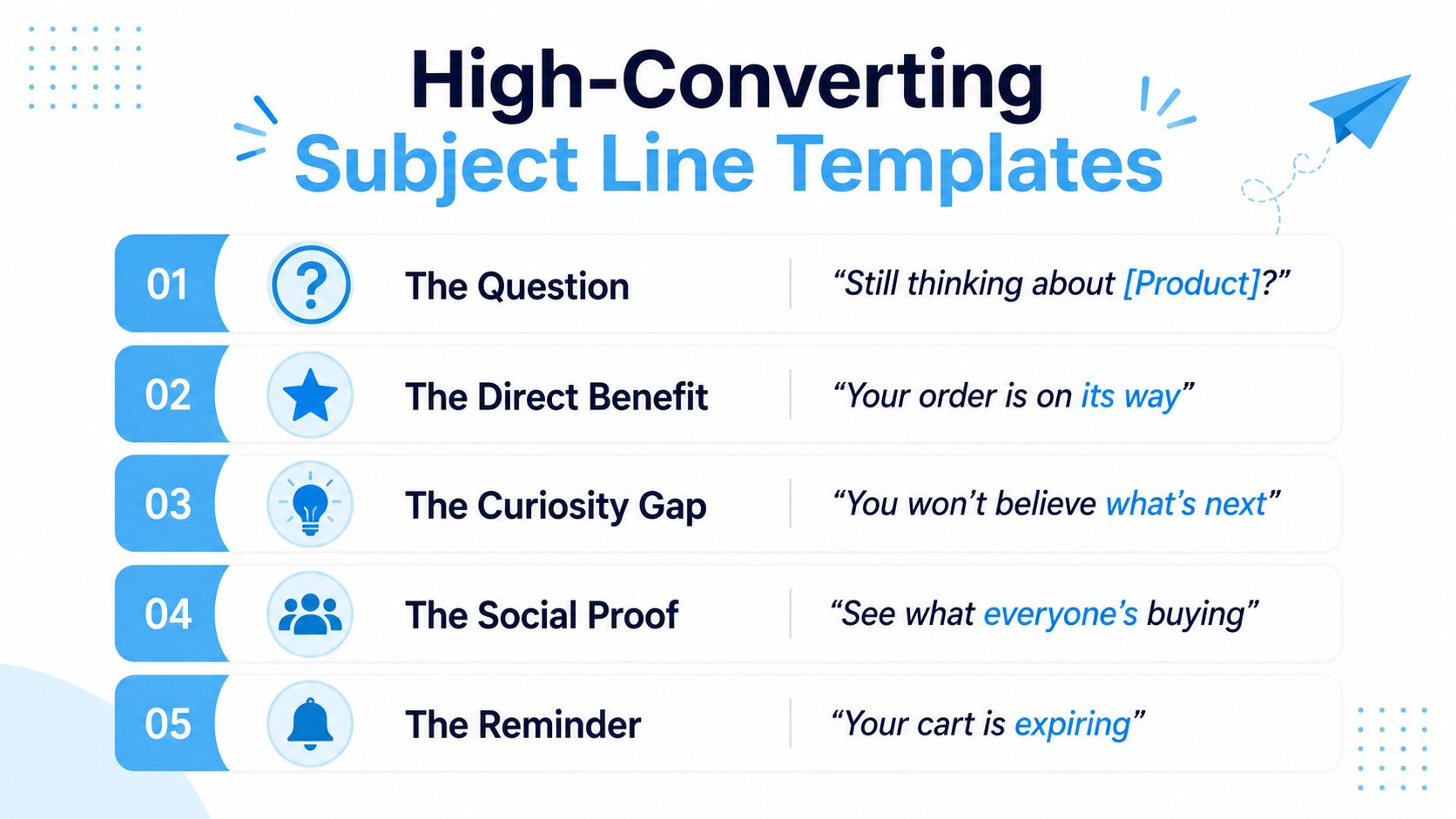
Welcome emails. Subject lines should signal orientation, not pressure. A direct line that explains what happens next usually beats cleverness because the subscriber is still deciding whether the brand is worth attention.
Abandoned cart reminders. These work best when they sound like a real reminder, not a guilt trip. The shopper already showed interest, so the copy only has to help them finish.
Promotional sends. If the campaign is offer-driven, make the value obvious. Ambiguity hurts here because the customer is scanning for relevance in a crowded inbox.
Urgency-driven offers. Use language that reflects a real deadline or limited access point. If the offer is time-bound, the subject line should make that obvious without overselling the pressure.
A few simple examples, adapted to common ecommerce moments:
- Welcome: “Welcome, your first picks are inside”
- Cart reminder: “You left this behind”
- Promotion: “New arrivals worth a look”
- Urgency: “Your early access ends soon”
For more swipeable ideas, the catchy email subject lines resource is useful because it keeps the emphasis on clarity, not gimmicks.
Creative that converts without a big design team
Text-first emails often outperform over-designed templates when the message needs to feel personal and fast. A single-focus layout also helps because it reduces decision fatigue. If the reader doesn’t need to scroll through three competing offers, they’re more likely to click the one thing that matters.
Preview text matters too. It should extend the subject line, not repeat it. Good preview text adds the missing detail, the reason to act, the product angle, or the time sensitivity that the subject line left out.
Measuring Email Performance Without Misreading the Data
Email looks stronger or weaker depending on where you measure it. If you judge it only by last-click revenue, you can undercount its contribution to consideration. If you judge it only by opens and clicks, you can overstate its value and miss where the program leaks.
Attribution changes the answer
CMSWire points out that brands often misread email when other channels are sharing the same shopper journey, and that the core fix is unified measurement tied to customer lifetime value rather than isolated channel metrics (CMSWire on email underperformance). That’s the right framing because a shopper may see an email, then click from SMS, then convert after a paid reminder. Credit gets messy fast.
The mistake is treating each channel as if it worked alone. In practice, email often primes the customer, SMS accelerates them, and paid media picks up the final reminder. If you only inspect the last touch, email can look weaker than it really is.
What to measure instead
A better read on performance uses holdout groups, downstream revenue, and customer lifetime value. The goal is to understand incremental value, not just attributed value. That distinction matters most in brands with strong SMS, paid social, or retargeting programs, because those channels can cannibalize or amplify one another.
The healthiest teams pay attention to:
- Incremental lift: whether the email changed behavior versus a control group
- Lifecycle impact: whether the message improved repeat purchase or retention
- List health: whether the audience is engaged
- Conversion quality: whether the revenue came from customers who would’ve bought anyway
That’s the lens that keeps brands from over-crediting email for sales it merely touched, or under-crediting it for decisions it helped move forward. It also stops a lot of bad optimization, where the team chases opens while the problem sits in offer design or channel overlap.
Building an Email Program That Compounds Over Time
The brands with the strongest email programs don’t act like every send has to rescue the month. They build systems that keep getting better because the emails match behavior, the list stays cleaner, and the offer logic doesn’t depend on deeper discounts every week. That’s a different operating model, and it takes more restraint than most promo calendars allow.
There’s also a practical production issue. Shopify teams don’t always have time to write, design, and QA every high-quality campaign from scratch. Shopify notes that 62% of email marketing professionals need at least two weeks to create a marketing email, which makes fast, behavior-driven campaign mechanics operationally valuable (Shopify email marketing statistics). The slower the team is to build a send, the more useful automation becomes.
A compounding program usually looks like this in practice. It starts with behavior-based flows, adds segmentation where intent is obvious, and uses urgency only where the offer is limited. It doesn’t depend on constant markdowns to stay alive, and it doesn’t confuse activity with progress.
What changes over time is the quality of the audience and the quality of the asks. The list gets tighter. The messages get sharper. The promotions feel less like a pressure campaign and more like an event people want to act on.
If your current email program is stuck between margin loss and mediocre conversion, Quikly gives Shopify brands a way to build urgency and scarcity into promotions without relying on deeper discounts. Visit Quikly to see how behavior-driven promotional campaigns can fit into your email and SMS strategy without turning every send into another markdown.
Topics: ecommerce email marketing, email automation, Shopify email, email segmentation, promotional email