A shopper lands on your Shopify store, likes a product, and hesitates. Then something changes. They start a trial, claim an offer, place the item in a cart that’s held for them, or customize it to fit their needs. The product now feels less like an option on a page and more like something that belongs to them. Walking away becomes harder.
That shift is the endowment effect, and it matters at a time when ecommerce brands are under pressure from three directions. Margins are shrinking as promotions deepen, conversion remains insufficient despite rising acquisition costs, and constant discounting can train customers to wait for the next sale. A standard discount says, “Buy whenever.” A well-designed ownership cue gives shoppers a reason to decide now without automatically paying everyone to wait.
The useful question isn’t whether ownership makes every product more valuable. It doesn’t. The better question is when ownership changes behavior, what creates that change, and how can a Shopify brand use it without damaging margin or trust? This guide moves from the basic definition to the classic evidence, the psychological mechanisms behind it, the situations where it weakens, and practical ways to design participatory promotions that reward action rather than blanket discount dependence. For a wider foundation in shopper psychology, see this guide to consumer psychology in marketing.
What the Endowment Effect Really Means for Buyers
Start with two pricing questions.
Willingness to pay, or WTP, asks: “What’s the most you’d pay to acquire this product?” Willingness to accept, or WTA, asks: “What’s the least you’d accept to give up a product you own?” For the same item, rational economic models would expect the answers to be reasonably close. Ownership shouldn’t alter the product’s materials, function, or market price.
Behavior often says otherwise.
The endowment effect is the gap between willingness to accept and willingness to pay. People typically demand more money to give up an owned item than they’re willing to pay to acquire the same item. The NBER working paper on WTA and WTP describes this as the core measurable mechanism behind the effect.
A coffee mug makes the idea easy to see. If you’re browsing mugs on a shelf, you compare the price with what you want to spend. If the mug is already in your hand, giving it back can feel like surrendering something you have. The reference point has moved from “I could acquire this” to “I’m about to lose this.”
That is reference dependence. People don’t judge value in isolation. They compare a possible outcome with a psychological baseline, such as what they currently possess or what they expect to receive. Status quo bias adds a preference for keeping the current state, especially when changing it requires effort or introduces uncertainty.
For ecommerce, the distinction matters in several places:
- Pricing: A shopper may resist a price that feels like a loss after they’ve mentally claimed the product.
- Returns: A trial can create attachment, but an unclear return process can turn that attachment into frustration.
- Promotions: A reward that shoppers actively claim can feel more personally relevant than an automatic sitewide markdown.
- Cart behavior: A reserved item, personalized bundle, or earned benefit can make abandoning checkout feel like giving something up.
The effect doesn’t mean shoppers have discovered that your product is objectively better. It means the decision now includes the discomfort of parting with a perceived possession.
Key Experiments and How Strong the Evidence Is
A mug changes meaning once it moves from a display table into a student’s hands. Richard Thaler formally named the endowment effect in 1980, after observing that people often demanded more to give up an object than they were willing to pay to acquire the same object. The idea challenged the assumption that ownership should not change value, and it became an important reference point for behavioral economics. The American Economic Association’s discussion of the foundational work traces the classic research and its influence.
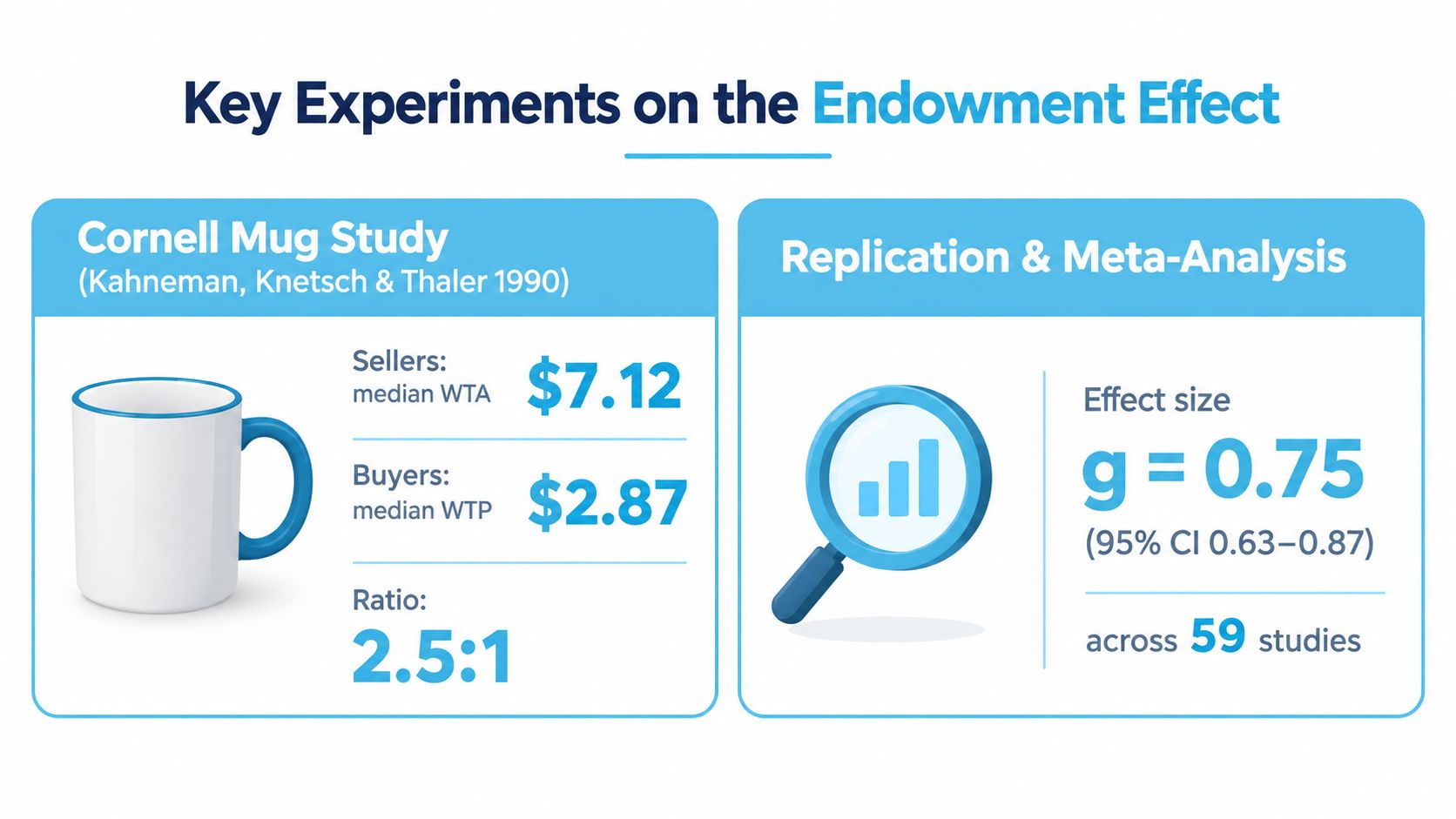
The best-known demonstration came from work by Daniel Kahneman, Jack Knetsch, and Richard Thaler around 1990. Cornell students who received a coffee mug stated what they would accept to sell it. Students who did not own the mug stated what they would pay for the same item. Sellers were willing to accept about twice as much as buyers were willing to pay. Later summaries describe sellers asking roughly $7 while buyers offered roughly $3, creating a near 2:1 gap.
The design was intentionally ordinary. Researchers used familiar goods such as mugs and pens, so the result did not depend on luxury products, rare collectibles, or highly emotional purchases. A routine item can become psychologically different after it enters someone’s possession. By comparing owners with non-owners, the classic studies tried to separate ownership from other reasons a person might value a product.
What broader evidence adds
A single experiment can suggest a mechanism without showing how widely it applies. Quantitative synthesis gives marketers a better basis for judging whether the pattern extends beyond one controlled setting.
A 2014 meta-analysis aggregated 76 studies measuring WTA and WTP for the same good. Across the full sample, the average WTA/WTP ratio was about 3.0, meaning participants demanded roughly three times more to give up an owned good than they were willing to pay to obtain it. The disparity was stronger for non-market goods, with environmental and public goods averaging above 6:1. Those findings are summarized in the meta-analytic review of the endowment effect.
The product category changes the likely effect size. A reusable water bottle, basic phone cable, or commodity household item may create less attachment than a product tied to identity, personal use, or a meaningful future routine. Ownership changes behavior without necessarily changing perceived quality. The product may look the same, yet giving it up feels more consequential after a shopper has claimed it, tried it, or mentally assigned it a place in daily life.
A later meta-analysis also reported statistically significant shifts in valuation, with buying and selling prices differing from store prices by standardized effects of d = 0.42 and d = 0.93, respectively, in the source’s summary of ownership-related effects. The practical conclusion is narrower than a guaranteed conversion lift. Ownership status can alter valuation judgments under suitable conditions, but the size and reliability of that change depend on the product, audience, and offer design.
Use research to establish a mechanism, not to promise a campaign outcome. Your store has different traffic, products, incentives, and customer expectations from a university lab.
For Shopify teams, test the specific ownership cue instead of copying a headline result. A trial, reservation, customization, or earned reward may create a stronger sense of possession than a blanket discount, while capped participation can limit promo fatigue and protect margin. Plan the audience, comparison group, and success metric before changing the offer across the whole store. A sample size calculation guide can help you set up that test more cleanly.
Why Ownership Changes Value Psychological Mechanisms
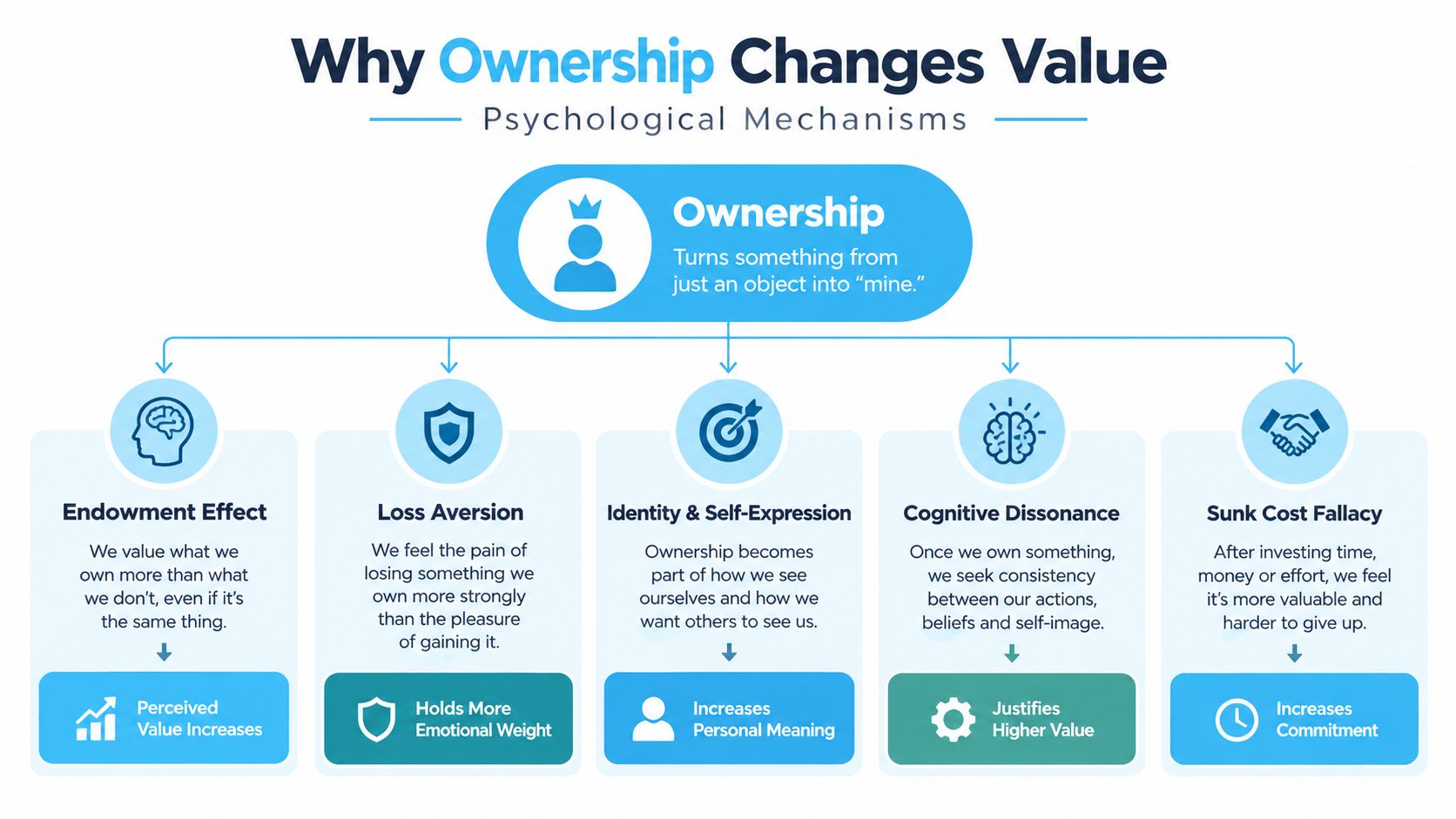
A shopper claims a reward, customizes a product, or reserves an item before paying. The product’s quality has not changed, yet abandoning it can now feel like giving something up. This is the practical starting point for understanding why ownership changes behavior.
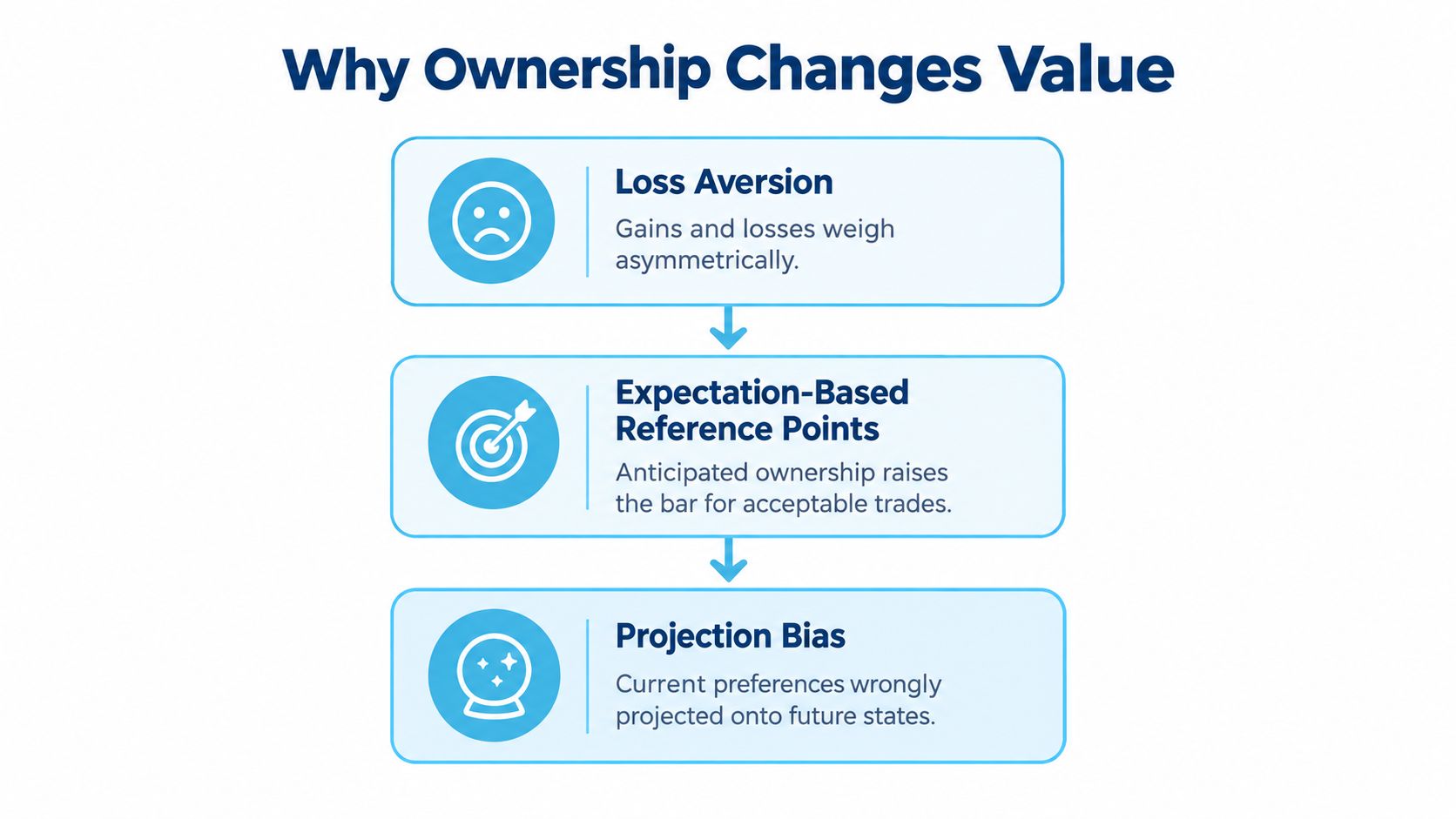
The familiar explanation is loss aversion. Giving up something you have feels like a loss, and losses can carry more psychological weight than equivalent gains. An owned product can therefore feel harder to surrender than an unowned product feels to acquire.
Loss aversion alone leaves out an important step. Physical possession is not always required. A trial, reservation, customization, or claimed reward can establish a new reference point before payment is complete.
Reference points come before possession
Value works like a moving line rather than a fixed number. Before a shopper claims an offer, the product sits outside that line. After the claim, the product or reward sits inside it. Canceling the purchase can then feel like moving backward from a state the shopper has begun to treat as theirs.
That shift helps explain why expectation-based reference points matter. A major review argues that the endowment effect is better understood through expectations about reference points than through a pure ownership-induced increase in value. Field-relevant work also found that people under-value their future attachment to an item they do not yet own by about 50%, an indication of strong projection bias, as described in the NBER review of reference points and the endowment effect.
Projection bias creates a practical ecommerce problem. A shopper judging a product from its page may struggle to predict how useful, convenient, or personally relevant it will feel after use. A trial or participatory experience gives that shopper a concrete reference point that product copy alone may not provide.
One bias does not explain every context
Recent work also complicates the loss-aversion explanation. In a representative U.S. survey of 4,000 adults, researchers found that the endowment effect for lotteries replicated clearly, while WTA and WTP were only weakly correlated and showed little evidence that loss aversion explained the gap for risky prospects. The findings appear in the CESifo working paper on WTA, WTP, and loss aversion.
The promotion format matters. A guaranteed product trial, a scarce reward, and a chance-based offer may activate different mechanisms. Uncertainty, effort, expectations, and perceived control all shape the response, while product type determines how naturally a sense of possession forms.
For a Shopify marketer, the operating lesson is clear: create a meaningful reference point, then make the next step clear. A timer or repeated discount does not create ownership by itself. The shopper needs to take an action that makes the offer personally relevant. Capped, participatory promotions can test that mechanism without training customers to wait for blanket discounts or putting the whole margin at risk.
Common Misconceptions and When the Effect Breaks Down
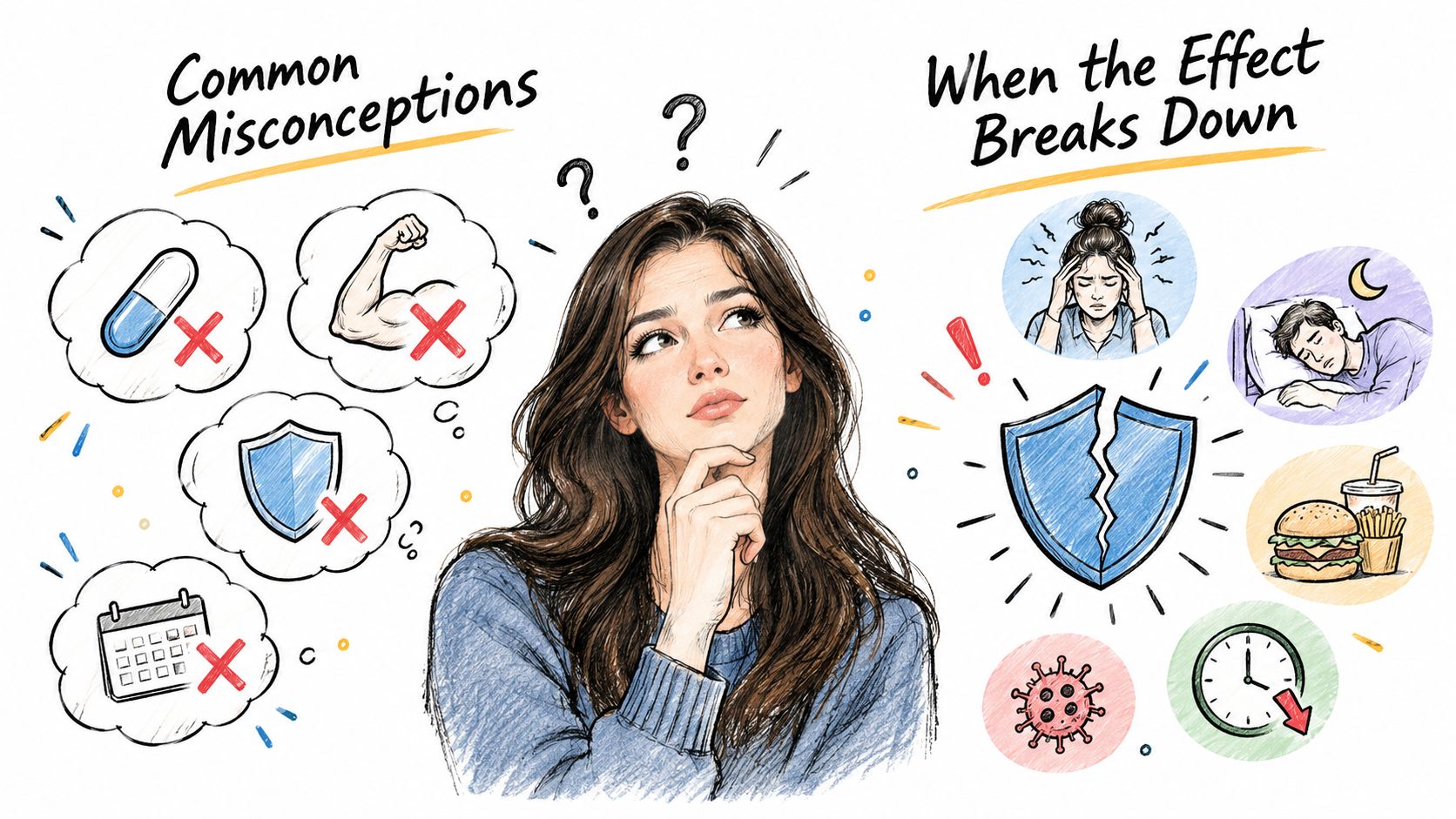
A shopper can recognize that two products have the same market value and still hesitate to give up the one they have claimed. Ownership may change behavior without changing the shopper’s view of quality. That distinction corrects a common misconception: the endowment effect does not require people to believe an owned item became objectively better.
A 2020 meta-analysis and related experiments found that ownership had no effect on beliefs about an item’s quality or its appropriate market price. The valuation gap may instead reflect motivation, reference dependence, or the friction involved in changing a choice, as discussed in the meta-analysis on ownership and valuation beliefs.
For ecommerce teams, the implication is practical. The goal is not to claim that a product is worth more because a shopper touched it, saved it, or temporarily possessed it. The useful lever is behavioral design: create a personally relevant state, then make keeping or changing that state easy to understand.
Product context determines the strength
The endowment effect does not activate equally across every SKU. Recent research reports substantial variation across products and situations. A 2025 study found that cognitive-bias links could predict a very large share of differences in endowment-effect magnitude across a new set of items. A Vanderbilt research line also found that evolutionary features could explain more than 50% of the variation across items, according to the research summary on variation in endowment-effect magnitude.
That variation gives Shopify marketers a useful way to choose a promotion:
- Self-relevant products: Apparel, beauty, accessories, and identity-linked goods can gain meaning through personalization or use.
- Utility-driven products: Tools, subscriptions, and household products may respond to trials that make future convenience tangible.
- Commoditized goods: Standardized items with easy substitutes may need service, bundle, or convenience cues because ownership alone may create little attachment.
- Social-signal products: Products that express taste or belonging can respond to a clear claim or personalized configuration.
The effect can weaken when a product creates regret, the offer feels deceptive, or returning it is difficult. A shopper who feels trapped experiences pressure rather than value. That response can damage trust, increase support work, and make an ownership-based promotion a poor trade for the margin it was meant to protect.
Turning the Endowment Effect Into Ethical Ecommerce Tactics
A shopper saves a customized bundle, holds it in the cart, or starts a trial. The product has not changed in quality, yet the shopper now has a personal reference point. That shift can make the next action easier, provided the experience creates real value rather than artificial pressure.
The practical goal is to let shoppers experience a credible form of ownership before asking for a final commitment. A trial, saved configuration, reserved cart, or actively claimed reward can do that. The right choice depends on how customers use the product, how much decision time they need, and how much margin the offer can support.
Product and context can create meaningful differences in effect size, so one sitewide promotion rarely suits every category. Use ownership cues where the customer can invest attention, effort, or choice.
Start with the ownership cue
A trial is useful when value becomes clearer through use. A cart hold fits a shopper who has made a meaningful selection but needs time before checkout. Personalization works when the customer builds a version that feels specific to their needs, taste, or recipient.
Make that customer-created state visible. If a shopper selects a bundle, saves a monogram, or claims a reward, display it consistently across the storefront, cart, email, and SMS. Klaviyo or another lifecycle platform can remind the shopper what they claimed. The message should state the next action, not manufacture panic.
A capped or time-bound offer can add urgency when its limit is real and easy to understand. The purpose is to reward early action, not to run a permanent countdown that shoppers learn to ignore. Quikly supports this approach as a participatory promotional experience that can cap rewards by claims, time, or both, and present them across storefront, email, social, and SMS with on-brand formatting.
Match the mechanic to the economics
| Tactic | Ownership Cue | Best Product Fit | Margin and Brand Consideration |
|---|---|---|---|
| Guided trial | Direct experience creates a personal reference point | Products whose value appears through use | Can reduce hesitation, but returns, logistics, and eligibility need clear controls |
| Cart hold | The selected product feels temporarily reserved | Considered purchases with longer decision cycles | Protects the offer from random discounting, but the hold window must be credible |
| Personalization | Effort and relevance make the configuration feel individual | Apparel, gifts, beauty, and customizable goods | Often protects price better than a blanket discount, but extra complexity can hurt conversion |
| Earned reward | The shopper takes an action to claim a benefit | Bundles, launches, loyalty moments, and list growth | Limits exposure compared with automatic discounts, but the reward must be easy to understand |
| Quantity or time cap | Early action protects access to a defined benefit | Launches, seasonal inventory, and event-linked campaigns | Can preserve brand value when limits are real, but false scarcity creates distrust |
Test behavior, not just revenue
A campaign can increase orders while reducing contribution margin or teaching customers to wait for the next promotion. Track conversion, average order value, discount cost, return behavior, and repeat purchase quality together. Compare an ownership cue with the standard discount, and keep the audience and product set narrow enough to interpret the result.
For a Shopify Plus operation, testing may involve differentiated eligibility, inventory-aware limits, and cleaner experiments across markets. A smaller store can begin with one product family and one clearly defined claim mechanic. The disciplined form of urgency is controlled exposure, not deeper markdowns for everyone.
Conclusion Using Ownership Psychology Without Eroding Trust
The endowment effect gives Shopify brands a sharper way to understand hesitation. Shoppers don’t evaluate products only by objective quality or listed price. Their reference point changes when they claim, configure, reserve, or experience something, and that change can make a decision feel more immediate.
Used carelessly, the same psychology can worsen the problems brands already face. Blanket discounts erode margin, predictable promotions encourage waiting, and aggressive countdown pressure can weaken perceived value. Ownership cues work better when they’re connected to a real customer action and a clear, credible benefit.
The operating principle is reward action rather than subsidize indecision. Let the shopper build a bundle, try the product, reserve an item, or claim a capped reward. Then make the terms visible, the limits genuine, and the path to checkout short.
Audit one existing promotion this week. Ask where the shopper creates a reference point, whether the benefit is earned or automatic, and what happens to margin if the campaign scales. If the only reason to buy now is a bigger discount, redesign the experience so acting early has a specific advantage without asking your brand to pay more for every conversion.
Quikly helps Shopify brands turn standard promotions into capped, time-bound experiences that shoppers actively participate in, rather than passive discounts they can ignore until later. Visit Quikly to explore a more controlled way to create urgency, protect perceived value, and reward customers who act.
Topics: the endowment effect, loss aversion, behavioral economics, ecommerce psychology, conversion tactics