Most promotion advice still treats price cuts like the only lever that matters. That’s a bad habit for brands with real margin pressure, because deeper discounts often train shoppers to wait, not act, and the brand pays for the privilege of teaching that lesson.
Nudge theory is useful because it changes the choice, not just the price. In ecommerce, that means designing promotions around defaults, scarcity, social proof, commitment, and friction, so shoppers move when intent is high instead of drifting away. The best nudge theory examples don’t feel like tricks, they feel like the store finally got out of the customer’s way.
1. Scarcity Through Limited Quantity
Quantity caps work because they create real scarcity, not just pressure. A shopper can ignore a generic sale banner, but it’s harder to ignore a reward that will run out once the last unit is claimed.
That matters in ecommerce because the strongest version of scarcity is tied to something tangible, like inventory, production run size, or a fixed number of claimable rewards. A capped drop of a new product, a first-come tiered discount, or a limited collaboration offer all do the same behavioral work, they turn waiting into risk.
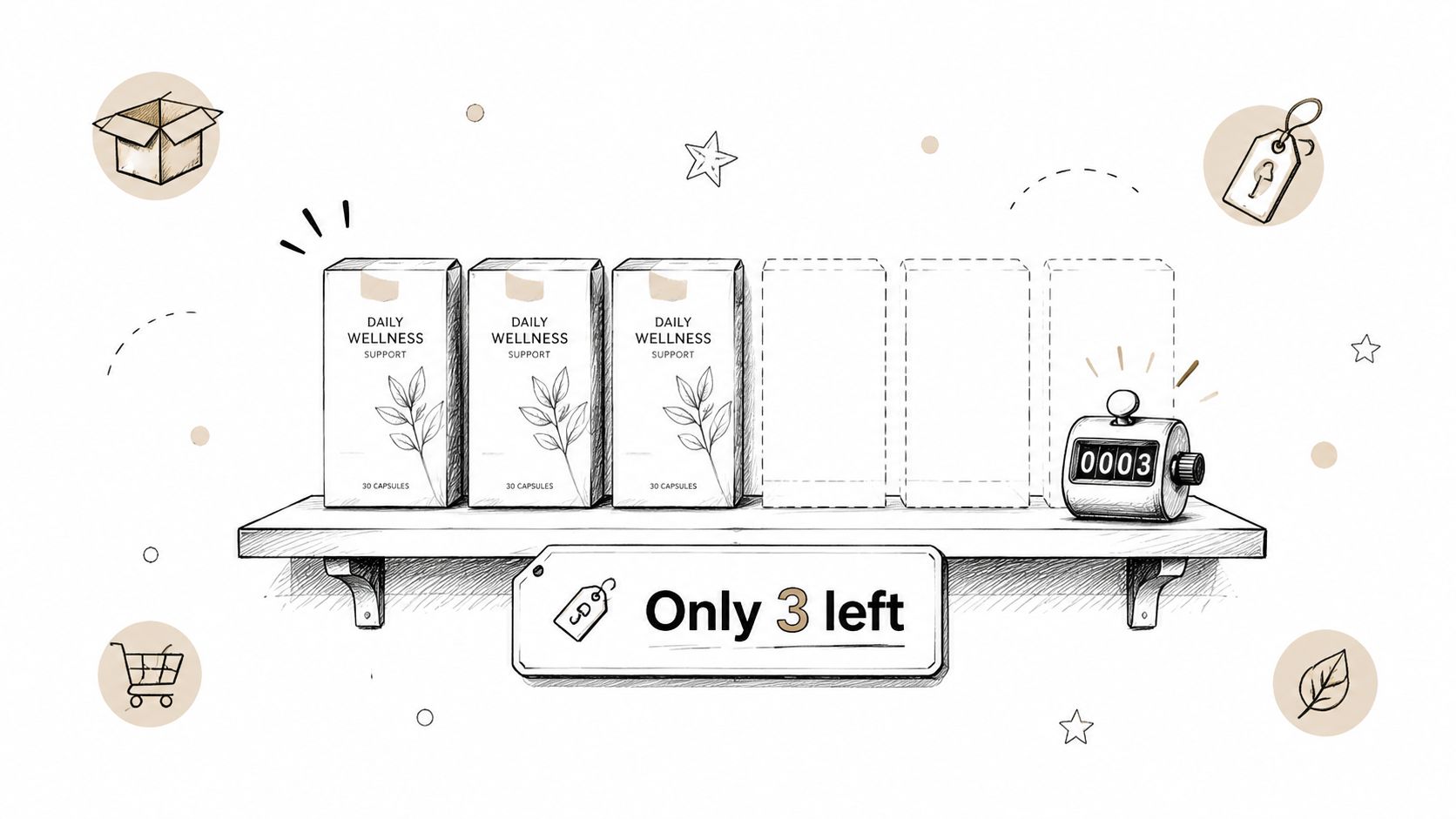
Make the cap feel real
If you use scarcity badly, shoppers notice immediately. A fake cap or a vague “limited time” message feels like marketing theater, and it can damage trust faster than it lifts conversion.
A better pattern is to show depletion clearly and tie the cap to actual stock or a fixed campaign mechanic. That’s why a flash inventory drop with a visible remaining count usually performs better than a page that just says “act fast.” The customer can see that the offer is getting smaller, not merely louder.
Practical rule: If the quantity cap doesn’t map to real inventory or a real campaign limit, don’t use it. Manufactured scarcity can buy a short click, but it can cost you repeat trust.
For Shopify brands, the economics get sharper. A capped offer lets you reward early action without flattening your whole margin structure across every visitor. If you want the deeper mechanics behind scarcity marketing, Quikly’s scarcity marketing guide is a useful reference point.
2. Time Windows With Behavioral Commitment
Time windows work best as commitment devices. A fixed open and close creates urgency, but the lift comes after the shopper has taken a small step, like opening the email, choosing a reward, or adding to cart.
That small step matters because people tend to stay consistent with what they have already started. In practice, a 24-hour sale, a six-hour VIP window, or a recurring birthday-month offer can all work if the shopper sees the end point immediately and understands they have entered a live promotion, not just glanced at one.
Don’t bury the end time
The biggest mistake brands make is treating the end time like fine print. If the shopper has to hunt for it, urgency weakens and the promotion starts to feel generic.
Use email or SMS to reinforce the window in a disciplined way. One message at launch, one at the midpoint, one near the end is enough. Anything more starts to feel like spam, especially if the offer keeps getting extended after the deadline passes.
The end time has to be real. If you keep moving it, you train shoppers to ignore the next deadline.
A Shopify brand can make this feel native across the store, email, and SMS stack. The same promotion can appear as a storefront event, then continue as a tightly timed follow-up sequence in Klaviyo or SMS, which keeps the window coherent instead of fragmented. A good countdown timer setup on Shopify can support that cadence without turning the page into a gimmick, and Quikly’s countdown timer for Shopify article is a useful reference if you want to compare approaches.
3. Descending Tier Rewards
Descending tiers are one of the smartest promotion structures because they protect margin while still creating urgency. Instead of giving everyone the same discount, you reward early action with the strongest offer, then step down for later claimants.
That changes the math for the merchant and the shopper at the same time. Early buyers feel they won something real, while later shoppers still have a reason to act before the next tier kicks in. The campaign stays active longer, but the average discount depth doesn’t have to be as aggressive as a blanket sale.
Build tiers around traffic, not guesswork
A tier structure only works if the levels can deplete in sequence. If the top tier disappears in minutes, the later tiers never get a chance to matter. If it barely moves, the urgency feels fake.
The practical move is to shape the reward drop-off so it still feels fair. A smooth descent keeps later shoppers engaged without making the offer look punitive, and that’s important because people can smell a bad deal structure quickly.
- Set the first tier for high-intent shoppers. They need a reason to act now, not later.
- Let later tiers stay attractive. The offer should weaken, not collapse.
- Announce tier changes clearly. Shoppers should know the moment the next level opens.
- Keep the hierarchy visible. If people can’t see which tier is live, the mechanic loses force.
For brands that want to protect perception, this is often a better fit than a flat-sitewide markdown. The shopper experiences momentum and fairness, not a clearance bin.
4. Social Proof Through Visible Participation
Social proof works because shoppers use other people’s behavior as a shortcut when the choice feels uncertain. In ecommerce, that means showing claims, views, purchases, or other visible signs that the offer already has momentum.
The strongest version is real participation data. A counter that shows how many customers have already claimed an offer, or a banner that reflects live activity, makes the promotion feel legitimate and socially validated. That is different from plain urgency, because it shows other shoppers have already decided the offer is worth their attention. For a practical breakdown of how this works across retail channels, see Quikly’s social proof marketing guide.
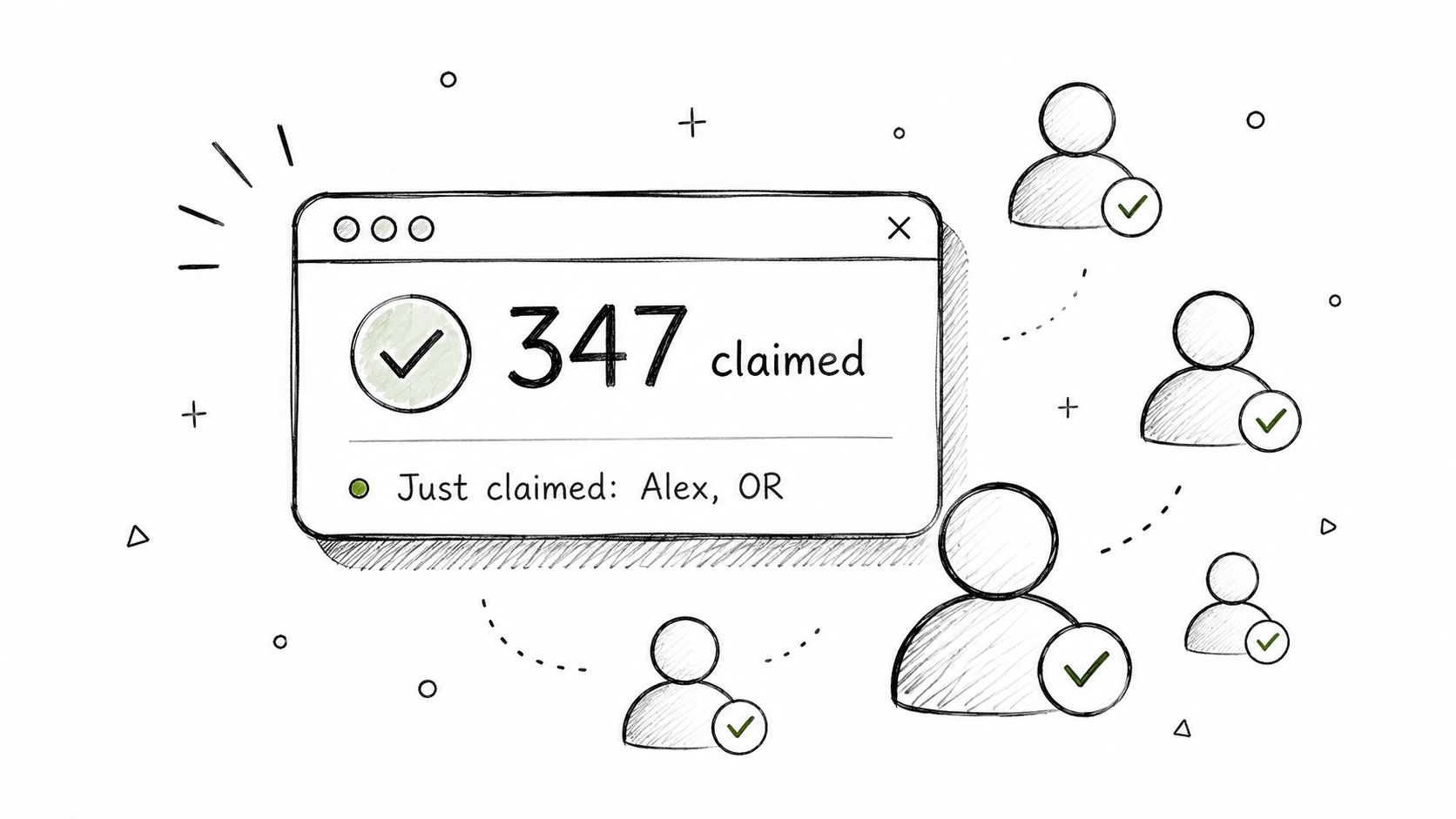
Pair participation with depletion
Social proof gets stronger when it sits next to scarcity. “People are claiming this now” is good. “People are claiming this now, and spots are disappearing” is better.
That combination works because it answers two questions at once, is this worth my attention, and do I need to move now? In a storefront, a live claims counter, a recent-activity note, or a “last purchased” cue can all do the job if they are genuine and current.
Practical rule: Never fabricate participation data. Real numbers build momentum, fake numbers build skepticism.
The public-sector field experiments around tax letters and energy conservation are useful here because the psychology is the same, people copy what looks normal. Quikly’s social proof marketing guide is a practical companion if you want to turn that logic into retail, email, and SMS without making the page feel gimmicky.
5. Earned Incentives Through Engagement Steps
A reward feels stronger when the shopper has done something to earn it. That’s the logic behind earned incentives, where the customer completes a small action first, then receives the offer.
That action can be simple, like an email sign-up, a style quiz, or a social share. The point isn’t to make people work for the sake of friction, it’s to create commitment and consistency while also collecting useful first-party or zero-party data. The reward feels more deserved, and the brand learns something useful in the process.
Keep the action short
If the ask takes too long, you lose the very momentum you’re trying to build. Three clicks is usually already a lot in a high-intent shopping moment, and any more starts to feel like homework.
Be explicit about what the shopper gets and why you need the step. If you ask for an email, say the early access or reward code will arrive there. If you ask for a quiz, make it clear that the answers help tailor the offer. Customers are more willing to engage when the exchange is transparent.
- Ask for one action, not three. The reward should feel immediate.
- Explain the data use plainly. Clarity lowers resistance.
- Send the incentive fast. Delay kills the emotional payoff.
- Use the same language across channels. “Earn” and “discover” all work differently by audience.
For Shopify brands, this is especially useful when list growth and conversion need to happen at the same time. You’re not just buying a sale, you’re earning permission for the next one.
6. Dynamic Personalization Based on Behavior
Personalization is one of the most practical nudge theory examples because it respects a simple fact, different shoppers need different pushes. The mechanics can stay the same while the offer strength, timing, or message changes based on behavior.
A first-time visitor, a returning visitor, and an abandoned-cart shopper are in different decision states. Treating them the same wastes margin on one side and leaves revenue on the table on the other. The smarter move is to respond to what the shopper did, not who you assume they are.
Segment by action, not by fantasy
Behavioral triggers usually outperform demographic assumptions because they are visible and current. If someone abandoned a cart yesterday, they are showing a different level of intent than a first-time browser arriving from paid social.
That does not mean you need a complex system on day one. Start with one or two segments, then compare how each behaves under different offer depths or windows. Track conversion and margin by segment together, because a segment that converts well but destroys margin is not a win.
Personalization should reduce friction, not create a maze of rules your team cannot explain.
Shopify-native execution matters here. A simple personalized flow can be built around abandoned carts, returning visitors, or VIP access without changing the whole store experience. If you are building around behavior and product fit, find your style with AI tools is a useful adjacent read.
7. Gamification Elements as Commitment Devices
Gamification works when the interaction itself gets the shopper to lean in. A spin wheel, scratch card, or progress bar gives the customer a small task to complete, which creates involvement before the reward even appears.
That’s the behavioral edge. Once someone starts the game, they’re no longer just browsing a discount, they’re participating in a mini event. That makes the final reveal feel earned, which is exactly why these mechanics can outperform static offer boxes when they’re done cleanly.
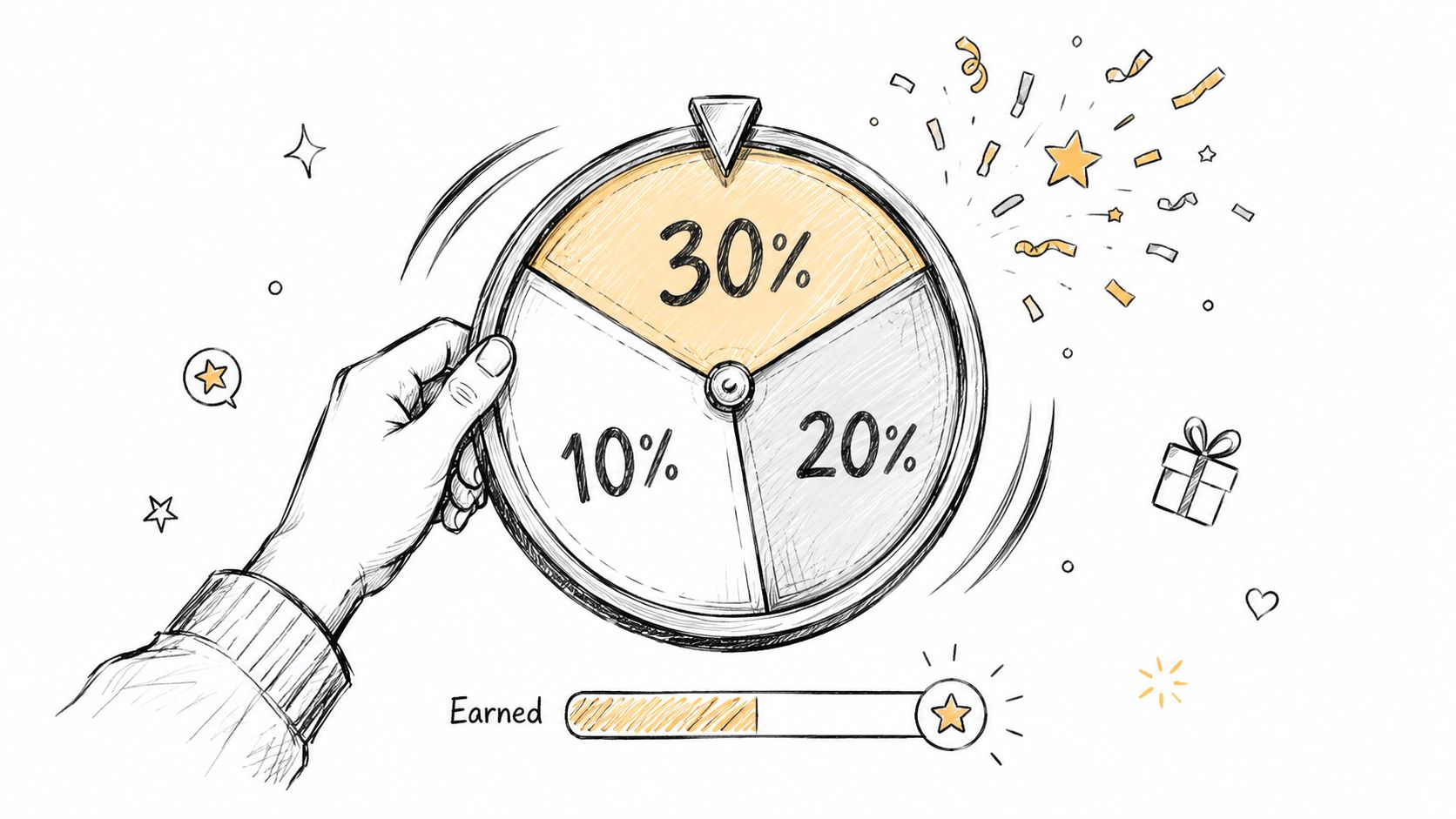
Keep the reveal fast and credible
The game should not become the campaign. If the customer has to wait too long for the outcome, the moment turns from playful to annoying.
A fast reveal, a clear prize, and an immediate code or message are enough. If the mechanic looks random, be transparent about how outcomes work. If it’s weighted toward loyal customers, say so. That kind of clarity protects trust and still lets you use the mechanic strategically.
- Make the interaction quick. The reveal should feel almost instant.
- Celebrate the result. Animation and confirmation help the win land.
- Match the mechanic to the brand. Luxury and playful brands should not use the same visual language.
- Avoid gating the game behind extra friction. Optional capture is usually better than forced capture.
Used well, gamification turns passive discount hunting into active participation. That shift matters because participation is a stronger signal than passive exposure.
8. Loss Aversion Framing, Save Versus Discount
The same promotion can land very differently depending on the words around it. Saying a shopper will save something usually creates a stronger pull than saying they get something.
That is loss aversion in practice. People respond more strongly to avoiding a loss than to receiving an equal gain, so the frame changes the emotional weight even when the economics stay the same. For a Shopify brand, that means subject lines, banners, and cart copy can shift behavior without changing the offer itself, which matters when you are trying to protect both conversion and margin.
Use the frame where attention is highest
The strongest results usually come at the points where the shopper is already close to buying. Subject lines, hero banners, and cart messages are good places for “save” language because the payoff feels immediate and concrete.
The same promotion can be written two ways, and the savings version often feels more decisive. That does not mean every audience wants the same framing. Budget-conscious shoppers often respond well to save language, while higher-end audiences may prefer exclusivity or gain-based language that protects brand equity.
Don’t shame the shopper into buying. Frame it as a smart decision, not a panic move.
That distinction matters. “Save $25 on your order” feels very different from “Don’t waste money,” and the first option respects the customer while still nudging action. If you want a practical test plan, start with a copy-only variation in your highest-intent placements, then measure whether the frame lifts conversion without dragging down average order value or the way the offer feels over time. For brands that need a broader CRO strategy, this kind of messaging test fits naturally into efforts to turn visitors into loyal customers at https://wiseweb.com.au/ecommerce-conversion-rate-optimization/.
8 Nudge Theory Examples Comparison
| Mechanic | Implementation complexity | Resource requirements | Expected outcomes | Ideal use cases | Key advantages |
|---|---|---|---|---|---|
| Scarcity Through Limited Quantity | Medium, stock caps and real-time visibility required | Moderate, inventory tracking, UI indicators, forecasting | Rapid purchases; controlled promo spend; short-lived spikes | Product drops, flash inventory sales, limited editions | Genuine scarcity, rewards early buyers, preserves credibility |
| Time Windows With Behavioral Commitment | Low–Medium, timers and enforcement logic | Low, scheduling, email/SMS cadence, clear messaging | Short-term lift; higher follow-through from engaged users | Flash sales, VIP early access, time-based rituals | Predictable, repeatable urgency; commitment increases completion |
| Descending Tier Rewards | High, tier rules, auto-advancement, live UI | High, real-time counts, messaging per tier, inventory sync | Sustained urgency across campaign; segmented conversion | Black Friday, product launches, multi-day promotions | Extends urgency, rewards early action, controls average discount |
| Social Proof Through Visible Participation | Medium, live counters and notification systems | Moderate, event tracking, volume to be credible, UX elements | Increased trust and conversions if volume exists | New brands, trust-building promos, high-traffic events | Signals legitimacy, creates organic FOMO, lowers skepticism |
| Earned Incentives Through Engagement Steps | Medium, engagement flows and unlock logic | Moderate, data capture, simple UX, integration with email/SMS | Higher-quality leads, deeper commitment, better list growth | List acquisition, personalized offers, loyalty programs | Captures zero-party data, increases perceived value, reduces misuse |
| Dynamic Personalization Based on Behavior | High, segmentation, triggers, Shopify integration | High, tracking, automation, testing, data infrastructure | Higher relevance and conversion efficiency; reduced waste | Cart recovery, VIP treatments, behavior-triggered offers | Targets offers by intent, preserves margin, builds loyalty |
| Gamification Elements as Commitment Devices | High, interactive UI, animation, fairness controls | High, dev/design effort, analytics, performance testing | Increased engagement and shareability; memorable campaigns | Brand engagement, list capture, social-driven promotions | Fun experience, higher capture rates, earned-perception of reward |
| Loss Aversion Framing: Save vs. Discount | Low, copy and visual framing changes | Low, A/B testing copy/assets | Improved persuasion without deeper discounts | Price-sensitive segments, cart nudges, subject lines | Stronger motivation via framing; protects margin |
From Theory to Practice, Nudging Your Customers Intelligently
These nudge theory examples all point to the same lesson, promotions work better when they align with how people decide. Defaults, social proof, commitment, scarcity, and framing all help shoppers move when intent is already there, and that’s the difference between a promotion that converts and one that just trains waiting behavior.
That matters because ecommerce has a margin problem as much as a conversion problem. Brands keep reaching for broader discounts when the issue is usually choice friction, weak urgency, or a promotion structure that doesn’t reward action. The better approach is to make the right choice easier, more visible, and more rewarding, while keeping the offer tied to actual behavior instead of blanket markdowns.
The research pattern behind this is pretty clear. Automatic enrollment changed retirement participation because the default shifted in a better direction, social norms moved household energy use and tax compliance, and simple instructions improved follow-through in public-health messaging. The commercial takeaway is straightforward, shoppers are influenced by the structure around the offer, not just the offer itself.
For Shopify brands, that’s where behavior-driven promotion design starts to pay off. A platform like Quikly helps turn those principles into on-brand promotional experiences that can be quantity-capped, time-bound, or tiered, so the store can reward early action without leaning on deeper discounts across the board. It’s also a more honest way to run urgency, because the mechanic is visible and participation-based rather than bolted on as a generic timer.
If you’re evaluating your next promotion, don’t start with “How much should we discount?” Start with “What behavior do we want, what friction is in the way, and what would make acting now feel worth it?” That’s the stronger question, and it usually leads to a better margin story too.
If you want to build promotions that push action without teaching customers to wait, Quikly is worth a look. It gives Shopify brands a way to run capped, tiered, and time-bound offers that feel like real events, not just deeper markdowns. Visit Quikly and see how behavior-driven promotions can fit your store.
Topics: nudge theory examples, behavioral economics, ecommerce promotions, conversion optimization, scarcity marketing