Popup-first upsell strategy is overrated. It often trains shoppers to wait for a discount and cuts margin on customers who were ready to buy anyway.
That trade-off gets expensive fast on Shopify, where conversion is already hard-won. A stronger approach is to build upsells around behavior and intent. Reward the shopper for taking the next step, create urgency that feels real, and make the added purchase feel like a better outcome, not a negotiated one.
Good upsells do three jobs at once. They raise average order value, protect contribution margin, and fit the brand experience closely enough that the offer feels earned. That usually means fewer flat discounts and more structured incentives such as capped bundles, threshold rewards, channel-exclusive drops, and time pressure tied to a real event.
The psychology matters. Shoppers respond to relevance, loss aversion, exclusivity, and progress. The economics matter just as much. A weak offer can lift cart value while hurting profit, especially if it discounts a product the customer would have added without help. A better system gives customers a reason to act now without teaching them to hold out for the next coupon.
If you are refining both offers and on-site conversion, this guide to improving D2C Shopify performance adds useful context. The ideas below focus on upsells that create urgency with discipline, protect margin, and reward the right customer behavior. One example is using a bundle pricing strategy that frames the offer around a complete use case, instead of attaching random products and calling it an upsell.
1. Product Bundling with Scarcity Caps
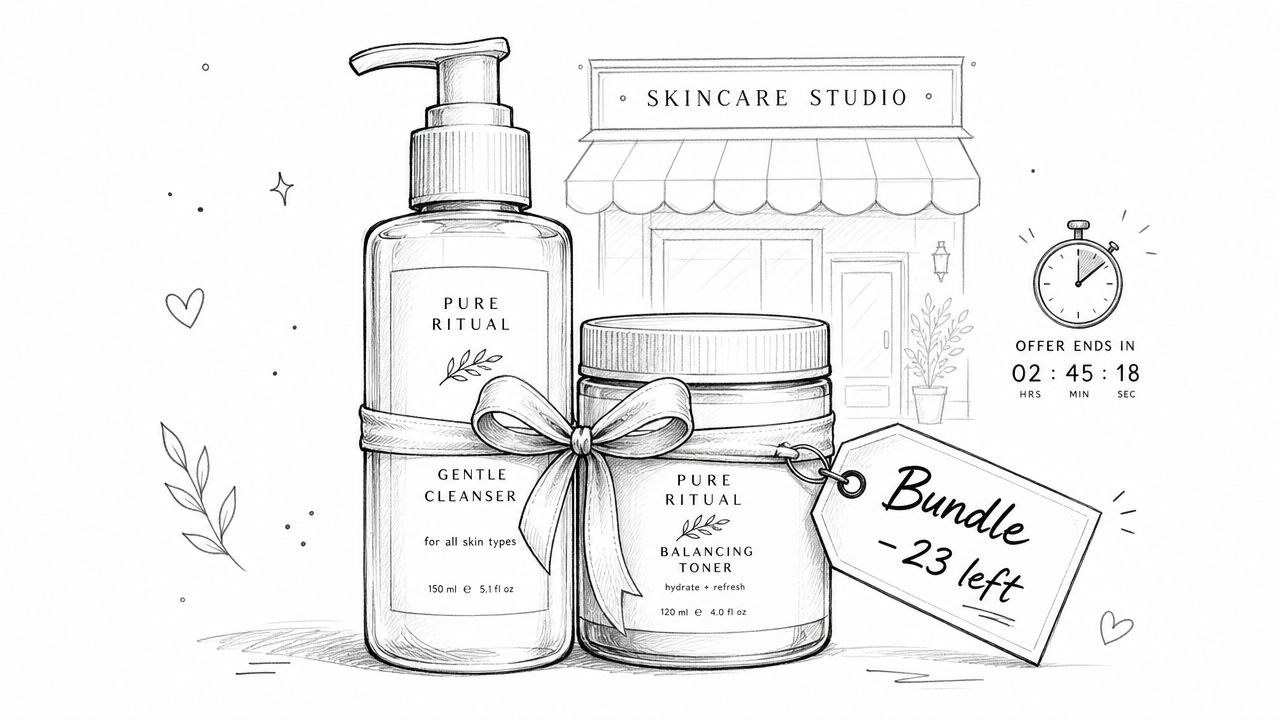
Bundling works when the customer sees a complete solution, not a merchandiser trying to clear extra inventory. A cleanser paired with a toner makes sense. A jacket paired with a care spray or accessory can make sense. Randomly attaching a slow-moving SKU to a bestseller usually doesn’t.
The margin advantage is straightforward. You raise order value without asking the shopper to accept a dramatically higher-priced single item. Aftersell notes that upselling and cross-selling can account for 10% to 30% of total revenue for ecommerce brands, and it emphasizes that the best offers reduce friction with clear value signals and easy comparisons. That’s exactly why capped bundles work. They’re simple to understand, and the scarcity gives the shopper a reason to decide now.
How to make bundle caps feel real
A skincare brand might run a daily “AM Routine Set” with a modest savings and a visible cap. An apparel retailer might release a cold-weather bundle for a short evening window through SMS and the cart drawer.
- Pair by job to be done: Bundle products that solve one clear use case, like travel, recovery, gifting, or a full routine.
- Keep the discount modest: Let scarcity do the heavy lifting so you don’t burn margin unnecessarily.
- Cap credibly: If the bundle never sells out, shoppers stop believing the constraint.
Practical rule: Scarcity only helps if the bundle itself already makes intuitive sense.
If you want to sharpen the economics behind this tactic, Quikly’s piece on bundle pricing strategy is worth reading.
2. Tiered Discounts with Descending Rewards
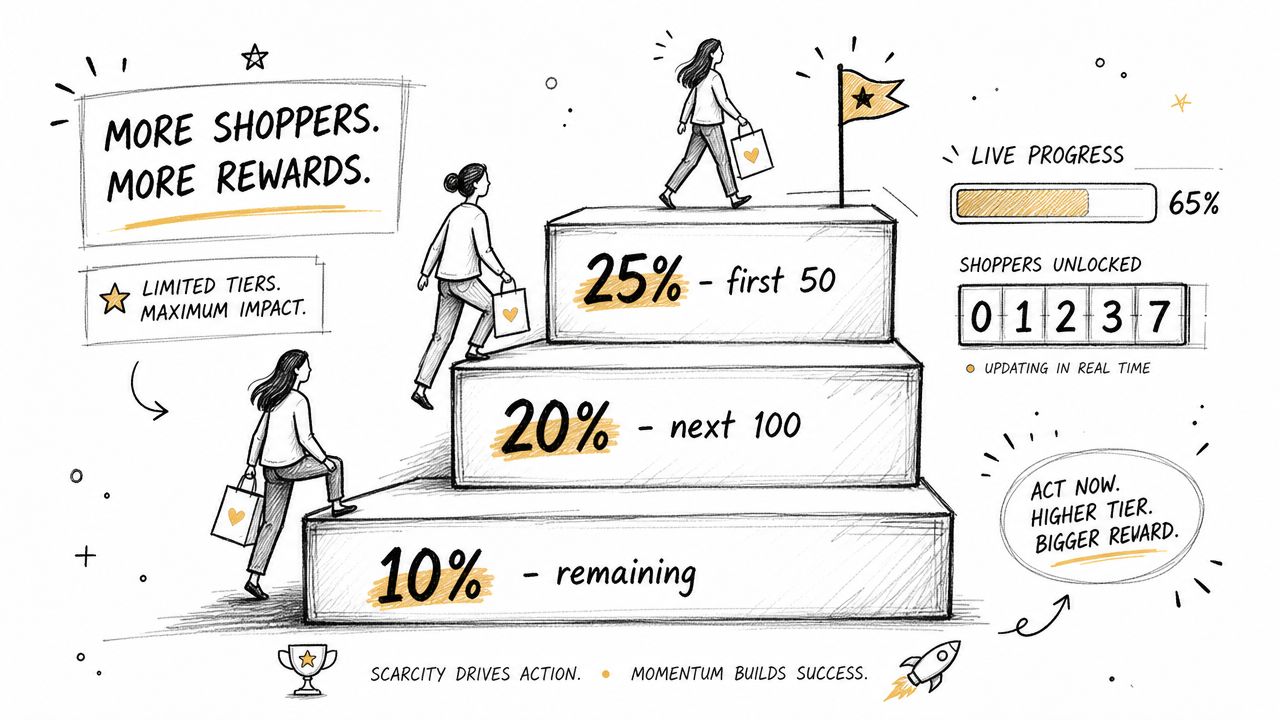
A flat discount tells everyone the same thing. Wait if you want, the deal is still here. Descending tiers change the psychology. Early buyers get the strongest reward, later buyers still get something, and nobody knows exactly how long the best tier will last.
This taps scarcity bias and loss aversion at the same time. The shopper isn’t just evaluating the product. They’re reacting to the idea of missing the better version of the offer. That’s more effective than a generic “20% off today” banner because it makes timing matter.
Why smaller discounts can win
A lot of brands assume stronger discount equals stronger conversion. That’s often too simplistic. Zipify highlighted a Shopify-focused 2026 test where 15% beat 20% by 7.4% CVR while protecting margin. The lesson isn’t that 15% is a magic number. It’s that offer design and timing often matter more than making the markdown deeper.
For a home goods brand, that could look like the first reward tier tied to launch-day shoppers, with later tiers stepping down through the weekend. For fashion, it can work especially well on new collection drops because the early-access audience already has intent.
- Show momentum clearly: If shoppers can see that a better tier is disappearing, they process the offer as an opportunity, not a coupon.
- Give late buyers a reason to stay in: The final tier should still feel worthwhile, even if it’s lighter.
- Use email and SMS after tier drops: “You missed the first reward, but the next tier is still live” works better than restarting the whole promo.
The point isn’t bigger discounts. It’s giving early action a visible payoff.
3. First-Purchase Incentives with Engagement Requirements
Most first-order offers train shoppers to wait for a coupon. That helps conversion in the moment, but it can hurt margin and weaken buying habits fast.
A stronger approach makes the incentive conditional on a small action. Reveal the offer after a preference quiz. Give the bonus only after email or SMS consent is submitted clearly. Ask the shopper to choose a use case, concern, or goal, then tie the first upsell to that response. The incentive feels earned instead of sprayed across the whole audience.
That matters because micro-commitments change behavior. A shopper who has already clicked, chosen, or answered something simple is more likely to finish checkout than a shopper who saw a generic popup and bounced. The actual win is not the discount itself. It is the increase in intent and the extra context you collect before showing the offer.
Where brands waste this tactic
They add too much friction.
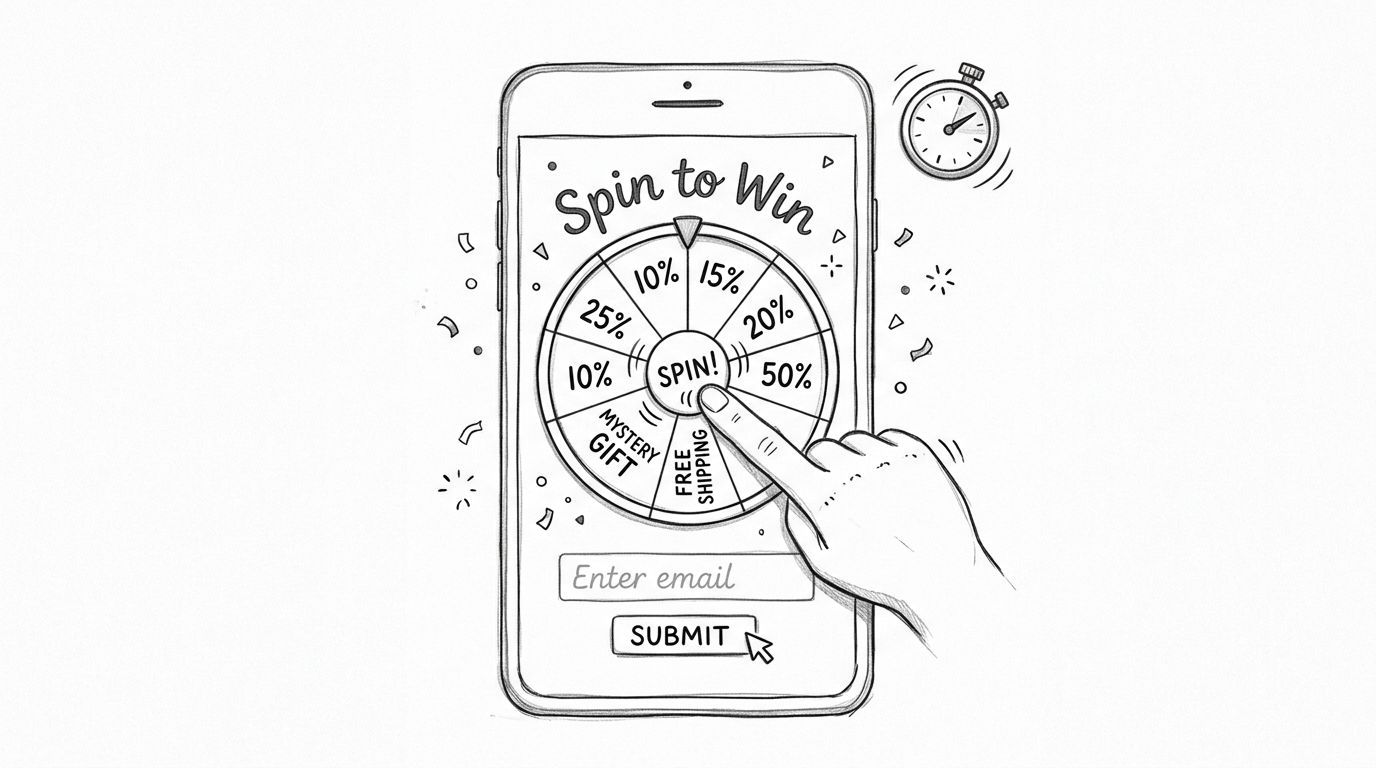
A spin-to-win wheel can work, but only if it loads fast, stays secondary to the product, and reveals an offer that matches the action. If the interaction feels like a gimmick, shoppers read it as a tax on attention. If it blocks the page before they understand the product, you are paying for interruption, not engagement.
The best version is usually simpler than teams expect. A beauty brand can ask, “What’s your main skin concern?” then present a first-order incentive on a relevant serum bundle or travel-size add-on. A sportswear brand can ask, “What are you training for?” and follow with socks, hydration gear, or recovery accessories that fit that goal. That protects margin better than a flat sitewide code because the reward is attached to a higher-intent path.
A few rules keep this profitable:
- Keep the action short: One question or one tap is enough.
- Match the reward to the response: Relevance beats novelty.
- Use explicit consent language: Especially for SMS, the shopper should know what they are agreeing to.
- Set a real expiration: A reward with a short timer creates urgency without training every visitor to expect the same deal tomorrow.
- Protect follow-up performance: If the incentive depends on email capture, the list only has value if your messages reach the inbox. Good email deliverability best practices matter as much as the popup itself.
Used well, this tactic does two jobs at once. It lifts first-purchase conversion and gives your team cleaner segmentation for the next upsell, without defaulting to the blunt instrument of a bigger discount.
4. Email and SMS Exclusive Offers with Limited Availability
Subscriber lists shouldn’t just be a place to dump campaigns. They should be a controlled access channel. If everyone gets the same public promotion, your email and SMS list loses some of its strategic value.
Exclusive availability changes that. The offer isn’t merely “discounted.” It’s reserved. That activates status and scarcity at once, which is much healthier for brand perception than nonstop public markdowns.
Use the channel as part of the reward
An athletic apparel brand can send an SMS-only window for matching accessories tied to recent purchases. A furniture brand can email VIP subscribers a limited claim period for white-glove add-ons, care kits, or gift packaging before the public sees anything.
This approach also helps with one of the most overlooked upsell categories. Vitals points out that many Shopify brands focus heavily on cart and product-page offers, while service-style add-ons and carefully timed urgency tend to get less attention in the broader upsell conversation. That’s one reason channel-exclusive offers are useful. They create room for non-product upsells that feel premium instead of pushy.
A few operational points matter here:
- Send when exclusivity is believable: Midweek or off-peak windows often feel more private than blasting every subscriber during a major sale period.
- Vary the offer structure: Repeating the same reward trains the list to ignore anything else.
- Protect deliverability: If email is part of the engine, basic list hygiene and sending practices matter. This guide on email deliverability best practices covers the fundamentals.
Done right, this tactic makes subscribers feel like insiders, not targets.
5. Limited-Edition Product Launches with Founder or Creator Access
Discounting a new release too early is often a sign that the launch positioning is weak. If the product is interesting, access can be the incentive.
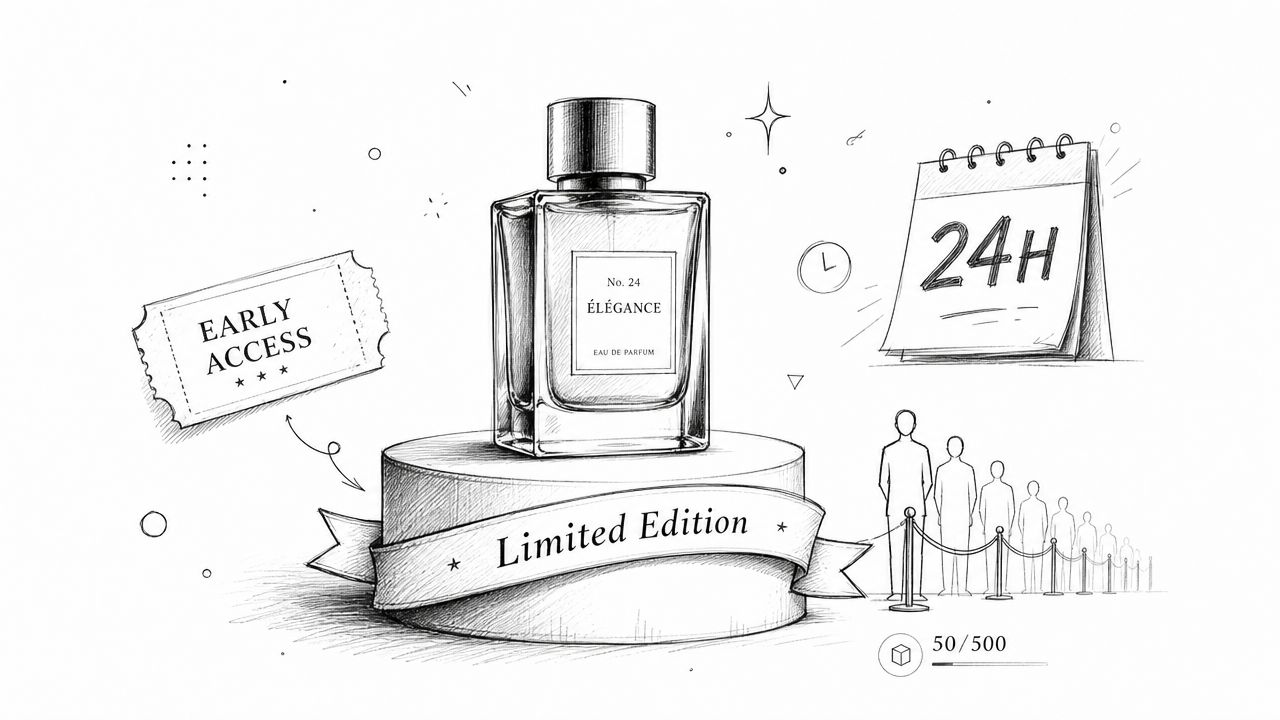
That’s the smarter play for limited editions, collaborations, and small-batch runs. Early access rewards the customers who pay attention, and public release becomes the second phase, not the whole event. You protect margin because you’re selling rarity and inclusion, not price cuts.
Make access the premium, not the markdown
A sustainable fashion brand can give email subscribers first access to a capsule drop, then open the remainder to the public later. A coffee roaster can reserve the first release window of an artist collaboration for SMS subscribers, then widen availability after that.
This works because social proof compounds fast when inventory is naturally constrained. The first group buys because they value access. The second group sees that access already mattered.
If you have to over-explain why a limited edition matters, it probably isn’t limited in a way customers care about.
The biggest mistake here is manufacturing rarity around products that don’t feel special. Founder notes, creator context, unusual materials, seasonal relevance, and a clear story all help. So does restraint. Not every month needs a “limited drop.”
For Shopify merchants, this is one of the cleanest ways to grow AOV without touching baseline pricing. Pair the launch item with tightly related add-ons in cart or post-purchase, and the upsell feels additive, not promotional.
6. Cart Abandonment Incentives with Escalating Pressure
Cart recovery is one of the few places where incentives make immediate strategic sense. The shopper already built the basket. Intent exists. The problem is hesitation, distraction, or friction.
That’s why escalation beats giving your strongest offer away in the first message. Start with a lighter nudge, then increase the pressure only if the cart remains abandoned. This respects margin and preserves optionality.
Sequence the incentive instead of front-loading it
A practical sequence might begin with free shipping or a low-friction add-on. If the shopper still doesn’t convert, the next message can introduce a stronger incentive with a tighter claim window. The final message can create a genuine closing moment instead of another reminder.
Shopify’s post-purchase upsell guidance notes that the average ecommerce conversion rate is 2%. Different moment, same implication. When baseline conversion is that tight, a small number of recovered high-intent shoppers can matter materially, especially if you don’t discount everyone else to get them.
- Escalate only when needed: Some abandoned carts return with no discount if the reminder is timely and useful.
- Segment by cart quality: Larger carts may need reassurance, not a deeper price cut.
- Apply genuine urgency: “Offer expires tonight” only works if it really expires tonight.
The trap is obvious. If shoppers learn that abandonment automatically leads to a better offer, you train them to stall. Keep the sequence selective, and don’t make the pattern too predictable.
7. Social Proof and Peer Incentives
Referral programs often sit in the footer collecting dust because there’s no reason to act today. People mean to share them later, then don’t.
Add scarcity and the program changes shape. A capped referral window gives both sides a reason to move now, not eventually. It also makes the reward feel less like a coupon and more like access to a live promotion.
Combine social proof with a visible constraint
An activewear brand could run a daily referral cap around a new set launch. A beauty subscription brand could attach a limited claim window to a giftable add-on for both the existing customer and the referred friend.
The psychology here is strong because it combines social proof, scarcity bias, and loss aversion. People trust offers more when they involve someone they know. They act faster when they can also see that the opportunity is finite.
Independent Shopify guidance reports that upsell acceptance rates are typically 4% to 8% when offers are well targeted, and it recommends keeping upsell pricing in a lower relative band versus the primary purchase because perceived burden matters. That principle applies here too. The referral reward should feel easy to say yes to. If the add-on or upgrade feels too expensive relative to the original purchase, the urgency won’t save it.
Referral incentives work best when the friend instantly understands the value without needing a second explanation.
Operationally, don’t overcomplicate tracking or redemption. If customers need to decode rules, participation drops fast.
8. Event-Driven Scarcity for Flash Sales and Launch Moments
Perpetual promotions flatten your calendar. Every campaign starts to feel like the same event wearing different creative.
Event-driven scarcity fixes that by tying urgency to something real. A launch, a seasonal transition, a warehouse clear-out, an anniversary, a subscriber milestone. Those moments carry their own logic, which makes the promotional window feel earned instead of manufactured.
Build your campaign around a real reason to buy now
A seasonal apparel brand can run a genuine end-of-season cleanup around remaining units. A home brand can tie accessory bundles or premium upgrades to a collection launch week. A beauty store can attach a post-launch gift window to the first buyers of a new routine.
This approach also helps solve a long-term brand problem. Vitals argues that brands need alternatives to repetitive discounting because constant incentives train customers to wait. Event-based urgency is one of the cleanest alternatives. The promotion has context, so the shopper doesn’t assume the same offer will reappear next week.
If you want a deeper framework for this, Quikly’s article on scarcity marketing gets into the mechanics.
A few rules keep this healthy:
- Leave whitespace between events: Constant urgency stops feeling urgent.
- Match discount depth to the event: Clearance can justify more aggression than a routine campaign.
- Use every channel consistently: Homepage, product pages, email, and SMS should all tell the same story.
The strongest Shopify upsell ideas aren’t always attached to a popup. Sometimes they’re attached to a moment.
9. VIP or Loyalty Tier Incentives with Exclusive Rewards
Most brands say they value loyalty, then give new customers the best public deal. That’s backward. If your best shoppers always pay close to full price while first-timers get the strongest incentives, your program is telling the wrong story.
Tiered rewards correct that. The best access, strongest perks, and most thoughtful upsells go to the people who’ve already proven intent. That increases retention, protects brand equity, and makes your promotional structure feel fair.
Make loyalty visible and useful
A Shopify Plus brand can give repeat buyers earlier access to curated bundles, care add-ons, or subscriber-only releases. A beauty brand can reserve the best replenishment or subscription upgrade offers for customers who’ve already bought a routine multiple times.
Personalization matters a lot here. Cartly cites Epsilon research showing that personalization in product recommendations can increase conversion rates by up to 320%. You don’t need to promise that outcome to use the lesson. Generic loyalty offers underperform because they ignore what the customer has already bought, ignored, or reordered.
- Base tiers on real store behavior: Spend, frequency, and recency are usually enough to start.
- Reward with access, not just discounts: Early claim windows, exclusive bundles, and premium services often preserve margin better.
- Announce status clearly: Customers should know when they moved up and what changed.
For brands thinking beyond a single campaign, Quikly’s post on customer retention programs is a useful next read.
Shopify Upsell Strategy Comparison Table
No upsell tactic works in every store. The right choice depends on purchase frequency, margin structure, inventory risk, and how much urgency your brand can create without looking forced. This comparison keeps the focus on strategies that increase order value while protecting pricing power.
| Tactic | Implementation complexity | Resource requirements | Expected outcomes | Ideal use cases | Key advantages |
|---|---|---|---|---|---|
| Product Bundling with Scarcity Caps | Medium. Requires pairing logic and live inventory caps | Inventory coordination, merchandising, on-site messaging, email/SMS support | Higher average order value and quicker purchase decisions without cutting every item’s price | Cross-sells, moving slower SKUs with proven sellers, short promotional windows | Raises AOV, creates real urgency, protects margin better than storewide discounts |
| Tiered Discounts with Descending Rewards | High. Needs real-time tier tracking and clear threshold messaging | Tiering logic or app support, live counters, performance monitoring, coordinated campaign creative | Faster early conversion, stronger momentum, less discount exposure across the full sale window | Flash sales, launches, and traffic spikes you can predict | Rewards fast action, signals demand, keeps average discount depth under control |
| First-Purchase Incentives with Engagement Requirements | Medium. Requires an interactive step and follow-up automation | Engagement widget or form flow, email/SMS capture, compliance setup | Better first-order conversion, list growth, more zero-party data for future offers | Welcome offers, paid traffic landing flows, list-building campaigns | Makes the incentive feel earned, improves targeting later, grows owned channels |
| Email and SMS Exclusive Offers with Limited Availability | Medium. Requires segmentation and inventory or code controls | Email/SMS platform, segmented audiences, unique codes, cap tracking | More revenue from subscribers while keeping public pricing intact | Subscriber campaigns, VIP drops, time-sensitive offers | Rewards attention, drives channel engagement, limits broad discount visibility |
| Limited-Edition Launches with Founder/Creator Access | Medium to high. Requires launch planning and audience segmentation | Product or collaboration development, inventory planning, gated access, pre-launch promotion | Strong conversion from loyal buyers, stronger perceived value, better margin retention | Capsule drops, collaborations, anniversaries, milestone launches | Builds exclusivity without relying on discounts, gives customers a reason to act now |
| Cart Abandonment Incentives with Escalating Pressure | Low to medium. Requires a staged recovery sequence | Abandonment automation, timed offers, analytics and margin guardrails | Recovers high-intent revenue while reserving the strongest incentive for shoppers who actually need it | Checkout recovery, high-consideration products, carts with clear intent | High ROI potential, better margin control, pressure increases only when needed |
| Social Proof + Referral Scarcity | Medium. Requires referral tracking and redemption limits | Referral tool, cap tracking, progress messaging, campaign creative | More referrals, faster trust-building, controlled redemption volume | Referral pushes, launch campaigns, community-led growth | Uses word of mouth and urgency together, keeps costs contained, attracts warmer traffic |
| Event-Driven Scarcity (Flash/Seasonal/Launch) | Medium. Requires calendar discipline and cross-channel coordination | Promotional calendar, campaign assets, countdown tools, inventory planning | Concentrated traffic and sales during moments customers already care about | Holidays, launches, end-of-season pushes, brand milestones | Feels credible because the deadline is tied to a real event, not an arbitrary popup |
| VIP / Loyalty Tier Incentives with Exclusive Rewards | High. Requires segmentation, automation, and loyalty infrastructure | Loyalty platform or CRM, automated tier rules, targeted messaging, reporting | Higher retention, stronger lifetime value, more behavior shaped around repeat purchase | Repeat customers, high-value segments, retention-focused programs | Rewards proven buyers, protects brand equity, encourages customers to climb tiers |
From Tactics to Strategy Building a Smarter Promotional Calendar
The biggest mistake brands make with Shopify upsell ideas is treating them like isolated tricks. Add a popup here. Add a cart offer there. Launch a post-purchase prompt and hope the numbers move. That creates activity, not strategy.
A stronger system starts with a simple question. Which customer behaviors do you want to reward? Early action, higher-intent buying, repeat purchasing, subscriber engagement, faster checkout decisions, and fuller routines all deserve different promotional mechanics. Once you think that way, upsells stop being random add-ons and start becoming part of how your store guides decisions.
The economics are tight. Easy Apps reports that properly targeted Shopify upsells tend to see 4% to 8% acceptance rates, with successful offers increasing AOV by 10% to 30% depending on placement and relevance. Those ranges are useful, but the deeper point is more important. Relevance and timing do most of the work. A mediocre offer shown everywhere usually underperforms a strong offer shown at the right moment.
That’s also why post-purchase deserves more attention than it usually gets. Shopify recommends making post-purchase offers tightly relevant to the just-purchased item and adding explicit urgency language such as a one-time offer or countdown because the customer has already completed the core purchase at that point. It’s one of the cleanest places to increase order value without disrupting the original conversion.
If you’re building a promotional calendar, start by mapping moments instead of discounts. Product launches. Subscriber-only windows. Cart recovery sequences. Loyalty upgrades. Seasonal inventory turns. Limited bundles. Then decide where a lighter offer with a stronger reason to act can replace a heavier discount with no urgency behind it.
That’s the broader value in a behavior-driven approach. Quikly is one option for running time-bound or quantity-capped promotions in a way that feels native to the store, and the approach has been refined across more than 60 million consumer interactions. Used well, that model helps brands reward the shoppers who act now instead of handing the same discount to everyone who waits. If you’re also trying to measure what your campaigns contribute across channels, SourceLoop’s Shopify attribution guide is a helpful companion.
The brands that win this don’t ask only how to raise AOV this week. They ask how to create better buying moments without weakening margin or brand trust. That’s the shift worth making.
If you want to turn promotions into time-bound, quantity-capped buying moments instead of default discounts, Quikly is worth a look. It gives Shopify brands a way to run urgency and scarcity campaigns that feel on-brand, connect across storefront and messaging channels, and push conversion or AOV without relying on heavier markdowns.
Topics: shopify upsell ideas, shopify upsell, ecommerce upsell, increase aov, quikly