Dynamic pricing on Shopify can increase revenue by 11% in a controlled experiment while maintaining a retailer-defined margin target, but the result depends on disciplined testing and guardrails, not on changing prices at random. The practical goal is to make offers more responsive without sacrificing contribution margin or customer trust.
A familiar pattern plays out in many Shopify stores. Traffic arrives, shoppers browse, and the team adds another blanket discount because the existing promotion no longer creates enough urgency. Sales may improve, but margin shrinks, customers learn to wait, and the brand starts competing on markdowns instead of value.
Dynamic pricing Shopify strategies offer a more precise alternative. They connect price or reward changes to demand, inventory, timing, competition, or shopper behavior, then evaluate the result against profit and retention. The sections below cover the foundations, implementation choices, Quikly campaign setup, measurement, and safeguards that keep urgency from becoming a trust problem.
The Dynamic Pricing Dilemma for Shopify Merchants
Shopify merchants usually face three pressures at the same time. Margins are tightening, acquisition costs make every visitor more valuable, and standard promotions are becoming easier for customers to ignore. A recurring 15% off code can create a short-term spike, but it also gives shoppers a reason to postpone a purchase until the next sale.
The operational mistake is treating conversion as the only score that matters. A higher conversion rate can still produce less profit when the discount is too deep, returns increase, or customers who would’ve purchased at full price receive the same incentive as hesitant shoppers. Brand perception suffers when promotions become predictable and permanent.
Practical rule: A promotion earns its place when it creates incremental contribution profit, not merely additional orders.
Dynamic pricing isn’t a magic switch that fixes weak merchandising or poor product-market fit. It’s a system for matching an offer to a changing commercial condition, such as limited inventory, a defined campaign window, a quantity threshold, or a shopper who has shown purchase intent.
Why blanket discounts lose precision
A blanket discount treats every visitor alike. It gives the loyal customer, the first-time browser, and the shopper already ready to buy the same economic reward. That makes campaign reporting simple, but it makes margin control difficult.
A behavior-driven offer works differently. The merchant defines the reward, the qualifying action, and the cap. The customer then decides whether to act now, purchase a qualifying quantity, or continue browsing without receiving an automatic reduction.
That distinction matters for brand value. A stable base price with a clearly earned reward preserves a stronger reference point than constant repricing across the catalog. It also gives the marketing team a cleaner hypothesis to test: does bounded urgency change timing and basket behavior without requiring a deeper discount?
A profit-first operating mindset
Start with one product group and one commercial objective. Decide whether the campaign is meant to increase contribution margin, improve conversion among high-intent visitors, raise average order value, or move inventory with a controlled incentive.
Then define what would make the campaign unacceptable. Margin floors, abandonment, customer complaints, refund behavior, and repeat purchase should sit beside conversion in the reporting view. That shift keeps dynamic pricing focused on sustainable growth rather than a short-lived sales graph.
Understanding Dynamic Pricing Foundations
Dynamic pricing predates Shopify and modern ecommerce. The practice can be traced to the 1980s, when U.S. airlines began using flexible prices to manage changing demand, seat inventory, booking timing, and customer segments. It later spread internationally and into online retail as digital systems made rapid price adjustment practical. The historical overview of dynamic pricing also describes an early ecommerce observation in which a major online retailer changed a product’s price approximately every 10 minutes.
That history clarifies the term. Dynamic pricing is a pricing system in which the economic terms respond to conditions, including demand, inventory, competition, timing, or customer behavior. It is not just a sale badge, a coupon, or a countdown clock.
From airline seats to Shopify offers
For a Shopify merchant, the relevant evolution is from a fixed price toward a responsive rule. A time-limited reward or quantity-based offer follows the same basic logic as dynamic pricing, even when the merchant sets the rule manually instead of using an algorithm.
That doesn’t mean every promotion should alter the underlying product price. In many cases, varying reward availability is easier to explain and safer for brand equity than showing different base prices to individual shoppers.
Teams evaluating pricing strategy can also use the Big Moves Marketing guide to pricing software products for a broader perspective on how value, cost, and customer willingness to pay interact.
What the research says
Academic interest in ecommerce dynamic pricing has grown, although the field remains smaller than research on airlines, transportation, electricity, and hospitality. A 2024 bibliometric study identified 153 articles specifically focused on dynamic pricing in ecommerce, found that researchers began investigating dynamic pricing as early as 1968, and reported that publication activity peaked in 2021. Its broader search identified 8,645 papers associated with dynamic-pricing research from a universe of 82,557 papers published from 1950 onward. The bibliometric analysis of ecommerce dynamic pricing provides that research context.
For Shopify teams, the takeaway is practical. Treat pricing experiments as measurable commercial systems, not isolated creative ideas. Useful measures include conversion rate, revenue per visitor, average order value, margin per order, claim velocity, and repeat-purchase behavior. The Shopify pricing strategy guide offers a useful companion when turning those measures into a broader store policy.
Choosing Your Dynamic Pricing Approach on Shopify
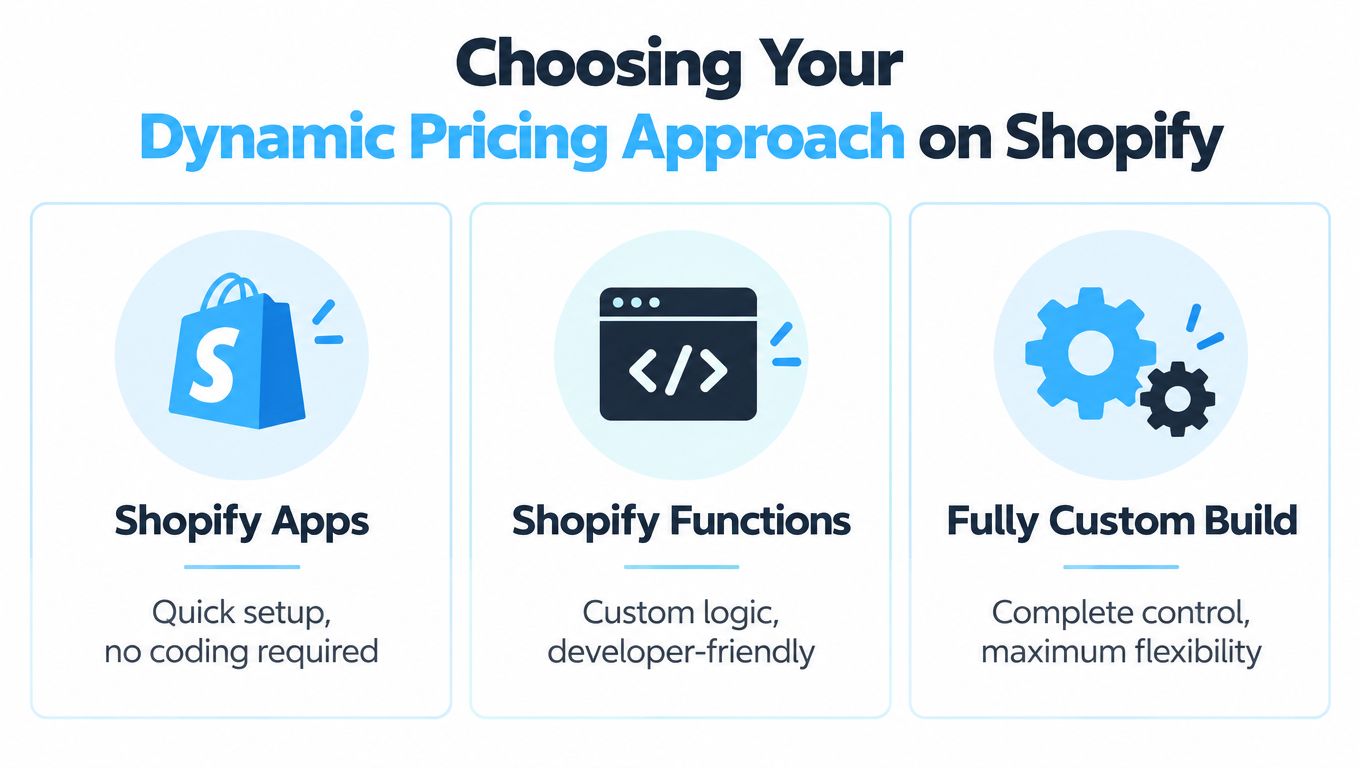
There are three practical implementation paths: a Shopify app, Shopify Functions, or a fully custom build. The right choice depends less on technical ambition than on how much rule complexity your team can operate safely.
| Approach | Best fit | Main advantage | Main trade-off |
|---|---|---|---|
| Shopify app | Small teams and campaign-led brands | Faster setup and less development work | Less control over unusual pricing logic |
| Shopify Functions | Technical teams needing native discount logic | Custom, Shopify-native rules | Requires development and careful QA |
| Fully custom build | Complex catalogs and integrated pricing operations | Maximum control across systems | Highest maintenance and operational burden |
Shopify apps for speed
An app is usually the sensible starting point when the campaign is behavior-driven rather than catalog-wide repricing. It can handle the customer experience, campaign state, and integrations while the merchant concentrates on the offer design.
Quikly, for example, supports capped rewards and descending tiers that change as shoppers claim an offer or as a campaign window progresses. The useful distinction is that the customer participates in a bounded promotion instead of receiving an identical discount automatically. The approach has been refined across more than 60 million consumer interactions, according to the publisher’s stated product background, but campaign performance still needs to be tested for each store.
Shopify Functions for controlled logic
Shopify Functions support product, order, and shipping discounts, including threshold-based offers. Functions are deterministic, so they can’t use randomization or clock functionality independently. Implementations also face a 256 kB compiled binary limit, 10,000 kB linear memory limit, 11 million instruction limit, 128 kB input limit, and 20 kB output limit, with carts of up to 200 line items, as documented in Shopify’s Functions documentation.
That makes architecture important. Store campaign state in app-controlled data, resolve eligibility in the app or campaign service, and pass compact deterministic state into the Function. Maintain an idempotent claim ledger and reconcile cancellations or failed payments. This route offers control, but it isn’t a shortcut around campaign design.
Custom builds for complex operations
A custom build makes sense when pricing connects to multiple markets, inventory systems, customer segments, or approval workflows. It also creates more surface area for bugs, price mismatches, failed-payment reconciliation, and support issues.
For comparison, merchants researching dynamic pricing on Amazon can see how marketplace-scale repricing introduces different operational requirements. Shopify brands shouldn’t copy that model automatically. A campaign that changes a reward based on claims may need far less infrastructure than a catalog engine reacting to competitor prices.
Setting Up a Behavior-Driven Promotion with Quikly
A small team can launch an advanced campaign without rebuilding the store’s entire pricing architecture. The key is to define one transparent rule set before touching the storefront.
Start with the commercial constraint
Install Quikly from the Shopify App Store, then choose the product, collection, or basket condition that qualifies for the offer. Decide whether the campaign needs one reward or a descending tier system. A single reward is easier to understand. Tiers can make claim timing more meaningful, provided the customer can see what changes and why.
Set the cap before choosing the creative. The cap can be based on claims, time, or both. The rule should be real, measurable, and connected to campaign capacity. Don’t publish scarcity that your team can’t verify.
Configure the customer journey
Write the offer in plain language. State the qualifying product or quantity, reward, start and end conditions, and what happens when the cap is reached. Shopify automatic discounts apply in the cart and checkout only after the shopper meets the configured conditions. For quantity or bundle offers, the customer must add every eligible item, including qualifying and promotional items, before the discount applies, as Shopify’s automatic discount documentation explains.
Style the experience to match the store. Use the brand’s typography, color system, imagery, and tone so the promotion feels like part of the merchandising rather than an overlay. Quikly’s stated product positioning is a fully on-brand promotional experience, not a generic popup or email capture widget.
Distribute the same rule across channels
Publish the campaign across the storefront, email, SMS, and social channels, but keep the eligibility rule consistent. Klaviyo flows and SMS messages should explain the same reward and deadline that the customer sees on site. If a shopper arrives from social after a tier has changed, the landing experience must still show the current state accurately.
A real-time offer management workflow is useful when the team needs to coordinate active offers, creative, and channel changes without allowing stale messages to keep circulating.
Test the complete path with a real cart. Check the qualifying item, discount application, checkout total, confirmation message, cancellation handling, and the next tier or end state before sending traffic.
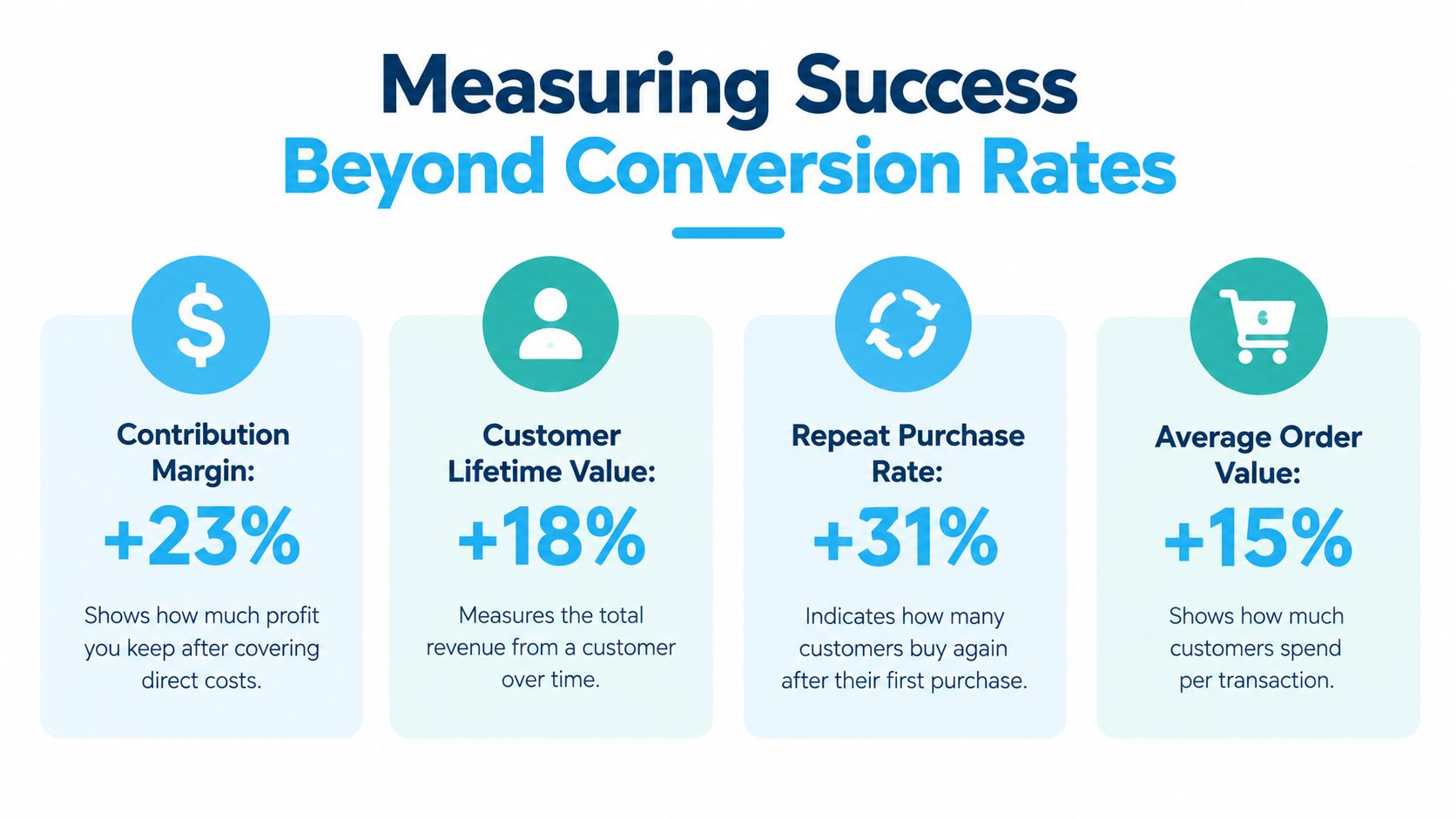
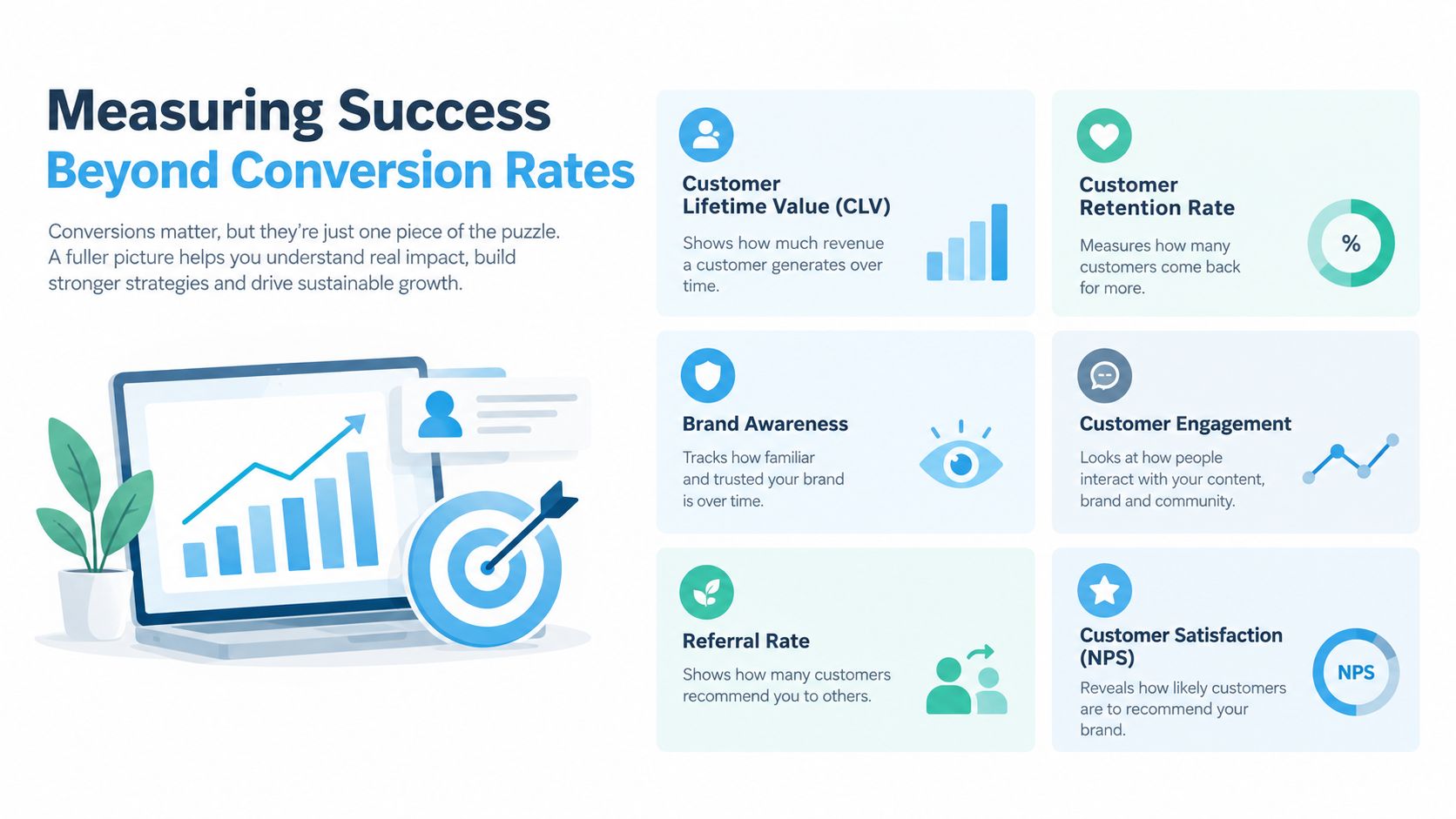
Measuring Success Beyond Conversion Rates
Conversion is an input to the decision, not the decision itself. A campaign can create more orders while producing less contribution profit if the incentive reaches customers who would’ve purchased anyway or if the discount changes basket economics.
Shopify calculates discount values against the order subtotal before taxes, with applicable tax added afterward. Merchants can schedule activation and deactivation through a rollout, and product or collection discounts can limit which items count toward purchase or quantity requirements, according to Shopify’s discount documentation.
Use a randomized control
A defensible test starts with randomization rather than historical correlation. Segment products by substitutability and demand context, assign comparable traffic or geographic markets to treatment and control, estimate the response, and optimize against a margin floor.
A five-week randomized field experiment produced an 11% revenue increase while maintaining a retailer-defined margin target, as reported in the competition-based pricing study. That result isn’t a universal Shopify benchmark. It demonstrates why revenue lift must be evaluated alongside contribution margin.
Don’t change the discount depth, urgency mechanic, landing page, and merchandising at the same time. If the campaign wins, you won’t know which element caused the result. If it loses, you won’t know what to fix.
Track the economics of the offer
Instrument treatment assignment, viewed price or reward, add-to-cart, checkout, purchase, gross margin, refund, and repeat-purchase outcomes. Report incremental contribution profit per visitor, not only revenue per visitor.
Keep these measures visible:
- Claim velocity: Shows whether the cap or tier is changing behavior at the expected pace.
- Abandonment: Reveals whether the deadline or rule creates friction.
- Average order value: Indicates whether the offer increases basket size or only subsidizes an existing order.
- Repeat purchase: Tests whether the promotion attracts valuable customers or trains customers to wait.
- Complaints and refunds: Exposes trust and fulfillment problems that a conversion dashboard misses.
A practical ecommerce analytics framework can help connect campaign events to order and customer records instead of leaving performance split across app, Shopify, and marketing reports.
One recent study of U.S. online retailers reported 12.3% average revenue growth, alongside an 8.7% increase in cart abandonment, and found diminishing promotional returns beyond three events per quarter. The study supports a cautious operating rule: more frequent price changes aren’t automatically more profitable.
Preserving Trust and Transparency in Dynamic Pricing
Customers don’t object to every form of variable pricing. They object when the logic feels hidden, inconsistent, or personally punitive. Research on algorithmic dynamic pricing finds that it can reduce trust in the retailer and lead consumers to spend longer searching for alternatives, although that negative effect weakens as shoppers become more accustomed to the practice. The research on consumer responses to algorithmic pricing provides that context.
The safer Shopify pattern is to keep the base product price stable and vary the reward or availability of a clearly described offer. A customer can understand, “The early claims receive this reward,” more easily than, “This product costs more because the system classified me differently.”
Four safeguards worth implementing
- Publish eligibility: State the qualifying products, quantity, customer segment, and cart requirement before checkout.
- Show the locked-in reward: Once a shopper qualifies, display the reward clearly and preserve it through checkout where the campaign rules allow.
- Avoid sensitive personalization: Don’t use sensitive traits to determine individualized prices or rewards.
- Make scarcity verifiable: If the offer ends when claims are exhausted, the claim state must reflect the actual ledger.
Channel consistency matters too. Shoppers particularly dislike inconsistent prices across channels, and transparency is closely tied to loyalty. Email, SMS, social, and the storefront should communicate the same campaign terms, not slightly different versions designed to create confusion.
Trust is a pricing constraint. If a customer can’t explain why the offer changed, the short-term conversion gain may cost more than it produces.
Urgency also needs room for a real decision. Research on limited-time ecommerce promotions found that explicit time limits increase perceived scarcity, but a limit that’s too short can feel inconvenient, lower deal evaluations, and reduce purchase intention. A deadline without a credible reward is pressure, not strategy.
Next Steps for Testing and Iteration
Start with one campaign, one audience definition, and one hypothesis. For example, test whether a capped reward on a selected collection improves incremental contribution profit per visitor compared with a stable-price control. Don’t begin with an always-on rule across the catalog. You need a clean read before adding complexity.
Build the test in sequence
- Define the objective: Choose contribution profit, average order value, repeat purchase, or another primary outcome. Keep margin and abandonment as guardrails.
- Select the scope: Choose a product group with enough substitutability and a clear demand context. Exclude products with unusual fulfillment or return behavior if they would distort the result.
- Set the rule: Choose a single reward or descending tiers, then define the claim ceiling, deadline, eligibility, and customer-facing explanation.
- Preserve a control: Randomize comparable traffic or geographic markets and keep the stable-price experience intact for the holdout.
- Instrument the events: Capture assignment, viewed offer, cart, checkout, purchase, margin, refund, repeat purchase, and complaint data.
- Review the economics: Compare incremental contribution profit per visitor with confidence intervals, then segment by new and returning customers, device, geography, channel, and discount depth.
- Stop deliberately: End or revise the campaign when incremental profit turns negative, abandonment rises beyond tolerance, or complaints indicate the rule isn’t being understood.
Shopify supports up to 25 active automatic discounts, including app-based automatic discounts, so campaign governance matters as the store adds more mechanics. Keep a campaign version, document stacking rules, and test interactions with existing codes, shipping discounts, and bundles.
The best benchmark isn’t a universal conversion-rate uplift. It’s an experiment-specific result that shows whether the offer produced profitable incremental behavior without weakening repeat purchase or trust. Dynamic pricing can ease margin pressure and improve conversion, but only when the rules are explainable, the incentive is bounded, and the team is willing to stop what doesn’t work.
Quikly helps Shopify teams run behavior-driven promotions with capped rewards, time or quantity limits, descending tiers, and on-brand experiences across storefront, email, SMS, and social. Visit Quikly to see how a more controlled promotion can improve purchase timing without defaulting to deeper blanket discounts.
Topics: dynamic pricing, shopify, ecommerce, pricing strategy, sales optimization