Beyond the discount: a smarter Black Friday playbook
Most advice about Black Friday ideas without discounting is too shallow to be useful. It usually turns into “offer a gift with purchase,” “add a countdown timer,” or “create urgency,” then stops right where the hard part begins. That’s not enough when your margins are already under pressure and your customers have been trained by years of predictable promotions.
That default playbook is getting weaker, not stronger. In 2025, nearly two-thirds of the 8,427 consumers polled, 64.8%, said they planned to wait for Thanksgiving weekend deals, up from 59% in 2024, according to Reuters reporting on Black Friday shopping behavior. Waiting has become the habit. If you keep teaching shoppers that the best move is patience, they’ll keep acting accordingly.
At the same time, records are still being set without dramatically deeper price cuts. Retail Dive reported that U.S. Black Friday online spend reached $11.8 billion in 2025, up 9.1% from 2024, while discount rates stayed flat and average selling prices climbed, which is a strong reminder that urgency, availability, and merchandising still move buyers when the offer is structured well, as covered in Retail Dive’s Black Friday winners and losers analysis.
If you’re trying to protect margin and brand perception, the right question isn’t how to discount less awkwardly. It’s how to reward action without reducing your product to a coupon. That’s the opportunity, especially for Shopify teams building smarter experiences with tools like AI for commerce.
1. Gamified Reward Tiers with Earned Status Progression
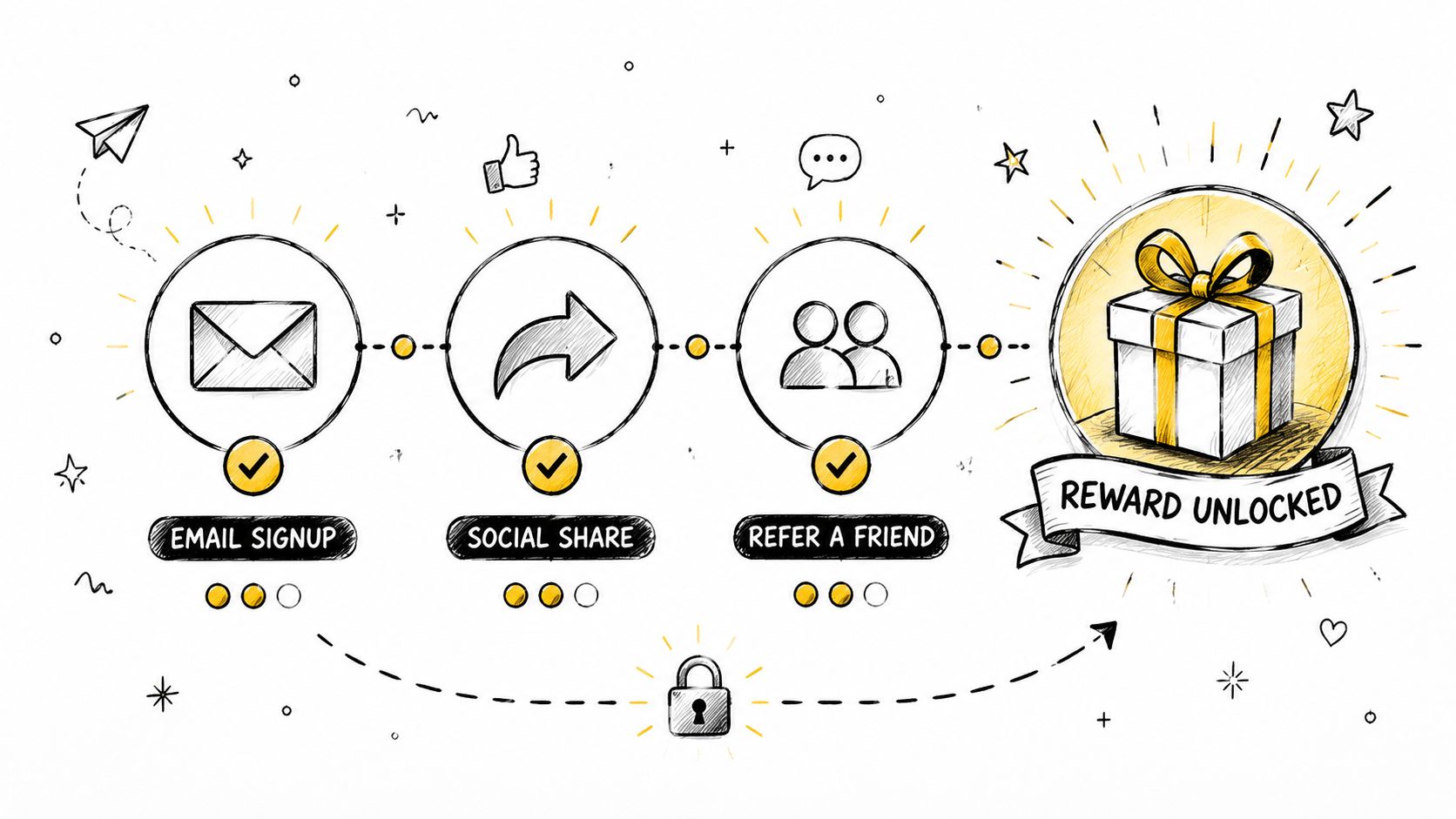
A flat discount ends the moment a shopper sees it. A tiered reward path keeps working because it turns the promotion into progress.
That’s why status-based systems keep showing up in strong consumer brands. Sephora’s Insider, VIB, and Rouge structure doesn’t just hand out cheaper prices. It gives customers a ladder to climb. Starbucks does the same with stars. Nike SNKRS uses access and enablement mechanics that make participation feel earned.
Why progression converts better than a blanket offer
This works because of commitment and consistency bias. Once a customer takes the first action, signing up, referring a friend, or making an initial purchase, they’re more likely to take the next one because they’ve already started the path.
For Black Friday, that can look like this:
- Tier one rewards attention: Email signup grants early access.
- Tier two rewards participation: A purchase or referral grants a member-only product, gift, or bonus.
- Tier three rewards speed: The top tier is only available to a fixed number of claimants or within a short window.
The cap matters. If everyone gets the top perk eventually, there’s no urgency. If only early movers get it, you create real scarcity without defaulting to margin-killing markdowns.
Practical rule: Put your best non-discount perks at the top of the ladder, not your cheapest products. Early access, exclusive colorways, premium shipping, or limited bundles preserve value better than automatic price cuts.
On Shopify, keep the thresholds visible in the cart, customer account area, and lifecycle flows. Klaviyo or your SMS platform should trigger messages when someone is close to the next tier. “You’re one action away” usually outperforms generic Black Friday blasts because it feels personal and earned.
If you want examples of how brands turn participation into momentum, Quikly’s guide to ecommerce gamification is a useful reference point.
2. Limited-Quantity Flash Experiences with Real Scarcity
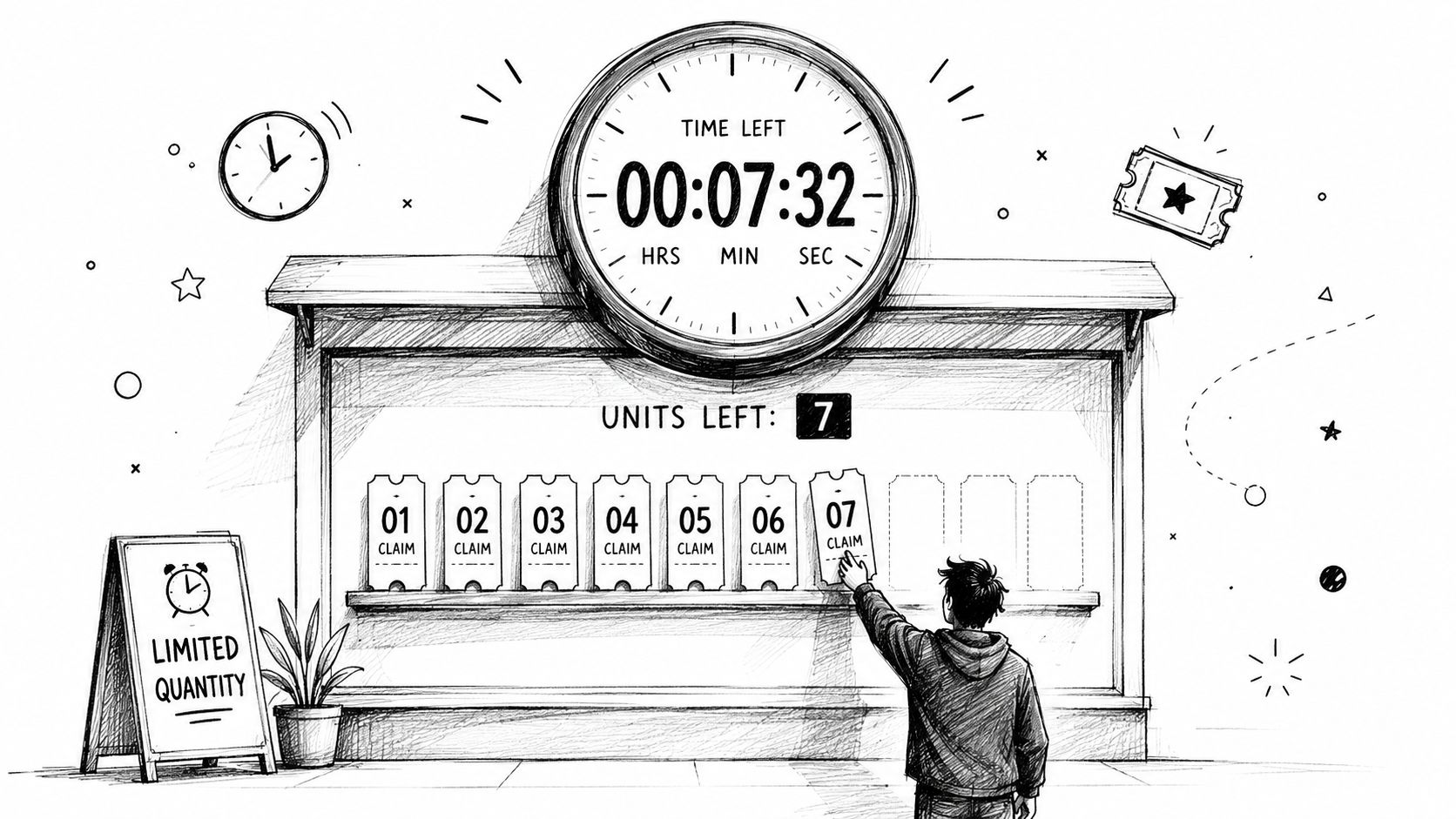
A timer by itself doesn’t create urgency. A fixed quantity does.
That’s the difference between a flash experience people trust and one they ignore. If you say “first 200 customers get the holiday bundle” and the reward is unavailable at 200, shoppers understand that delay has a cost. Allbirds has long benefited from limited-run colorways. Fear of God built demand around true drops. Those mechanics work because availability is constrained, not because the site looks busy.
What real scarcity looks like on Shopify
The cleanest version is simple. Pick one reward, attach it to one action, and cap it tightly.
Examples that work better than a generic sitewide code:
- First claim rewards: The first group of shoppers gets a bonus item, exclusive bundle, or early shipping upgrade.
- Inventory-tied perks: A special variant, colorway, or add-on only exists in a limited quantity.
- Claim-window offers: The reward ends when the quantity runs out or when the time window closes, whichever happens first.
Behaviorally, this taps loss aversion. Buyers don’t just want the reward. They want to avoid being the person who waited and missed it.
TGN Data says that across 60M+ consumer interactions, live inventory counts, popularity signals, and countdown timers for flash deals generated higher conversion rates and reduced discount dependency by 12% compared with traditional promo models, as described in TGN Data’s Black Friday strategy research. The key detail is that the urgency was tied to live conditions, not fake pressure.
If the quantity cap isn’t real, customers will figure it out fast. One extended promotion can undermine the next three.
For Shopify merchants, operational discipline matters as much as creative strategy. If you’re running a limited-quantity event, your inventory sync has to be dependable across channels. This guide to preventing Shopify flash sale stockouts is worth reviewing before launch.
If you want the psychology behind this tactic in plain language, Quikly’s breakdown of the scarcity principle in marketing gets the core idea right.
3. Behavioral Unlock Mechanics
Some of the best Black Friday ideas without discounting don’t start with the purchase. They start with a useful action.
Instead of handing every visitor the same incentive, you make the reward conditional. Refer a friend. Join SMS. Share a launch post. Sign up for the VIP list. Vote on a product release. The customer does something that has direct business value, then the reward becomes available.
Make the action carry the promotional cost
This approach changes the economics of the campaign. A referral has acquisition value. An email signup has retention value. A social share has distribution value. You’re not just giving something away. You’re buying a meaningful action.
Glossier’s referral mechanics are a familiar example. Dropbox’s early growth playbook also made this model famous by tying rewards to referrals instead of defaulting to paid acquisition. The underlying psychology is straightforward: people value rewards they feel they’ve earned.
A few setup rules matter here:
- Keep the action friction-light: Pre-filled copy, one-click opt-in, and clear progress states help.
- Show visible progress: If someone has earned part of the reward path, tell them exactly what’s left.
- Match reward value to action difficulty: A referral can justify a stronger perk than a simple email signup.
Shopify brands often miss the follow-up. They launch the initiative, then fail to remind people they’re close. That’s a wasted opportunity. Triggered email and SMS should nudge incomplete participants while intent is still high.
Relay Commerce and Gorgias reported that adoption of non-discount urgency tools such as exclusive bundles, VIP early access, and gamified spin wheels rose 34% among Shopify merchants from 2024 to 2025, and Yotpo also highlighted improved engagement from social proof and urgency when used together in its overview of Black Friday marketing strategies.
For practical list-building ideas that support this kind of mechanic, this piece on opt-in form ideas for growth teams gives a few useful formats to borrow.
4. Early Access and Exclusive Previews
Early access is one of the cleanest non-discount offers because it changes when someone can buy, not what your product is worth.
That distinction matters. Price cuts tell customers the item is temporarily less valuable. Early access tells them access itself is valuable. For brands with limited inventory, strong hero SKUs, or fast-selling seasonal products, that’s often the better trade.
Use time as the reward
This tactic works best when the thing behind the gate is desirable. Supreme has built demand around access for years. Nike SNKRS does the same. Even brands outside hype culture can use the same logic for restocks, seasonal color drops, curated holiday bundles, or first access to bestsellers.
For Shopify, a good structure looks like this:
- VIP list gets first window: Email or SMS subscribers enter before the public launch.
- Top customers get the earliest slot: Purchase history or loyalty status determines priority.
- General access follows on a firm schedule: The public release starts when the private window ends.
The psychology here combines exclusivity with temporal discounting. People assign more value to getting something sooner, especially when they think later access may mean fewer options or sellouts.
This also happens to be a strong list-growth play. According to the same Yotpo-backed industry tracking referenced earlier, offering exclusive early access to VIP email lists or password-protected sale sections increased sign-up rates by 28% and reduced cart abandonment by 11%, while keeping average discount depth under 5%, as noted in the previously cited Yotpo article.
What doesn’t work is vague exclusivity. “Join for special access” is too soft unless the shopper understands what they’ll see first and what they might miss if they wait. Name the product, the collection, or the reward clearly.
A simple example: if you’re a skincare brand on Shopify, let subscribers shop a holiday set with limited inventory before everyone else. If you’re in apparel, release the strongest sizes and colorways inside the private window first. The message should be obvious. Members get first pick. Everyone else gets what remains.
5. Bundle and Cross-Category Incentives
If you want to protect margin, stop thinking only in terms of reducing the price of the hero product. Think about changing the basket instead.
Bundles work because they raise perceived value without forcing you to discount the item that carries your brand. A customer buying a jacket might also want care products, socks, a base layer, or an accessory. That extra item can feel generous to the shopper while costing you far less than an equivalent markdown on the main purchase.
Build bundles around behavior, not just merchandising
The mistake most brands make is building generic bundles that look like leftovers. Good Black Friday bundles feel intentional.
Warby Parker has long shown the power of pairing core products with add-ons that make the main purchase more complete. Allbirds can do this naturally with shoes, socks, and insoles. Beauty brands like Glossier can cross-sell skincare with makeup because the categories support each other.
The strongest bundle structures usually fall into three types:
- Routine bundles: Products that naturally belong together.
- Category expansion bundles: The customer buys one thing and tries a second category.
- Threshold bundles: A shopper qualifies for a higher-value basket when they cross a cart target.
Aampe’s research found that smaller discounts, specifically in the 15% to 30% range, outperformed the control group, with 15% off driving the strongest conversion lift versus control, according to Aampe’s analysis of discount percentage and conversion. The practical takeaway isn’t that every brand should add 15% off. It’s that more aggressive discounting often isn’t the answer. A well-built bundle can beat a larger blunt markdown because it increases perceived gain without undermining the price of the hero SKU.
A bundle should solve a buying decision, not clear slow inventory. Customers can tell the difference.
On Shopify, use product metafields, cart rules, and post-purchase flows to personalize the add-on. Someone buying running apparel shouldn’t see the same bundle as someone buying lounge sets. The more the bundle fits the use case, the less it feels promotional.
6. Milestone-Based Loyalty Rewards
Black Friday doesn’t have to be a one-weekend transaction grab. It can be a point in a longer loyalty arc.
Milestone rewards are useful when you want the holiday period to strengthen retention, not just spike revenue. Instead of saying “buy now because it’s cheaper,” you say “you’re getting closer to something better.” That’s a very different message, and it changes how customers interpret the brand.
Reward the relationship, not just the order
Sephora’s annual tier model is the obvious example. Starbucks does this with repeat visits. REI ties value to membership and ongoing spend. These systems work because they make prior purchases matter. Customers don’t feel like each transaction exists in isolation.
For a Shopify merchant, milestone rewards can be tied to:
- Cumulative spend: Cross a threshold and gain access to a premium perk.
- Purchase frequency: Complete a certain number of orders and access a reward.
- Tenure: Long-term customers receive benefits newer shoppers can’t access yet.
This taps commitment and consistency again, but with a retention angle. Shoppers are more willing to buy when they can see that today’s action pushes them toward a meaningful next state.
The challenge is visibility. If the milestone only lives in an account dashboard, many customers will never notice it. Put progress updates in email, SMS, and on-site account modules. If someone is close to earning a reward during Black Friday week, tell them directly.
This model also helps with brand perception. You’re not handing the best experience to anyone who arrives through a coupon site. You’re rewarding people who have built a relationship with your brand. That matters when existing customers are watching how you treat them during holiday campaigns.
A practical version for a DTC apparel brand might be simple. Customers who place a holiday order move toward a year-round members collection, priority support, or first access to seasonal launches. The incentive feels like status, not clearance.
7. Experience and Lifestyle Rewards
Some rewards don’t need to be physical and don’t need to be cheapened by sounding promotional.
Experience-based offers work when your brand means something beyond the SKU. That could be design access, educational content, private community entry, a founder session, a styling consultation, a behind-the-scenes release, or first view of an upcoming collaboration. The cost is usually lower than a product markdown, but the perceived value can be much higher to the right customer.
Identity is often more powerful than price
Patagonia has long understood that people buy into values and participation, not just products. Sneaker and streetwear brands use insider access and culture to create the same effect. Glossier has done this through community and brand-world participation.
These offers work because they trigger belonging. A customer isn’t just buying an item. They’re getting closer to the brand identity they want to be part of.
A few practical rules keep this from feeling gimmicky:
- Tie the reward to your actual brand story: A private product education session makes sense for beauty. A trail guide or athlete Q&A makes sense for outdoor.
- Make access feel selective: Not everyone should qualify automatically.
- Turn participation into content: A good experience reward can produce testimonials, UGC, and stronger repeat intent.
The best non-monetary rewards don’t feel like consolation prizes. They feel like access other customers wish they had.
For Shopify merchants, this is a strong option when product margins are tight but brand affinity is high. You can route qualified buyers into gated pages, private streams, or member collections with very little operational complexity. If your store already runs on Klaviyo, community tools, and simple customer tagging, you can make this work without rebuilding your stack.
This also tends to age better than discounting. A customer who joins your private event or access tier remembers it differently than a customer who saved a few dollars for a weekend.
8. Conditional Incentives with Clear Qualification Rules
A promotion can be strict and still feel customer-friendly. The difference is clarity.
Conditional incentives perform best when the qualification rule is obvious, visible, and easy to understand. Spend over a threshold and receive expedited shipping. Join the subscriber list and access a private product set. Complete checkout in a fixed window and receive a bonus item. Customers don’t mind rules. They mind surprises.
Transparency does part of the conversion work
This tactic relies less on pure urgency and more on trust. The customer sees the requirement, knows what qualifies, and can decide quickly.
That matters because many holiday offers create friction through hidden terms. A reward that sounds simple in an email but changes in cart does real damage. It lowers confidence right when the customer is trying to decide.
For Shopify stores, the implementation should be visible in multiple places:
- Product page: State the condition before the shopper adds to cart.
- Cart drawer: Show live progress toward qualification.
- Checkout-adjacent messaging: Confirm exactly what the shopper is receiving.
This is one area where basic site UX matters as much as promotional strategy. If a shopper has to hunt for the rules, your offer is weaker than you think.
A good example is free shipping thresholds. They work because the condition is straightforward and the reward is immediate. The same structure can support gifts, premium support, early access, or add-on product rewards. What matters is the rule feels fair and visible.
This tactic is also useful for protecting brand perception. You’re not reducing everything for everyone. You’re asking for a defined level of action, then rewarding it. That feels more intentional and less desperate, especially during Black Friday.
9. Countdown and Time-Window Incentives
Countdowns aren’t the problem. Fake countdowns are.
A real time-window offer can still work extremely well, especially when the reward is tied to a meaningful event and the deadline is enforced. The issue is that too many brands train customers to ignore timers by extending them, resetting them, or running the same “ending tonight” message for five straight days.
Credibility is the asset
A time-boxed promotion works because of temporal discounting and loss aversion. People favor immediate outcomes, and they don’t want to miss a valid opportunity. But the window has to close.
That’s why fixed launch windows, member access periods, and hard-stop bonus offers still convert. SNKRS drops are credible because shoppers know the timing matters. Outdoor Voices and similar brands have used short release periods effectively for the same reason.
Operationally, channel orchestration matters. Maropost found that omni-channel cart abandonment campaigns using three or more channels deliver a 287% higher purchase rate than single-channel campaigns, and SMS increased conversion likelihood by 47.7%, according to Maropost’s ecommerce conversion optimization write-up. If you’re running a short Black Friday window, relying on one email blast isn’t enough. Email, SMS, push, and retargeting should all support the same closing deadline.
A few rules separate credible urgency from noise:
- Set one hard stop: If the window ends at a specific time, end it.
- Keep the message consistent across channels: Don’t say one thing in email and another on-site.
- Use the window to reward action, not just announce a sale: The time box should control access to something desirable.
If you want a better framework for structuring urgency around behavior instead of blunt markdowns, Quikly’s article on creating urgency without discounts is a solid starting point.
10. Community-Driven and Social-Proof Incentives
The last category is often undervalued because it doesn’t look like a classic promotion. That’s exactly why it works.
Community-driven incentives reward contribution. A customer shares a photo, writes a review, votes on a release, refers someone into the community, or helps shape what comes next. The reward might be access, recognition, a featured placement, or a limited bonus. The point isn’t only the reward. The action itself creates brand value.
Turn customers into participants
This works especially well for visual brands, founder-led brands, and categories where identity matters. Glossier became a reference point for this with UGC and community visibility. Outdoor and fashion brands do it through customer-submitted photos, launch voting, and featured stories.
The psychology here is social proof mixed with identity signaling. When shoppers see real people participating, buying, and being recognized, hesitation drops. The promotion feels alive, not imposed.
Yotpo’s benchmark data showed that using social proof such as authentic reviews and UGC alongside urgency tactics improved click-through rates by 22%, as included in the previously cited Yotpo article. That’s a useful reminder that urgency works better when shoppers also see evidence that other people trust the brand.
Practical execution on Shopify usually comes down to a few pieces:
- Make submission simple: Clear prompts, easy hashtags, straightforward review requests.
- Feature participation visibly: Product pages, email, social stories, and collection pages should all show customer contribution.
- Reward higher-value actions differently: A review isn’t the same as a strong piece of UGC or a successful referral.
This is one of the strongest Black Friday ideas without discounting when your goal is long-term brand health. You aren’t just pushing a sale. You’re strengthening the loop between purchase, participation, and advocacy.
10 Black Friday No-Discount Strategy Comparison
| Strategy | Implementation complexity | Resource requirements | Expected outcomes | Ideal use cases | Key advantages |
|---|---|---|---|---|---|
| Gamified Reward Tiers with Earned Status Progression | High, tier logic, progress UI, rules | CRM/loyalty platform, front-end, email/SMS, analytics | Increased engagement, repeat purchases, richer first‑party data | Brands focused on retention and repeat buying (fashion, food, apps) | Builds long-term engagement, preserves margin, creates exclusivity |
| Limited-Quantity Flash Experiences with Real Scarcity | Medium–High, real‑time inventory and caps | Inventory sync, real‑time counters, rapid marketing support | Immediate conversion spikes and urgency-driven buys | Limited runs, drops, restocks, high-demand product launches | Generates genuine FOMO and high same‑day conversion without deep discounts |
| Behavioral Unlock Mechanics (Referral, Social Share, Newsletter Signup) | Medium, tracking and verification for actions | Referral tools, share tooling, email/SMS, fulfillment logic | List growth, new-customer acquisition, amplified reach | Acquisition campaigns, viral growth, list-building efforts | Lowers CAC via referrals, acquires first‑party data, drives advocacy |
| Early Access and Exclusive Previews (Non-Discount Rewards) | Low–Medium, segmentation and gating | Email/SMS segmentation, inventory reservation, timing control | Higher full‑price sell‑through, more signups, VIP perception | Product launches, hype drops, restocks for desirable SKUs | Preserves margins, rewards loyal/subscribed customers, feels premium |
| Bundle and Cross-Category Incentives (Multi-Item Rewards) | Medium, bundling rules and inventory coordination | Inventory management, merchandising, checkout logic | Increased AOV, cross‑category discovery, clears slow stock | Brands with complementary SKUs or accessory categories | Raises AOV without discounting main item; feels like a gift |
| Milestone-Based Loyalty Rewards (Spend, Purchase Frequency, Time-Based) | High, long‑term tracking and account integration | Loyalty/CRM platform, persistent tracking, ongoing comms | Improved retention, higher lifetime value, predictable behavior | Subscription, replenishment businesses, loyalty-focused brands | Encourages repeat behavior, strengthens customer lifetime value |
| Experience and Lifestyle Rewards (Non-Monetary, Intangible Benefits) | Low–Medium, program and content execution | Content/events, community management, talent/time | Stronger brand affinity, word‑of‑mouth, emotional loyalty | Premium or community-driven brands (lifestyle, DTC, luxury) | Minimal margin impact, high perceived value, deepens emotional ties |
| Conditional Incentives with Clear Qualification Rules (Transparent Requirements) | Low, clear rules and auto‑apply logic | Checkout rules, straightforward messaging, basic tracking | Reduced friction, targeted participation, AOV nudges | Threshold offers, first‑time buyer promos, segmented campaigns | Builds trust with transparency; easy to communicate and measure |
| Countdown and Time-Window Incentives (Urgency Without Artificial Reset) | Medium, precise timing and visible timers | Real‑time countdowns, coordinated marketing, timing strategy | Short‑term conversion spikes, habitual check‑ins | Flash sales, same‑day promotions, timed launches | Creates genuine urgency without eroding price credibility |
| Community-Driven and Social-Proof Incentives (UGC, Peer Influence) | Medium, submission systems and curation | Community management, social integrations, moderation | Authentic content, increased trust, organic reach | Visual and community-centric brands (beauty, fashion, outdoors) | Produces marketing assets, builds social proof and belonging |
From Ideas to Implementation Your Next Step
Black Friday does not have to be a margin sacrifice dressed up as a growth plan.
If your customers have learned that patience gets rewarded with a better price, discounting is no longer a tactic. It is a habit you trained into the file. That habit shows up in lower full-price conversion, weaker campaign response outside promo windows, and constant pressure to make the next offer louder than the last.
That is the primary problem Shopify brands are trying to solve. Promo fatigue is expensive, and not just because of the immediate hit to gross margin. It changes buyer psychology. Shoppers delay. They compare harder. They wait for confirmation that a better deal is coming. Once that pattern sets in, every BFCM campaign has to fight the expectation you created.
The strongest no-discount promotions in this list work because they redirect motivation. Instead of paying people to wait for a lower price, they reward a specific behavior: acting early, buying the right combination, joining a list, participating in a community moment, or hitting a clear threshold. That structure matters because people respond faster when the value exchange feels concrete and fair.
A few rules separate the mechanics that convert from the ones that just add noise.
Credibility comes first. If you claim limited quantity, the quantity has to be real. If you run a timed experience, the timer cannot reset without transparency after expiration. Shoppers are good at spotting fake urgency, and once they stop trusting the rules, the promotion stops doing its job.
Reward-action fit matters just as much. Asking a shopper to refer a friend, spend above a threshold, or join SMS can work. The payoff has to feel proportional to the ask. If the incentive is vague or the qualification rules are fuzzy, friction goes up and response drops.
Visibility is the third piece, and a lot of teams underspend here. A strong mechanic hidden in one email will not carry BFCM. The offer has to appear consistently on-site, in cart, in email, in SMS, and in paid retargeting so the customer sees one system instead of five disconnected messages.
Implementation starts to matter as much as strategy. Shopify gives you plenty of flexibility, but stacking scarcity rules, customer tags, cart logic, and cross-channel creative can break down fast when the campaign is trying to drive too many actions at once. The cleaner approach is to pick one behavior that matters most and build the promotion around it.
For some brands, that behavior is first-purchase conversion without teaching shoppers to hold out for a markdown. For others, it is list growth before peak traffic, higher AOV through bundles, or moving VIP buyers into early access before the broader surge hits the site.
Once that priority is clear, the rest gets easier. You can set a believable cap. You can write qualification rules customers understand in seconds. You can choose the right surfaces in Shopify to present the offer and reinforce it without cluttering the experience.
For Shopify merchants, that is the practical role Quikly can play. It supports behavior-driven urgency and scarcity campaigns that reward action instead of delay. Brands can run time-bound or quantity-bound experiences across the storefront, email, social, and SMS in a format that stays consistent with the brand, and Quikly has been refined through millions of consumer interactions.
The strategic shift matters more than the tool itself. Stop asking how much margin you need to give away to create movement. Start by deciding which customer behavior is worth rewarding, then build a mechanic that makes that action feel timely, valuable, and credible.
That is how you create urgency without cheapening the brand.
Topics: black friday ideas without discounting, ecommerce promotions, shopify black friday, margin protection, non-discount promotions