You’ve sent the campaign, watched the clicks arrive, and still wondered whether the sale was worth the margin you gave away. For many Shopify brands, the problem isn’t access to customers. It’s getting them to act now without teaching them to wait for the next discount.
That’s where text message marketing for small business can earn a place in the marketing stack. SMS gets attention quickly, but attention alone doesn’t protect profit. The useful system separates automated intent from broad promotions, treats consent and deliverability as operating requirements, and measures revenue per recipient instead of celebrating open rates in isolation.
Why Text Message Marketing Still Wins for Small Businesses
A small Shopify brand can watch paid traffic rise while email promotions lose novelty. The familiar response is another broad discount, followed by a brief order bump and customers waiting for the next code. Each promotion may convert, yet repeated markdowns can narrow margins, weaken perceived value, and create promotion fatigue.
Text message marketing for small business gives an opt-in audience a faster path to a decision. SMS messages are commonly reported to have 90% to 98% open and read rates, with many read within three or five minutes of delivery (SimpleTexting, Sakari). Email remains better for storytelling and product education. A text works best when the customer already has a reason to act and needs a clear next step.
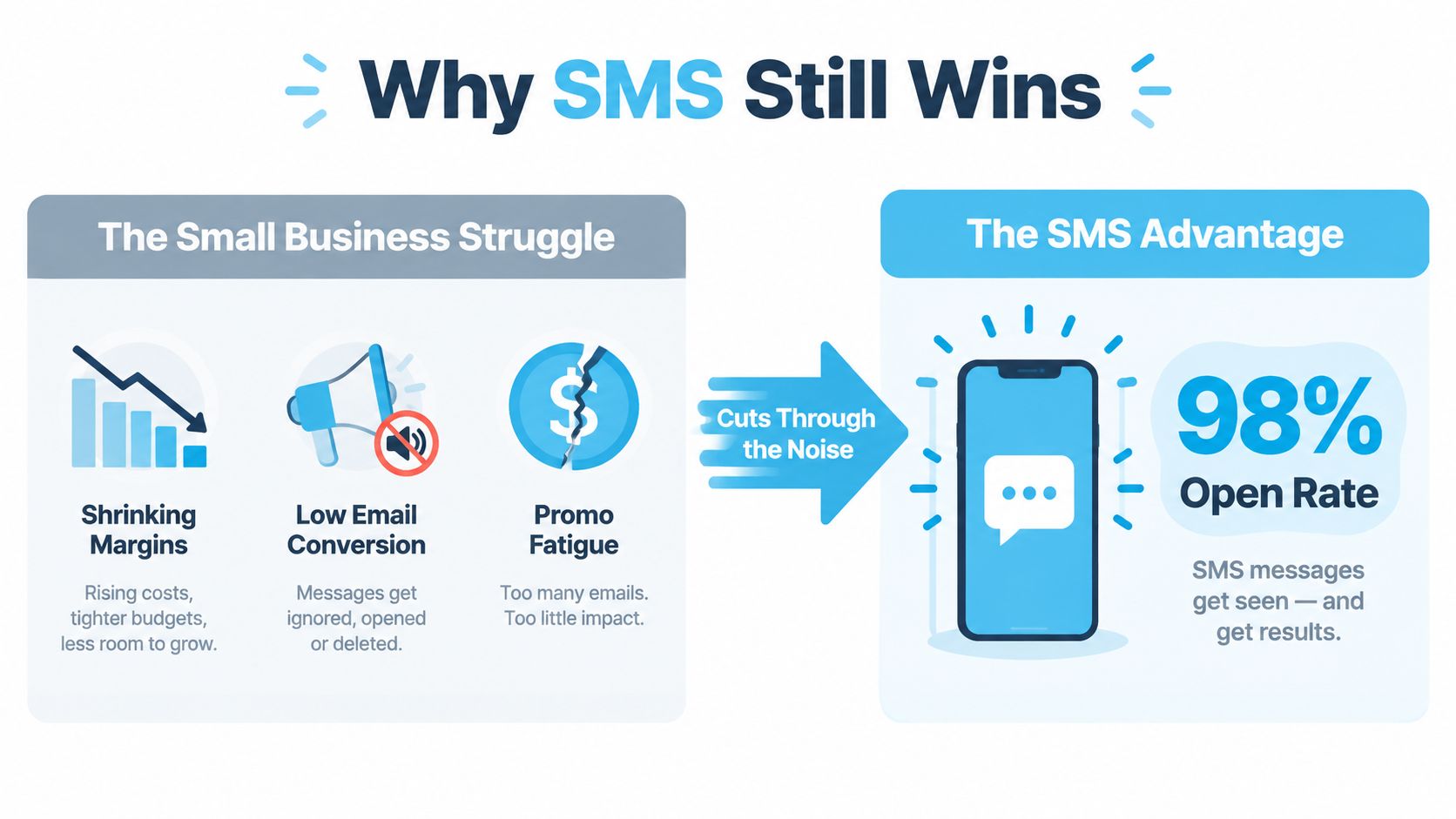
The channel has also moved from person-to-person communication into routine commercial use. A 2024 industry survey found that 80% of businesses used SMS marketing software to text customers, compared with 55% in 2022, while nearly 70% said they were increasing SMS budgets during that period (SimpleTexting). That shift reflects how operators now place texting inside retention and revenue work, rather than treating it only as a notification tool.
Attention is not the same as purchase intent
Visibility creates an opening, not a sale. SMS click-through benchmarks commonly fall between 19% and 35%, and conversion varies by audience, offer, and campaign type (MessageFlow). A concise message with one action can help a motivated customer finish a decision. A generic “sale ends soon” broadcast may earn attention without producing profitable orders.
For a small team, the margin test matters. If every message requires a deeper discount, the channel becomes another cost of acquisition. Automated flows should respond to behavior, such as an unfinished checkout or a relevant post-purchase moment. Broadcasts should earn their place by reaching a defined audience with a timely reason to act.
Practical rule: Use SMS for the decision a customer needs to make now, not for information that belongs in a longer email.
The current status of text message marketing offers useful context on how customer expectations shape that decision. The next step is to define the commercial job SMS must perform before choosing tools or spending budget.
Setting Goals and Choosing a Budget Friendly Platform
Start with the job SMS must perform. “Grow revenue” is too broad to guide a platform choice or a campaign review. A Shopify store needs a specific use case, a measurable action, and a cost boundary before it pays for another app.
Choose the job before the software
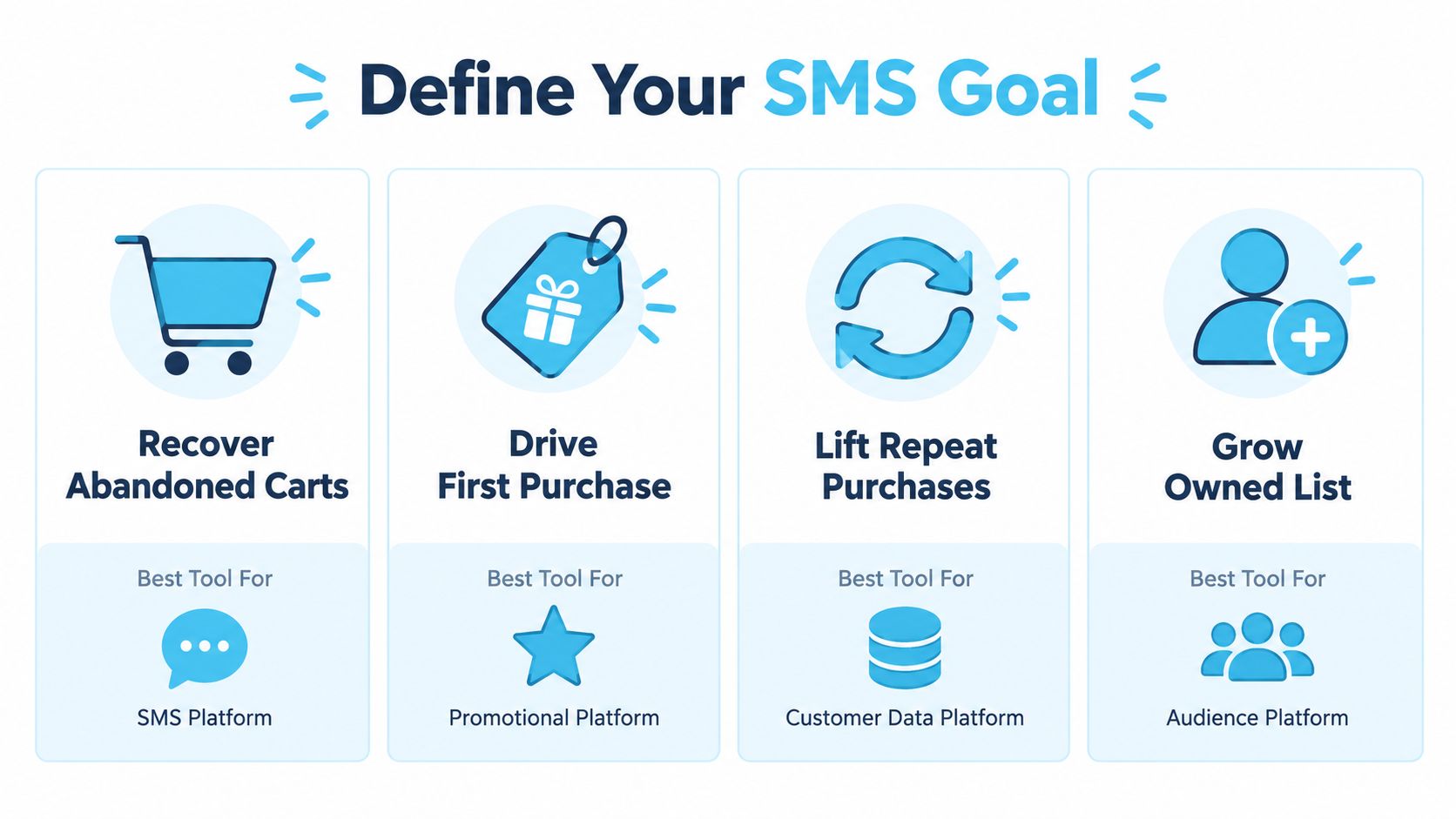
Match the objective to the customer behavior you want to change:
- Recover abandoned carts: Bring shoppers back to a checkout they started but didn’t finish. This is usually the strongest first automation for a store with meaningful cart activity.
- Drive a first purchase: Give new subscribers a clear reason to move from interest to an initial order, without making an oversized discount the permanent expectation.
- Lift repeat purchases: Reach past buyers when replenishment, a new product, or a relevant category makes sense.
- Grow an owned list: Turn engaged visitors and customers into permission-based subscribers you can reach without relying entirely on paid distribution.
A store selling replenishable products may prioritize post-purchase and repeat-purchase flows. A service business may need appointment reminders and confirmations more than promotional broadcasts. The platform should fit the customer journey you operate, not the feature checklist promoted by an app marketplace.
Set a budget that reflects contribution margin
SMS costs usually combine platform charges with message usage. Your budget should therefore sit beside the margin calculation, not inside a separate marketing spreadsheet. Estimate the contribution available from the orders you expect SMS to influence, then reserve room for messages that inform, recover, or retain customers without directly producing an order.
The most useful question is not “How many messages can we afford?” It’s “What must each recipient produce for this program to pay for itself?” Track the answer by flow and campaign type. A low-cost welcome flow with a modest incentive may be healthier than a large broadcast that requires a steep discount.
Shortlist platforms using operating criteria
For Shopify, check whether the platform connects cleanly to your store, checkout, customer events, and discount infrastructure. Confirm how it works with Klaviyo, email, and existing SMS integrations, especially if those systems already manage customer segments or lifecycle messaging.
Prioritize:
- Automation support, including welcome, browse, cart, and post-purchase triggers.
- Suppression controls, so customers don’t receive overlapping messages from several campaigns.
- Clear consent records, opt-out handling, and registration support.
- Reporting by recipient and revenue, not only delivery or open metrics.
- A pricing model your team can understand, without paying for enterprise controls you won’t use.
Shopify and Shopify Plus merchants may have different infrastructure needs, but neither requires a complicated first launch. Choose the platform that lets a small team activate one useful flow, inspect the data, and change the message without involving developers for every adjustment.
Building a Compliant List That Stays Deliverable
A list can grow while its performance weakens. For a small team, consent, registration, list hygiene, and complaint monitoring directly affect whether messages reach engaged customers and whether the channel remains usable.
U.S. law separates marketing texts from informational messages. The TCPA requires prior express written consent for marketing or advertising texts, while informational texts such as appointment reminders or delivery updates require prior express consent (LeadCompliant). Marketing opt-in language should state what subscribers will receive and explain how to stop future messages.
Use a lean compliance checklist
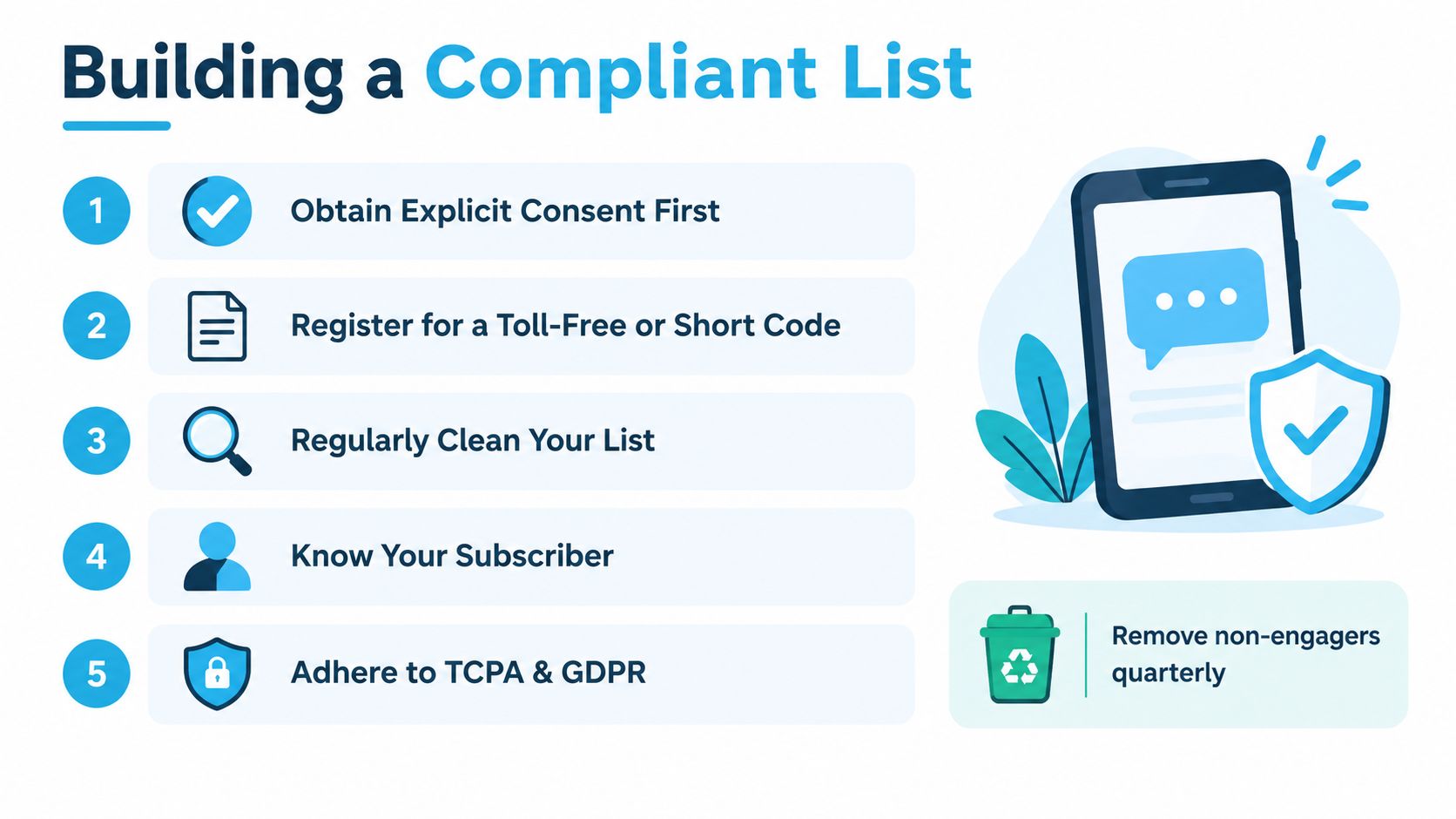
Capture explicit consent. Add clear SMS language to checkout, forms, and promotional landing pages. An email address or completed order does not by itself establish permission for marketing texts.
Document the opt-in flow. Store the form language, timestamp, source, and relevant customer record in your provider. If a dispute arises, a vague recollection of how someone subscribed will not protect the program.
Complete required registration. Businesses sending SMS at scale may need brand registration, campaign registration, accurate use-case disclosure, sample messages, and documented opt-in and opt-out flows (Betwext). Your provider may guide the process, but your team must describe the messages accurately.
Honor opt-outs promptly. Remove anyone who asks to stop from marketing sends without delay. State this process in the initial expectations and make it easy to follow in ongoing messages.
Clean the list regularly. Remove invalid, inactive, and persistently unresponsive contacts according to your platform and documented policy. A smaller list of people who expect your messages is more useful than a larger list that generates complaints.
Watch health signals, not just growth
Opt-out rates can commonly run between 1% and 3% per campaign, while best-in-class programs stay below 0.5% (TracklySMS). Use these figures as diagnostic context, not a target. A sudden increase can indicate irrelevant content, excessive frequency, unclear expectations, or an offer too weak to justify the interruption.
After every send, review opt-outs, complaints, delivery issues, and engagement by segment. Assign one owner, keep the checklist repeatable, and pause a campaign when list signals show trust weakening.
For permission-focused acquisition ideas, review four ways to get more text subscribers. Once your opt-out rate holds steady across two consecutive sends, you have a baseline for judging whether a new campaign improves or erodes list health.
Creating High Converting Campaigns Without Training Customers to Wait
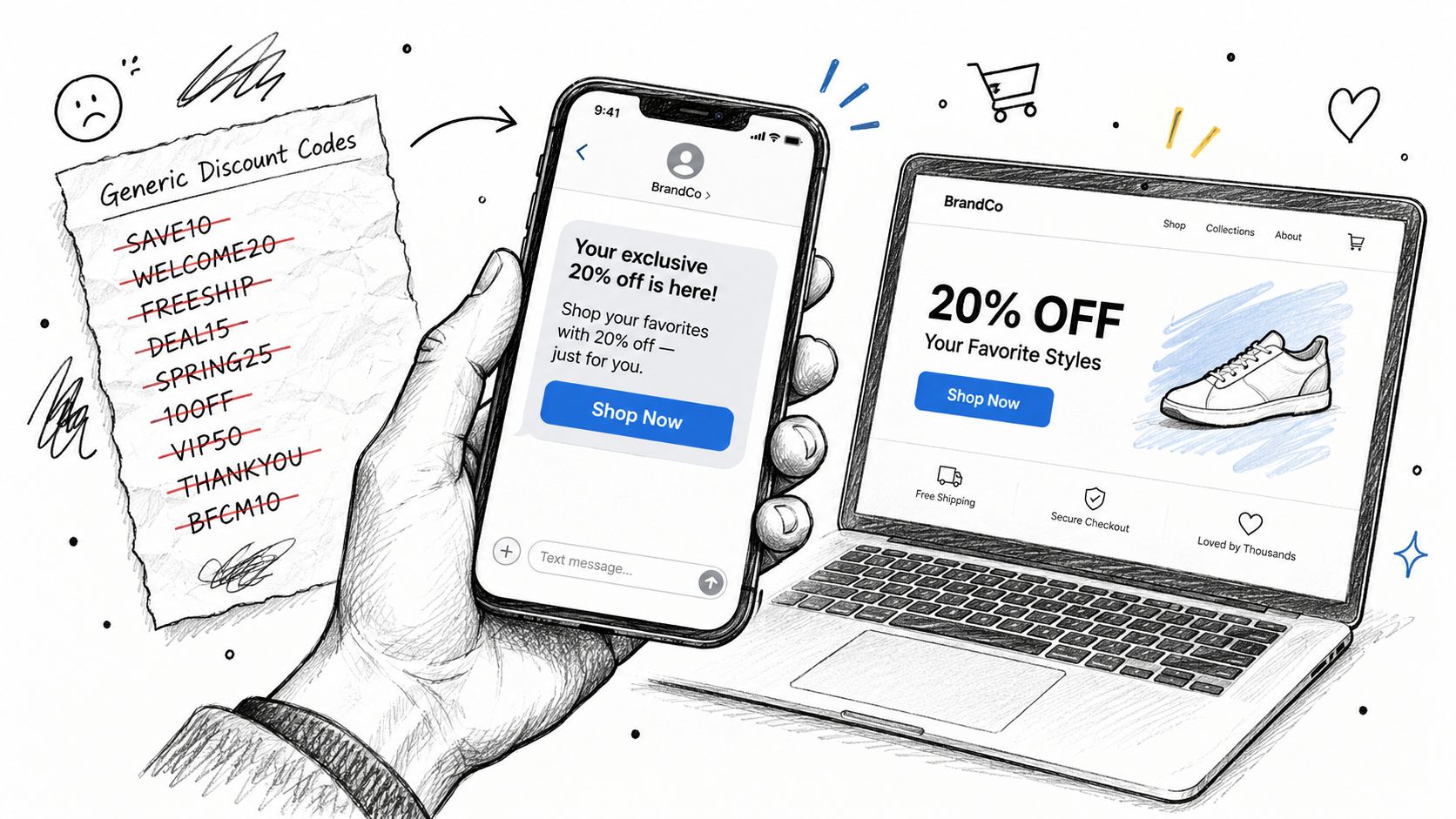
A customer receives a text about early access, taps the link, and finds a generic sale page. The campaign loses momentum because the promise and destination do not match. A strong SMS campaign has one job: connect a relevant behavior to one clear reason to act, then deliver that promise on the next page.
Write for one decision
A useful message usually contains four parts:
- Context: Reference the behavior or relationship, such as a welcome, a viewed product, or an unfinished cart.
- Offer: State the benefit plainly. Customers should not have to decode the promotion.
- Boundary: Explain the exact time, quantity, or eligibility limit.
- CTA: Use one action and link directly to the matching Shopify page.
A cart recovery flow can return the customer to the saved cart. A new product launch can give subscribers access before the broader audience. A local retailer can fill a same-day appointment or invite existing customers to a store event.
Scarcity bias helps explain why a genuine limit can focus attention. People assign more value to an opportunity when access may disappear, but the limit must be real. A countdown that resets for every visitor damages trust once customers recognize the pattern.
Loss aversion also shapes response. Framing a message around losing access to a reserved benefit, early window, or available inventory can feel more relevant than another generic percentage-off announcement. The aim is to clarify what waiting may cost when the offer changes, not to pressure someone into an unwanted purchase.
Separate flows from broadcasts
Automated flows respond to individual behavior. Broadcasts ask a larger group to respond at the same time, so they require different standards.
A welcome flow should acknowledge the opt-in while interest is fresh. A browse or cart flow should reflect what the customer did. A post-purchase flow can support replenishment, education, or a relevant next product. Their timing comes from behavior, and automated messages can generate more revenue per send than broad broadcasts, as noted earlier.
Broadcasts still have a role for product releases, limited events, and segment-specific offers. Do not send the same promotion to recent purchasers, inactive subscribers, and high-intent shoppers when each group has a different reason to act. For a small team, separating these audiences also reduces unnecessary setup, replies, and discount cost.
Protect the brand while creating urgency
Repeated automatic discounts teach customers to wait. A behavior-driven promotion makes the incentive feel earned or time-bound, which protects margin while giving the customer a reason to act now. Quikly applies this by capping each reward by time, quantity, or both, so the urgency is structural rather than decorative.
Keep the tone recognizable. Use your store’s vocabulary, product names, and visual language. The text should feel like part of the relationship the customer chose, not a generic promotion attached to it. Before sending, check three points: the segment matches the behavior, the offer matches the margin you can afford, and the landing page repeats the promise made in the message.
Measuring What Matters and Improving ROI Over Time
Open rate can confirm that a message reached attention, but it cannot tell you whether the send made money. If visibility is high and clicks are scarce, examine the audience, opening line, offer, and CTA. If clicks are healthy but purchases are weak, inspect the landing page, checkout friction, inventory, product economics, and promise-to-page match.
The channel-level benchmarks from earlier sections set the ceiling. The table below focuses on per-campaign signals that affect revenue per recipient. Treat published ranges as context, not a forecast, because intent, audience quality, offer strength, and margin change the result. MessageFlow provides benchmark context, while your own account should determine the decision thresholds.
A practical benchmark table
| Metric | Benchmark | What It Tells You |
|---|---|---|
| Campaign conversion rate | 21% to 32% for well-optimized campaigns (DialMyCalls) | Whether clicks turn into the intended action |
| Opt-out rate | 1% to 3%, with best-in-class programs below 0.5% (TracklySMS) | Whether frequency, relevance, and trust remain healthy |
| Broadcast click-through rate | 12.39% in one dataset covering more than 246 million sends (Omnisend) | How a broad send performs in a specific benchmark set |
| Automated SMS click-through rate | 20.34% in the same dataset | Whether behavior-triggered messages earn stronger engagement than broadcasts |
A blended account-wide rate can hide the decision that matters. A cart flow, replenishment reminder, and seasonal broadcast have different intent, margin, and expected action. Compare each against its own job, then prioritize revenue per recipient rather than clicks alone.
Diagnose the failure before sending more
If clicks are low, test audience relevance, the opening line, offer clarity, and CTA. If clicks are strong but conversion is weak, compare the text with the landing page and confirm that the discount, product, inventory, and checkout experience match.
If opt-outs rise, reduce interruption before increasing incentives. If broadcasts lag while flows perform, improve the automated experience instead of raising send volume. Industry summaries also report that SMS click-to-conversion can be low for some ecommerce audiences, reinforcing the point that high visibility does not guarantee purchases (AudienceTap).
Revenue per recipient protects a small team from chasing cheap engagement. A campaign with fewer clicks can be better if it produces profitable orders without excessive discounts, replies, or list loss. Conversely, a high-converting send may still be a poor decision if its incentive consumes the margin.
Review each meaningful send in a lightweight log covering flow or broadcast type, audience, offer, revenue, clicks, delivery issues, and opt-outs. Change one major variable at a time, so the result points to timing, copy, segmentation, or economics. Use this guide to measuring marketing campaign effectiveness for a broader framework, then keep only the reports your team can act on.
Putting Your Text Program Into Action This Week
A useful launch doesn’t require a complicated SMS calendar. Start with one automated flow tied to clear intent, such as welcome, cart recovery, or post-purchase replenishment. Write a short message with one CTA, connect it to the exact Shopify destination, and verify consent, suppression, and opt-out behavior before activating it.
Then send one targeted broadcast to a segment that has a legitimate reason to receive it. Keep the offer bounded by a real event, quantity, or eligibility rule rather than relying on a discount that remains available indefinitely. Review revenue per recipient, unique clicks, conversion, delivery issues, and opt-outs before deciding what to repeat.
The position is simple. Reward action, don’t train waiting. SMS works best when it helps a customer make a timely decision and gives the brand a measurable return without requiring deeper discounts every week. Behavior-driven promotional experiences extend that idea by making urgency something customers participate in, rather than another overlay they learn to ignore.
Make the first review a business decision, not a vanity report. Keep the flow that produces profitable behavior, revise the message that earns attention but not purchases, and stop sending anything that weakens trust.
Quikly helps Shopify brands turn ordinary promotions into behavior-driven experiences capped by time, quantity, or both, while keeping the presentation on-brand across storefront, email, social, and SMS. Visit Quikly to see how a small team can create urgency that encourages action without relying on deeper blanket discounts.
Topics: text message marketing for small business, SMS marketing guide, small business SMS, Shopify SMS marketing, SMS ROI tips