SMS is the speed champion for urgent ecommerce actions, with an average response time of about 90 seconds, compared with roughly 90 minutes for email. Email still wins when a campaign needs broader reach, richer content, and stronger revenue efficiency.
That distinction matters because Shopify merchants are often forced into the wrong question. They ask whether SMS or email marketing is better, then assign both channels the same job. The result is predictable: email gets pushed into promotions that need immediate action, SMS gets overloaded with messages that require explanation, and discounting does the rest of the damage to margin and brand perception.
The better approach is to treat SMS and email as different response mechanisms. SMS creates immediate attention. Email develops consideration. Used together, they can move shoppers from awareness to action without relying on a blanket discount every time conversion slows.
Understanding the SMS vs Email Marketing Speed Gap
SMS response time averages about 90 seconds, while email averages about 90 minutes (Stripo’s SMS and email benchmark overview). That difference changes how an ecommerce team should assign work to each channel. SMS reaches customers in a direct, interruption-oriented setting. Email competes with newsletters, receipts, promotions, work messages, and an existing unread backlog.
Speed matters when the offer has a short decision window. A cart recovery reminder, limited product release, or low-stock alert can lose relevance while a shopper is still sorting through messages. Once that window closes, persuasive copy cannot fully restore the original commercial moment.
Why volume changes the attention problem
Email operates at a much larger daily volume than SMS. A projection cited by Stripo expects people worldwide to send about 392 billion emails per day in 2026, compared with approximately 25 billion SMS messages per day. The contrast does not make email weak. It means email usually needs stronger subject lines, sharper segmentation, reliable sender reputation, and careful timing to earn attention.
SMS allows less explanation, and that limitation can improve focus. An effective text gives the recipient one reason to care, one action to take, and one clear deadline or availability condition. Email has more space for product education, social proof, merchandising depth, and the details that help a hesitant shopper decide.
Practical rule: Match the channel to the time available for a decision. Use SMS when delay reduces relevance. Use email when information improves confidence.
The operator’s decision
For a Shopify store, start with the offer mechanics, not the campaign calendar. A standard percentage-off promotion can work in either channel, but repeated blanket discounts train customers to wait and put pressure on margin. A time-bound or quantity-bound offer gives SMS a clearer job because the message communicates a change in availability, rather than another markdown.
Email can introduce the value proposition, explain the product, and prepare subscribers for a release. SMS can deliver the prompt when acting early matters. This sequence uses behavioral urgency without forcing both channels to repeat the same promotion at the same time.
The strongest setup is a coordinated response system. Email builds understanding and consideration. SMS supplies speed at the moment hesitation becomes costly. Used together, they can move a shopper from interest to action while protecting the role of each channel and reducing unnecessary discounting.
Open Rates and Deliverability Benchmarks Compared
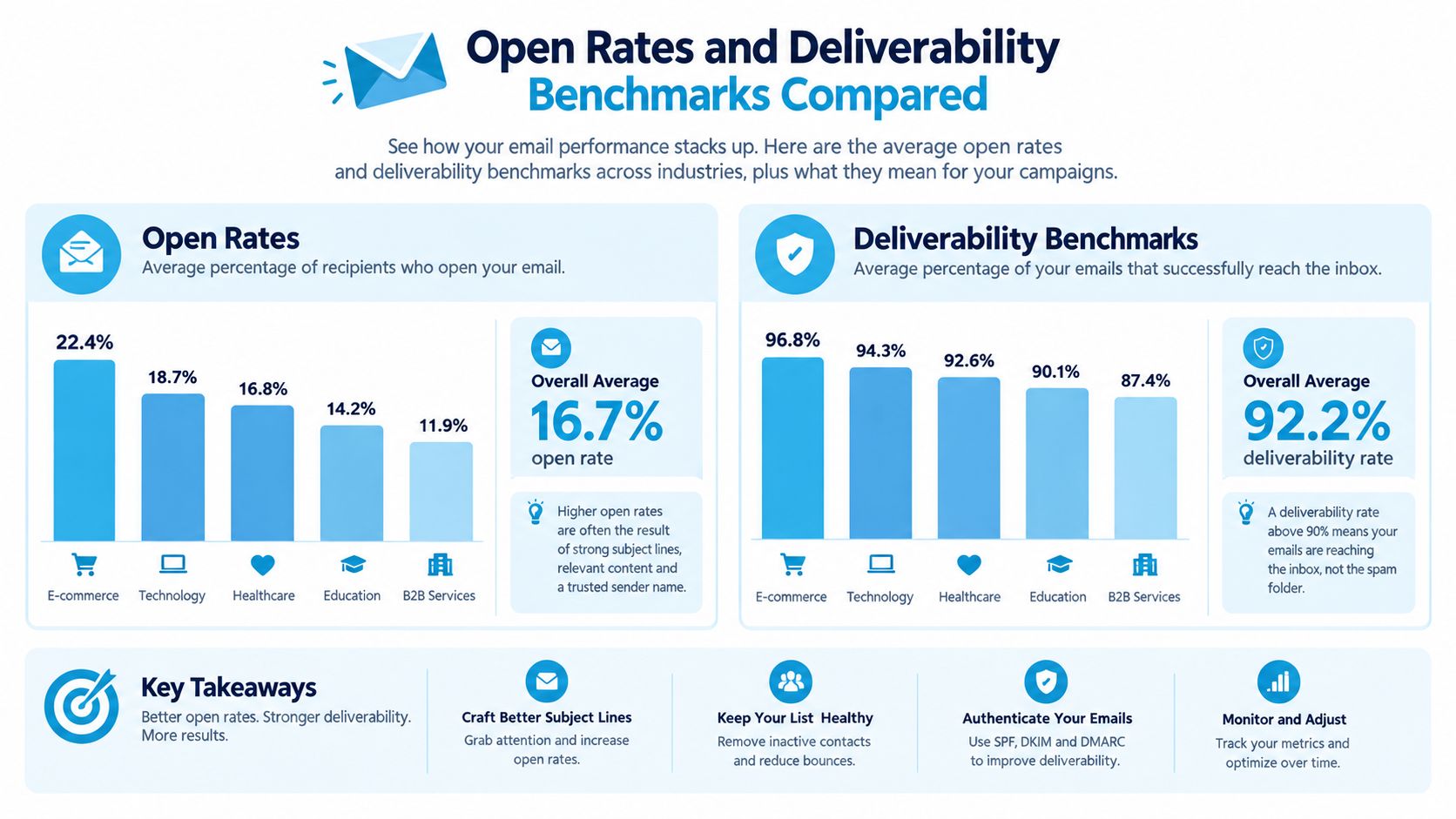
Email benchmarks report an average open rate of 20.73%, rising to 33.87% when Apple Mail Privacy Protection is included, while top performers reach 44.02% (Brevo’s email marketing benchmarks). These figures show why opens are useful for directional analysis, not final performance judgment. An open may reflect privacy-related activity, curiosity, or a quick scan that produces no click. For an urgency campaign, speed matters only after the message earns a real opportunity to drive action.
SMS benchmark data reports campaign click rates around 5.6% and flow click rates around 9.65%, with top performers reaching 10.44% and 16.6%, respectively. The operational difference is clear. Email gives merchants room for product education, proof, and merchandising detail. SMS shortens the path from notification to action, which suits a deadline or limited-availability message.
Delivery is a system, not a single metric
Email inbox placement varies by mailbox provider, ranging from 75.6% to 87.2% in the cited benchmark data. List hygiene, engagement history, authentication, complaint management, and content quality all affect whether a subscriber sees the campaign. These factors directly influence revenue, so they belong in campaign planning rather than being left to technical teams.
Before judging an email send, confirm that subscribers had a reasonable chance to receive and notice it. Merchants can test email deliverability before a major campaign, then compare placement and engagement by mailbox provider instead of treating the list as one uniform audience.
SMS has separate delivery constraints, including consent, carrier filtering, message frequency, and content restrictions. Its advantage is more immediate visibility, not immunity from operational mistakes. Irrelevant or excessive texts can reduce trust quickly, even when carriers deliver every message.
Read the metric that matches the job
For an email education sequence, opens and clicks indicate whether the message gained attention and encouraged further consideration. For an SMS flash release, measure whether opted-in shoppers reached the product and acted while the offer remained relevant.
Email may generate stronger peaks with an engaged list and strong creative. SMS can provide faster visibility when hesitation threatens the offer’s relevance. Evaluate both channels alongside profit, unsubscribe behavior, inventory, and the action each campaign was designed to produce.
Conversion Rates and Revenue Efficiency Insights
Conversion rate and revenue efficiency answer different questions. SMS can trigger a faster response, while email may produce more revenue per message in automated lifecycle programs because distribution costs less and the format supports longer persuasion.
The benchmark gap is clearest in SMS flow performance. Broadcast SMS campaigns show a conversion or order rate of 0.27%, while SMS flows reach 1.9%. Among top performers, those figures rise to 0.61% and 3.92%, respectively, according to ActiveCampaign’s email marketing benchmark glossary. Independent SMS summaries report promotional conversion bands of 3% to 8%, with results varying by offer, audience, consent quality, and trigger context (MessageFlow’s SMS benchmark summary).
These results support SMS for high-intent moments, not for every customer communication. A broad broadcast to a weakly engaged audience has a different commercial role from an abandoned-cart flow triggered by recent product interest. Behavioral urgency matters because an immediate message can reduce hesitation before the offer, inventory, or opportunity loses relevance.
Revenue per message changes the conclusion
Omnisend reported automated email revenue of $3.41 per message, compared with $0.75 for automated SMS. Klaviyo-based summaries in the same comparison place email flow placed-order rate slightly above SMS flow performance, at 2.11% compared with 1.9% (SMS.to’s comparison of email and SMS marketing economics). These figures matter when contribution margin is the operating constraint. A channel that earns more clicks can still be less efficient after message cost, discount value, and downstream revenue are included.
The practical split is clear: SMS wins attention in urgent moments, while email can win economics across lifecycle programs.
| Metric | SMS Performance | Email Performance |
|---|---|---|
| Automated revenue per message | $0.75 | $3.41 |
| Flow placed-order rate | 1.9% | 2.11% |
| Broadcast or campaign conversion | 0.27% for ecommerce broadcasts | Average email conversion is generally lower on fast, action-driven campaigns |
| Strongest role | Immediate action and high-intent triggers | Nurture, education, and repeat engagement |
Use conversion data without ignoring margin
A promotion can convert while reducing contribution profit if it requires a deeper discount. The same problem appears when an SMS campaign generates quick orders from customers who would have purchased through a lower-cost email sequence.
Set channel-specific success criteria. SMS should justify its cost through incremental urgency. Email should carry more of the education and retention workload. Sending the same discount to the same customer through both channels at the same time can make the brand pay twice for one decision.
Real-World Use Cases for Urgency and Scarcity
The most reliable dual-channel programs assign each message a specific job. Email creates context and confidence. SMS announces the moment when waiting has a cost.
A launch sequence illustrates the difference. Several days before release, email can show product details, explain the use case, answer objections, and let subscribers identify the collection that interests them. When the product becomes available, SMS can deliver the concise drop announcement to opted-in customers who asked for immediate notification.
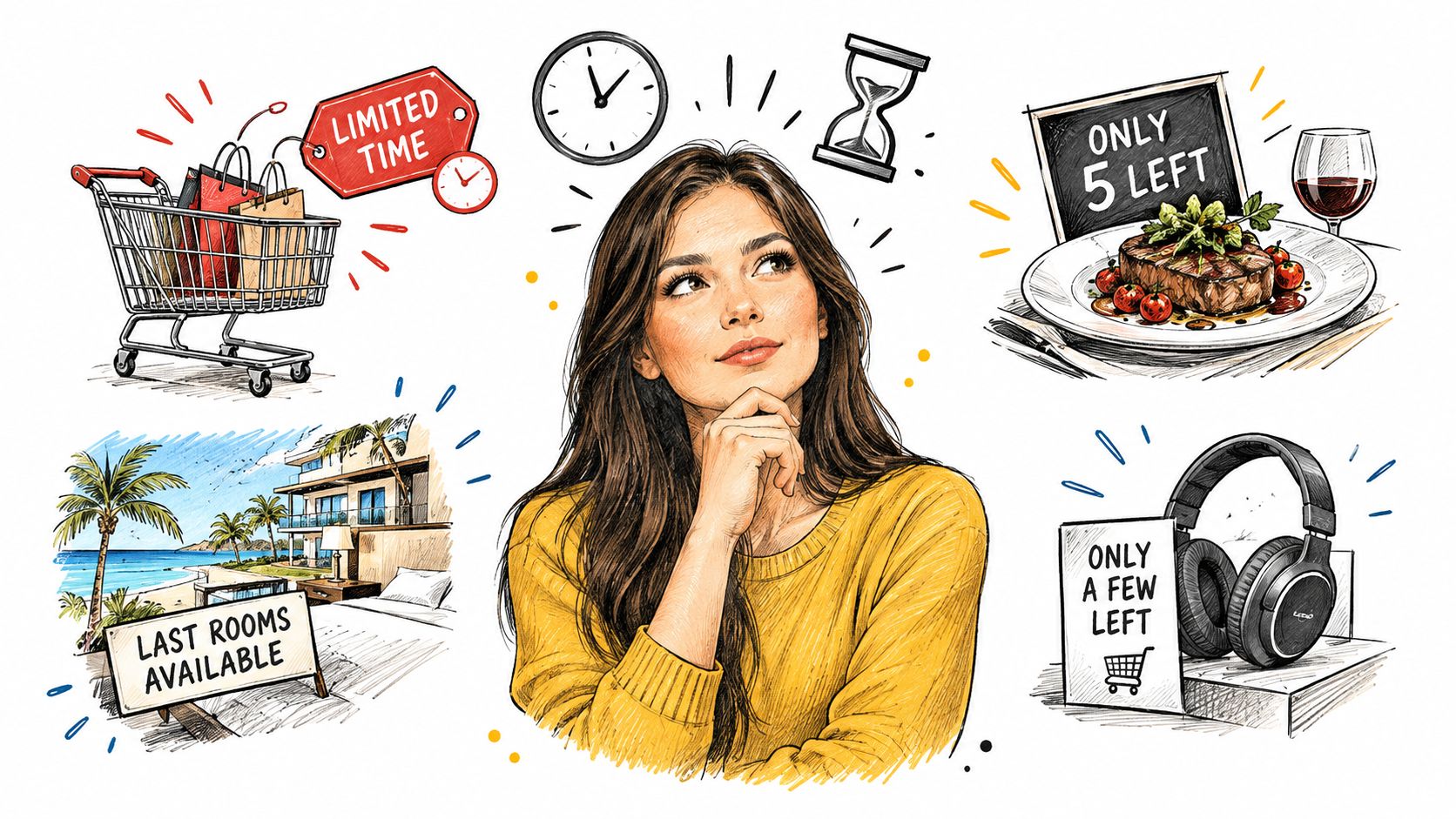
That structure uses temporal discounting, the tendency to value an immediate benefit more heavily than a delayed one. It also uses scarcity carefully. If availability is limited, the message gives shoppers useful information. If the brand invents scarcity that never changes, customers eventually stop trusting the signal.
Three coordinated ecommerce scenarios
Flash release: Email explains the product and sets expectations. SMS reaches the opted-in segment when the release opens. The text should state what is available and what action to take, rather than repeat the entire email.
Cart recovery: Email can handle product reassurance, shipping information, reviews, and alternatives. SMS works when the shopper has already shown strong intent and the reminder is useful. A flat discount isn’t always necessary. A clear expiration condition or limited reward can create a reason to decide without automatically lowering the price for everyone.
Post-purchase education: Email is the better home for setup instructions, care guidance, complementary products, and brand story. SMS can carry a concise delivery update or a service prompt, but it shouldn’t force detailed education into a channel built for brevity.
The behavioral principles differ by situation. Scarcity increases the perceived cost of waiting. Loss aversion makes a shopper more attentive to losing access to a reward or release. Commitment and consistency can strengthen a flow when a customer has requested a notification, joined a waitlist, or started checkout.
For additional practical examples, see three ideas for scarcity in text message marketing. The important distinction is controlled exposure. A promotion should reward action, not teach the entire customer base to wait for a deeper markdown.
Legal Compliance and Consent Management Rules
SMS consent is a commercial requirement, not a small-print detail. Under the TCPA, promotional texts generally require prior express written consent, while email marketing follows a different, often less restrictive commercial framework. Promotional SMS programs must also honor requests such as STOP, QUIT, CANCEL, UNSUBSCRIBE, or END within 10 business days, and accept opt-outs through any reasonable method, not only a text reply (Digital Applied’s TCPA and GDPR guidance).
Shopify merchants should make the subscription promise specific at the point of capture. The customer should understand that the form authorizes promotional texts, what types of messages may arrive, and how to stop them. A checkbox buried in a general account or checkout flow creates a weak consent record and sets the wrong expectation.
Build consent into the customer journey
Keep email and SMS permissions separate wherever the stack supports it. Klaviyo flows, Shopify forms, loyalty applications, and checkout extensions should pass consent status consistently. An email subscriber should not become a text subscriber automatically.
A practical consent review should answer four questions:
- What did the customer authorize? Record the channel and stated purpose.
- When was permission collected? Preserve the signup event and source.
- Can the customer opt out easily? Make the process visible and functional.
- Does every sending tool honor the status? Check integrations, imports, and automations.
Opt-out handling needs particular care. Store the request, suppress the number across every sending system, and confirm that automations cannot re-add the subscriber. This protects the customer relationship as well as the campaign’s ability to create urgency through timely, expected messages.
Consent is part of the product experience. A fast message that arrives without clear permission can cost more in trust than it earns in orders.
Merchants operating across regions should obtain legal advice for their audience, data flows, and messaging program. For a Shopify-specific operating view, text message marketing for Shopify provides additional context on structuring the channel around consent and customer expectations.
Building a Unified Marketing Strategy for Both Channels
The channel-war framing fails because customers don’t experience a brand as a spreadsheet of open rates. They experience a sequence of decisions, reminders, questions, purchases, and service interactions.
Consumer expectations are moving beyond promotional blasts. 31% of consumers prefer SMS over email and phone for customer service, 67% say texts increase product interest, and 47% say they share feedback by SMS, up from 35% in 2024 (Revenue Memo’s SMS marketing statistics). Those figures suggest that SMS can support service and feedback as well as urgency, provided the brand respects consent and message relevance.
Give each channel a defined role
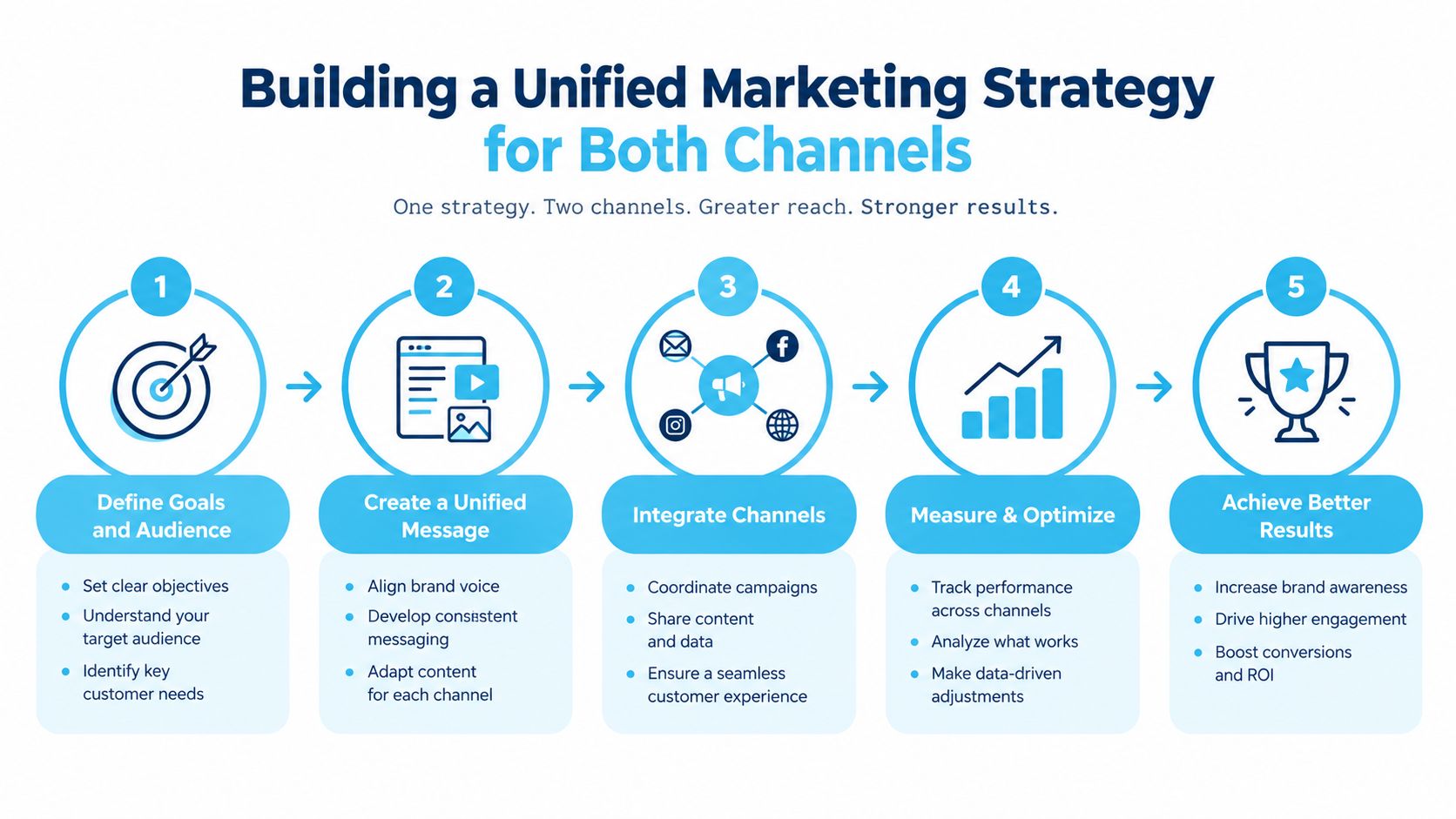
A unified Shopify workflow can follow a simple operating logic:
- Email establishes context. Use visual merchandising, product education, testimonials, and longer explanations where they reduce uncertainty.
- Behavior identifies intent. Give greater weight to browsing, product views, cart activity, waitlist participation, and prior purchases than to a generic subscriber status.
- SMS carries the immediate prompt. Send only when timing, availability, or a service need makes the interruption useful.
- The next message adapts. A customer who buys shouldn’t continue receiving the same urgency sequence. A customer who ignores the SMS may need education, not another discount.
- Profit closes the loop. Compare contribution margin, revenue per recipient, unsubscribes, repeat behavior, and incremental orders.
Here behavior-driven promotions can replace some of the blunt force of blanket discounting. Quikly creates promotional experiences whose rewards are limited by quantity, time, or both, and can distribute the experience across storefront, email, social, and SMS. The approach has been refined across more than 60 million consumer interactions, with campaigns styled to match the merchant’s store rather than presented as generic overlays.
The practical goal is not to make every message urgent. It is to reserve urgency for moments where acting early changes the outcome, while email continues to do the patient work of persuasion and retention. A broader email and SMS marketing strategy can then coordinate audience rules, suppression, timing, and measurement across both channels.
Visit Quikly to see how Shopify brands can turn ordinary promotions into time- or quantity-bound experiences across email, SMS, social, and the storefront. Use the platform to test urgency against blanket discounting while keeping the customer journey and margin model in view.
Topics: SMS marketing, email marketing, SMS vs email marketing, ecommerce marketing, marketing channels