You’ve probably seen this launch pattern before. The product is solid, the creative looks polished, paid traffic is ready, and then the offer is just a generic discount code with a timer slapped on top. A few people buy, plenty of people browse, and the brand gives away margin to create a result that feels smaller than it should.
That’s usually not a product problem. It’s a hype problem.
If you want to learn how to build hype for a product launch, start by dropping the idea that hype means noise. Good launch hype is structured. It builds anticipation in phases, gives people something to respond to, and turns launch week into a decision point instead of a passive announcement. For Shopify brands, that matters because conversion already sits in the low single digits for most stores, and standard promotions rarely create enough urgency to change behavior without pushing discounting too far.
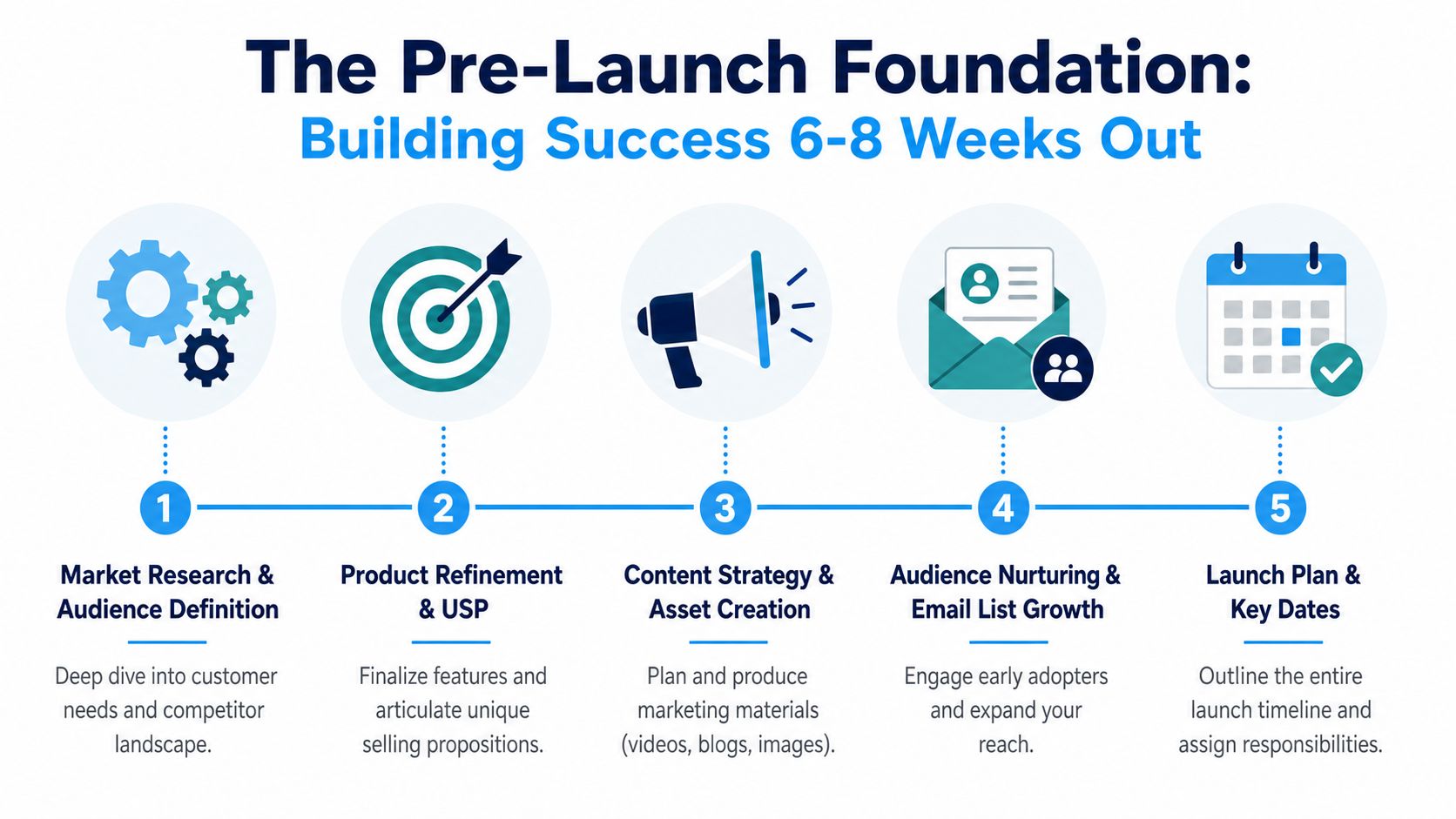
The Pre-Launch Foundation 6 to 8 Weeks Out
Most launches are decided before the product page goes live. If the first time people hear about your launch is the week you open access, you’ve waited too long.
The early window is where you establish the problem, define the insider group, and create the first layer of commitment. That matters because people are more likely to act when they’ve already raised their hand, replied to a poll, joined a VIP list, or followed the build process in some small way.
Start with the problem, not the reveal
A weak teaser says, “Something exciting is coming.” That gives the customer nothing to care about.
A stronger approach opens with the friction your customer already feels. If you’re launching a new supplement, don’t tease the jar. Talk about the routine that’s hard to keep, the ingredient confusion, the format people hate using, or the quality concerns that made you build something better.
The cadence matters too. An early-stage launch cadence from NXGN Tools lays out a 3–6 week sequenced content plan with three phases: a 2-week problem-awakening phase with one core post per week and 3 short updates per week, a 2-week proof-of-work phase, and a 1-week early-access phase with 5 direct conversations per week plus a 5-email VIP sequence. When executed consistently, that sequence can drive a 35–45% waitlist-to-activation rate.
Practical rule: if your teaser content could be posted by any brand in any category, it won’t build real anticipation.
Build a VIP list that feels earned
A waitlist is only useful if it changes the customer’s position. “Sign up for updates” is weak. “Get first access to the first release window” is better. “Get first access plus the best launch reward before it steps down” is better still.
For Shopify brands, that usually means creating:
- A focused coming soon page: one outcome, one visual, one signup action. If you need a sharper framework, this guide to coming soon pages for Shopify launches is worth reviewing.
- A visible reason to join early: early access, first-look inventory, first claim on a capped reward, or access to founder notes.
- A tighter segmentation layer: VIP subscribers, past customers, and high-intent SMS subscribers shouldn’t all get the same message.
Give people small actions before asking for the big one
Commitment and consistency matter here. People are more likely to buy when they’ve already participated.
Use small prompts in the first two weeks:
- Run a problem poll on Instagram Stories or email.
- Ask one product shaping question, such as color preference, bundle format, or packaging choice.
- Invite replies, not just clicks. A direct response creates stronger intent than a passive view.
- Tag VIPs early in Klaviyo so launch week sends don’t start from zero.
This is the quiet part of the launch, but it’s where the pressure comes off later. Brands that do this well don’t need to panic with last-minute discounts because they’ve already built a group that wants to act early.
Building Anticipation and Social Proof 3 to 5 Weeks Out
Now, the launch starts to feel real. Not polished, real.
A fictional Shopify brand makes the point well. Say a premium haircare brand is about to launch a new scalp serum. Instead of holding everything back for a glossy reveal, the team starts sharing ingredient sourcing clips, stability testing snippets, packaging rounds, and the founder explaining why they rejected two earlier pump designs. None of that is random content. It tells buyers the product exists, decisions are being made, and other people are paying attention.
Show the work people usually never see
The middle stretch of a launch is ideal for behind-the-scenes content because it does two jobs at once. It gives the audience proof that the product is taking shape, and it gives them a story to repeat.
For a Shopify merchant, useful proof-of-work content usually includes:
- Prototype comparisons: show version A next to version B and explain the trade-off.
- Packaging decisions: not “new packaging coming soon,” but why one format protects freshness, stacks better, or improves unboxing.
- User reactions: screenshots, short clips, or comments from early testers.
- Operational detail: formulation, material choice, fit adjustments, or shipping prep.
That kind of content works because anticipation is social. Research on pre-release consumer buzz shows that expressions of anticipation don’t just reflect existing intent, they actively generate additional purchases among observers. In other words, hype spreads when people see other people care about the launch, not just when the brand says the launch matters. The underlying study on pre-release consumer buzz and adoption is useful reading if you want the behavioral logic behind that.
When buyers can watch the product take shape, they stop treating the launch like an ad and start treating it like an event.
Seed the right creators, not the biggest ones
A lot of brands overcorrect here and chase reach. Reach is nice. Relevance is better.
For a new product launch, send product or preview access to creators who already speak to the buyer you want. On Shopify, that usually means niche creators with a loyal audience, not broad lifestyle accounts that can’t explain why the product matters.
A simple structure works:
- Pick creators close to the use case.
- Give them context, not a script.
- Ask for honest reactions and product experience.
- Use their feedback in your own launch content if they consent.
If your team needs a better system for outreach and follow-up, these practical tips for creator engagement are a solid reference.
Turn your waitlist into visible momentum
A waitlist hidden in your ESP is useful. A waitlist that creates visible movement is better.
That can look like founder updates, email screenshots of VIP replies, product vote results, or on-site language that signals early demand without forcing fake urgency. The point is to make social proof legible.
For more examples of what that looks like in ecommerce, this piece on social proof marketing for Shopify brands is a helpful companion.
Designing a Launch Offer That Protects Margins
A lot of launches go sideways at this stage. The team has done the hard work, built anticipation, earned attention, and then hands everyone the same discount.
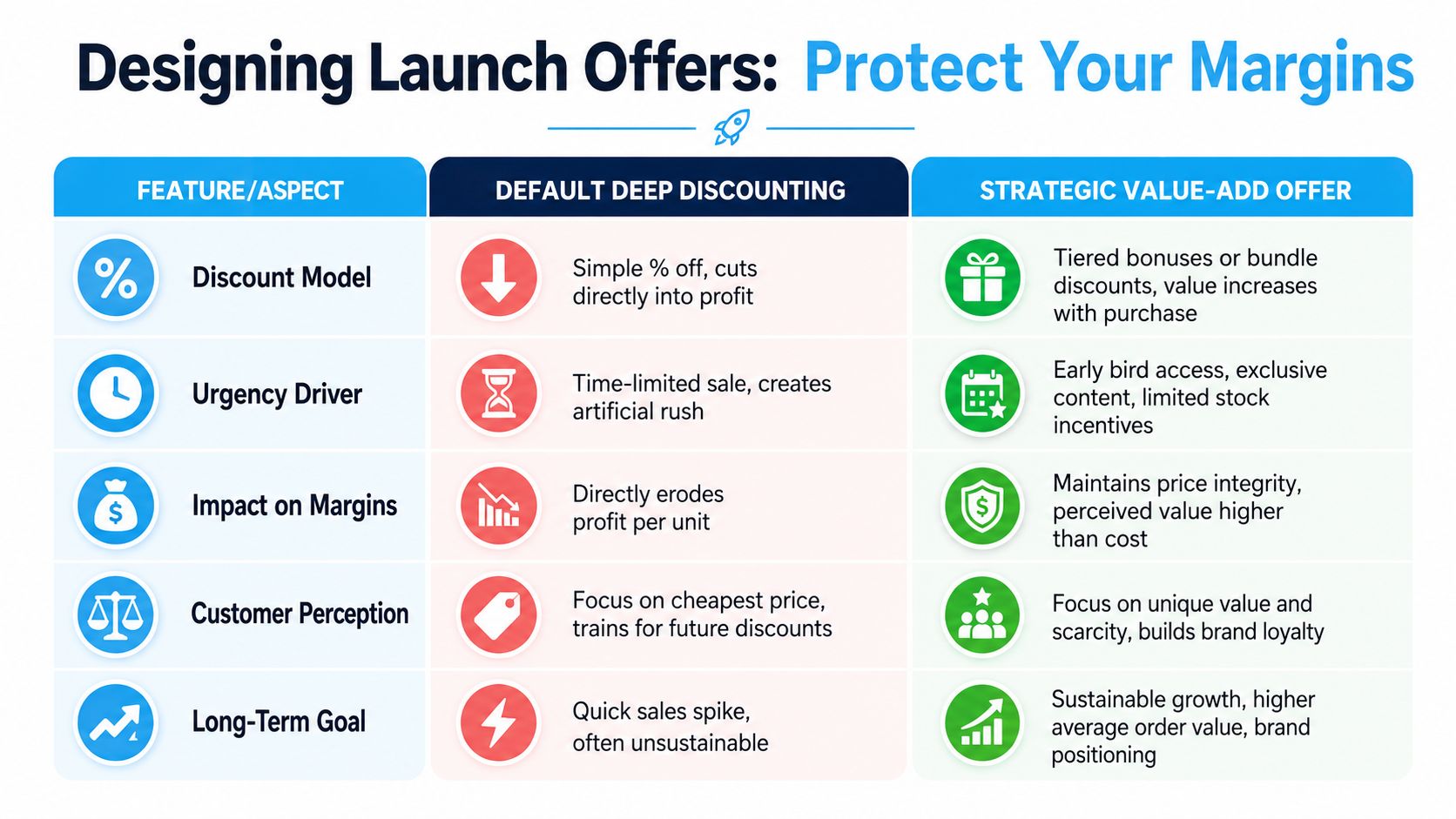
That’s the default because it’s easy to set up in Shopify. It’s also expensive. It trains shoppers to wait, narrows perceived value to price, and puts the brand in a weaker spot the next time it launches something.
Why the generic launch discount underperforms
If you train customers to think the best move is waiting for a markdown, they’ll keep doing it. That’s one reason the usual “launch week only” discount often creates a short sales spike without improving brand behavior.
That pressure is getting worse. Jenna Kutcher’s launch guide discussion highlights an underserved issue in launch advice: most content leans on discounts and giveaways, but 68% of consumers now wait for discounts before buying, which makes discount-led hype weaker and more damaging to brand value over time.
On top of that, ecommerce conversion is already tight. The 2025 ecommerce benchmark summary from Red Stag Fulfillment places the global average conversion rate between 2.5% and 3%, and Digital Web Solutions’ category view puts retail and fashion websites at roughly 1.5% to 2.5% outside major sales periods. That’s the underlying backdrop. More traffic doesn’t automatically solve the problem, and flat discounts don’t reliably create immediate decisions.
Use scarcity mechanics that reward action, not waiting
The smarter move is to make the offer participatory.
Instead of “20% off for everyone through Sunday,” use mechanics like:
- Quantity-capped rewards: the first group gets the best value, then the reward steps down.
- Time-bound access: VIPs get an earlier claim window than the general list.
- Tiered bonus structures: early buyers get added value, limited bundles, or exclusive access rather than a deeper markdown.
- Descending launch rewards: the highest-value reward is available first, not forever.
These mechanics work because they align with loss aversion and temporal discounting. People are more likely to act when delaying means giving something up, not just postponing the same deal.
A simple comparison helps:
| Offer type | What the customer learns | Brand impact |
|---|---|---|
| Blanket launch discount | Waiting is normal | Margin pressure increases |
| Countdown with no real condition | Urgency might be fake | Trust weakens |
| Quantity-capped reward | Early action wins | Price integrity holds better |
| Early-access tier | Participation matters | VIP behavior improves |
Design the reward so it feels valuable without cutting too deep
For many Shopify brands, the best launch offer isn’t a lower price. It’s a better deal structure.
That might mean:
- First access to a limited bundle
- A bonus item for early claimers
- Tiered rewards that step down as claims come in
- A members-only window before public release
If you’re looking for examples of urgency offers that don’t default to blanket discounting, this guide to a limited-time offer strategy is a practical place to start.
The launch offer should answer one question clearly: why should someone act now instead of later?
When that answer is “because the first movers get the best outcome,” hype turns into action without forcing the brand into a deeper promotional hole.
The Go-Live Week Execution Checklist
Launch week is mostly coordination. The brands that look calm here usually did the work earlier.
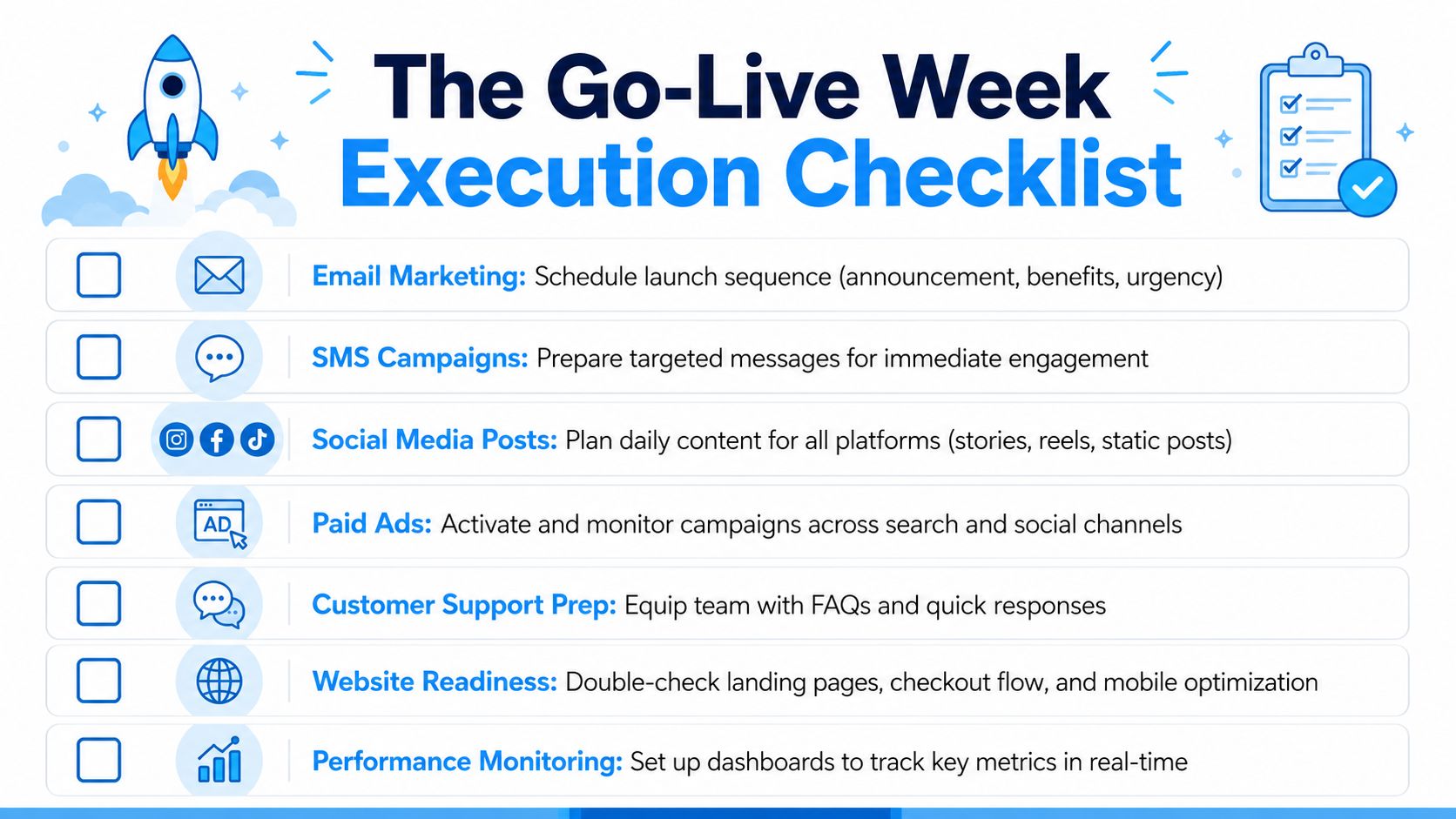
The message across email, SMS, social, paid, and onsite should feel like one campaign with one decision point. If your ads say one thing, your email says another, and your PDP just shows a standard sale banner, you lose the tension you spent weeks building.
Sequence the channels by intent
Start with the warmest audience first. Your VIP list should hear about the launch before your general list, and your general list should hear before broad paid traffic ramps.
A practical rollout looks like this:
- VIP email first: access opens, reward is explained, and the customer knows why acting early matters.
- SMS shortly after: short message, direct link, no extra story.
- General email next: broader announcement with social proof or product proof folded in.
- Paid and social creative after that: drive the larger audience once the campaign is live and the first buyers are already visible.
Marketing Week’s product launch research found that online offers and competitions were the strongest pre-launch attention driver for consumers at 51%, ahead of video content at 38% and behind-the-scenes information at 35%, which is why launch-week messaging should make the offer feel active, not passive. The Marketing Week write-up on launch attention drivers is worth bookmarking.
Match the creative to the mechanic
A launch creative should explain the rule of the offer fast. If the reward is capped, show that. If access is tiered, say that plainly. If the best launch benefit is for early claimers only, make that impossible to miss.
Use channel-specific versions:
- Email: more context, product details, and the offer logic.
- SMS: pure urgency and link discipline.
- Instagram Stories: polls, countdown stickers only if they match a real event, and reposted UGC from seeded creators.
- Paid social: direct headline, visible product, clear reward structure.
- Onsite: hero module and PDP messaging must match the ad click promise.
Check the operational details that kill launches quietly
A launch can lose momentum because the mechanics are wrong, but it can also lose momentum because the site is slow, the cart logic breaks, or support isn’t prepared.
Use a short preflight checklist:
- Verify mobile load speed: Parah Group’s ecommerce benchmark summary notes that even a one-second delay can reduce conversion by 7% or more, citing Deloitte and Google.
- Test discount logic and cart behavior: especially if bundles, access windows, or Shopify Scripts or Functions are involved.
- Prep support macros: shipping timing, stock questions, reward explanation, and access-window confusion.
- Build a live dashboard: watch traffic, conversion, claim behavior, and support volume in real time.
Launch week rewards fast operators. The team that can spot friction in the first hour usually protects more revenue than the team that spent another week polishing assets.
Analyzing Success and Creating a Repeatable Playbook
A launch isn’t healthy just because revenue came in. Plenty of launches hit a topline number while damaging margin, trust, or future pricing power.
The useful question after launch is simpler: did the campaign create profitable urgency, or did it just rent demand?
Measure launch quality, not just launch volume
Start with metrics tied to launch health:
- Waitlist-to-purchase conversion: did the audience you built act?
- Average order value against baseline: did the launch structure increase basket quality?
- Average discount depth: what did you have to give away to get the result?
- Channel response by audience tier: VIP, existing customers, SMS subscribers, paid traffic, and creator traffic should not all behave the same.
- Support friction: where did confusion show up?
If you want a clean framework for assessing campaign performance without drifting into vanity metrics, The AI CMO’s success guide is a practical reference.
Separate real urgency from fake urgency
Often, many teams misread the data. A countdown timer might increase clicks in the short term and still damage the campaign.
The reason is credibility. KickoffLabs’ prelaunch strategy analysis notes that countdown timers or generic scarcity popups without behavioral anchoring cause a 22% drop in perceived trust and an 18% reduction in conversion among repeat shoppers. By contrast, tiered, time-bound scarcity increases conversion by 27% and average order value by 19% while maintaining a 12% lighter average discount than flat promotions.
That’s the distinction that matters. Real urgency has a clear rule and a believable consequence. Generic urgency just looks like pressure.
Turn each launch into a stored operating system
The best brands document launches the way operators document campaigns, not the way marketers archive assets.
Keep a simple post-launch file with:
- The content sequence used before launch
- The offer structure and exact reward logic
- Segment-level results
- Questions support received most often
- What hurt trust or caused hesitation
- What should be reused, tightened, or cut
That document becomes your next launch advantage. It also makes your promotions more disciplined over time, because you stop reinventing the campaign every quarter and start improving the parts that move response without dragging margin down.
Conclusion From Hype to High-Value Habit
The strongest product launches don’t rely on being louder. They rely on being better structured.
That means starting earlier than most brands do, talking about the customer’s problem before talking about the product, showing enough proof that the launch feels credible, and designing an offer that rewards action without teaching customers to wait for the next markdown. That’s how you build anticipation without falling into promo fatigue.
For Shopify brands, this is bigger than one release. A good launch system protects margin, lifts conversion quality, and keeps brand perception intact because it turns urgency into something customers understand and want to participate in.
The most useful shift is this one. Stop treating hype like a spike in attention and start treating it like a repeatable buying habit. When customers learn that early action consistently gets the best access, the best value, or the best experience, each future launch gets easier to run.
That’s the ultimate upside. Not one busy launch day, but a customer base that knows your next release is worth showing up early for.
Quikly helps Shopify brands run urgency and scarcity promotions that feel native to the storefront, not bolted on top. Instead of defaulting to blanket discounts, teams can create time and quantity-bound launch experiences that reward shoppers who act early. If you want a more profitable way to turn launch hype into conversion, average order value, and email or SMS signups, take a look at Quikly.
Topics: product launch marketing, how to build hype, ecommerce product launch, shopify product launch, hype marketing