Your Shopify store is probably already running promotions. The problem is that many of them don’t feel like assets anymore. They feel like rent. You discount to hit the week, watch conversion move a little, and then deal with the aftereffects: tighter margins, lower perceived value, and a customer base that starts waiting for the next code.
That’s the promotion paradox. You need demand now, but the easiest promotional levers often make the next campaign harder to run profitably. For many brands, the issue isn’t whether urgency works. It’s whether the kind of urgency they’re using is building momentum or draining trust.
The useful way to think about fear of missing out psychology isn’t as a bag of gimmicks. It’s a decision framework. When you understand what people are afraid of missing, you can build offers that motivate action without defaulting to blanket discounts that train customers to buy only on sale.
The Promotion Paradox Harming Shopify Brands
A familiar scenario plays out every week in Shopify: traffic is decent, paid acquisition is expensive, and the team needs a sales spike. Someone launches a flash sale. Revenue jumps a bit, but not enough to feel great. Then the actual cost shows up. Returning customers ask when the next promo is coming, new buyers anchor on the discounted price, and full-price conversion gets harder.
That’s not a pricing problem alone. It’s a behavioral design problem.
Most merchants don’t lack promotions. They lack promotional structure. When every visitor gets the same offer, with the same discount, at the same time, the promotion stops feeling special and starts feeling expected. You get short-term response, but you also create promo fatigue and margin erosion.
A better approach starts by treating promotions as experiences that shape customer behavior, not just as levers for moving inventory. That means understanding why someone acts now versus later, why some offers feel exciting while others feel cheap, and why urgency can either sharpen intent or damage trust.
For Shopify teams trying to break out of the discount-more-to-sell-more cycle, the question isn’t “Should we promote?” It’s “What kind of promotion motivates action without weakening the brand?” If your current setup relies on broad markdowns and repetitive urgency cues, it’s worth rethinking your Shopify promotions strategy.
Practical rule: If a promotion increases orders but lowers customer expectations of your brand, you’ve solved this week’s problem by creating next month’s problem.
What Is FOMO Psychology Really?
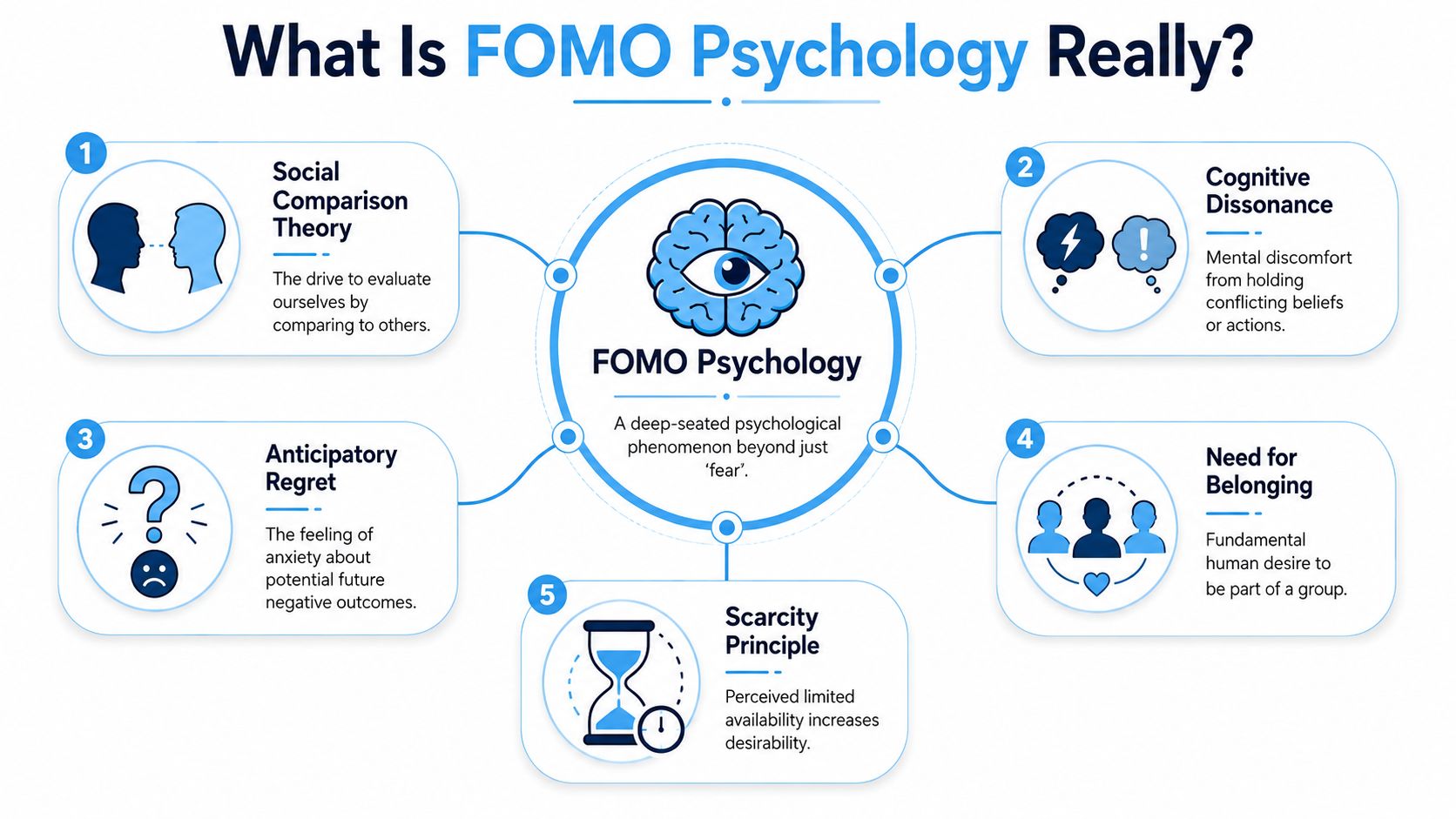
Fear of missing out psychology gets flattened into a simple idea: people buy because they don’t want to miss a deal. That’s incomplete. The deeper mechanism is social and emotional, not just transactional.
Research tied to Cornell SC Johnson College of Business shows that FOMO is driven specifically by the worry that friends will withdraw or purposely exclude an individual if they miss group activities involving social bonding, rather than just a general fear of missing an event. The fear is rooted in losing social bonds and shared experiences within a group, not the event itself, as summarized by the AAU overview of the Cornell findings.
FOMO is not the same as scarcity
Scarcity says something is limited. FOMO says missing it might change your standing, your connection, or your future experience. That distinction matters in ecommerce.
A low-stock message on its own is basic scarcity. A product drop that signals participation, belonging, and shared cultural relevance touches something stronger. The shopper isn’t only evaluating utility. They’re evaluating whether buying now keeps them inside the moment.
That’s why surface-level urgency often underperforms. It treats shoppers like calculators. Real-world buyers aren’t just asking, “Is this available later?” They’re also asking, “What does acting now say about me, and what do I lose if I sit this out?”
The psychological drivers merchants should actually care about
The academic language can get dense, but the implications for Shopify are practical:
- Need for belonging matters because shoppers often respond to signals that they’re part of a group, early access cohort, or shared moment.
- Social comparison matters because people use other people’s behavior as context for their own decisions, especially when a product has identity value.
- Loss aversion matters because people feel the pain of missing a rewarding experience more acutely than the satisfaction of a standard discount.
These forces are why broad “20% off today” style offers can feel weak over time. They create transactional urgency, but they often ignore emotional participation.
For brands that want a deeper behavioral lens, Quikly has a useful piece on consumer psychology in marketing that aligns with how promotion mechanics influence action.
What this means for a product page
On a product page, FOMO works best when the customer sees a meaningful opportunity, not just a shrinking clock. That opportunity might be access, status, participation, exclusivity, or the feeling of being in sync with other buyers.
FOMO becomes commercially useful when the customer feels they’re joining something, not merely being cornered into buying something.
How FOMO Shapes Ecommerce Behavior and Metrics
FOMO doesn’t stay in the realm of feelings. It changes how people move through a store.
A peer-reviewed study found that the need to belong is the strongest predictor of FOMO, increasing it directly and indirectly through social media use. The study describes FOMO as an all-consuming feeling tied to mental stress caused by compulsive concern about missing socially rewarding experiences, rather than simple regret, in the Wiley study on need to belong and FOMO.
For ecommerce operators, that has direct implications for the metrics you watch every day.
Where it shows up in the funnel
At the top of the funnel, FOMO can increase attention. Shoppers stop scrolling when an offer feels time-sensitive or socially relevant.
Mid-funnel, it can compress consideration. Customers who might normally compare, delay, or abandon start making decisions faster when the opportunity feels finite and meaningful.
At the bottom of the funnel, it can raise both conversion intent and hesitation. That sounds contradictory, but it isn’t. Strong urgency can push some buyers through checkout and push others into overthinking if the pressure feels too aggressive.
The metric effects that matter
The cleanest way to think about FOMO’s impact is by metric type:
| Metric | Healthy FOMO effect | Unhealthy FOMO effect |
|---|---|---|
| Conversion rate | Faster purchase decisions | Panic clicks followed by regret |
| Average order value | Added bundles or threshold behavior | Overbuying that leads to returns |
| Customer lifetime value | More engagement with launches and drops | Lower trust if urgency feels fake |
| Cart abandonment | Less delay for high-intent buyers | More abandonment if pressure creates friction |
That’s why “urgency works” is too shallow a conclusion. Some urgency lifts orders. Better urgency lifts profitable orders without creating cleanup later.
What often gets missed
Merchants tend to focus on the first visible output, usually conversion. But fear of missing out psychology also affects product mix, bundle acceptance, checkout speed, and post-purchase satisfaction.
A shopper who adds one more item to qualify for a reward may raise AOV in a healthy way. A shopper who rushes into a purchase because the page feels coercive may convert now and resent the brand later. Those are not the same outcome, even if the dashboard initially treats them the same.
When FOMO is aligned with genuine value, it sharpens intent. When it’s disconnected from value, it distorts decision-making.
Avoiding the Trap of Manipulative Urgency
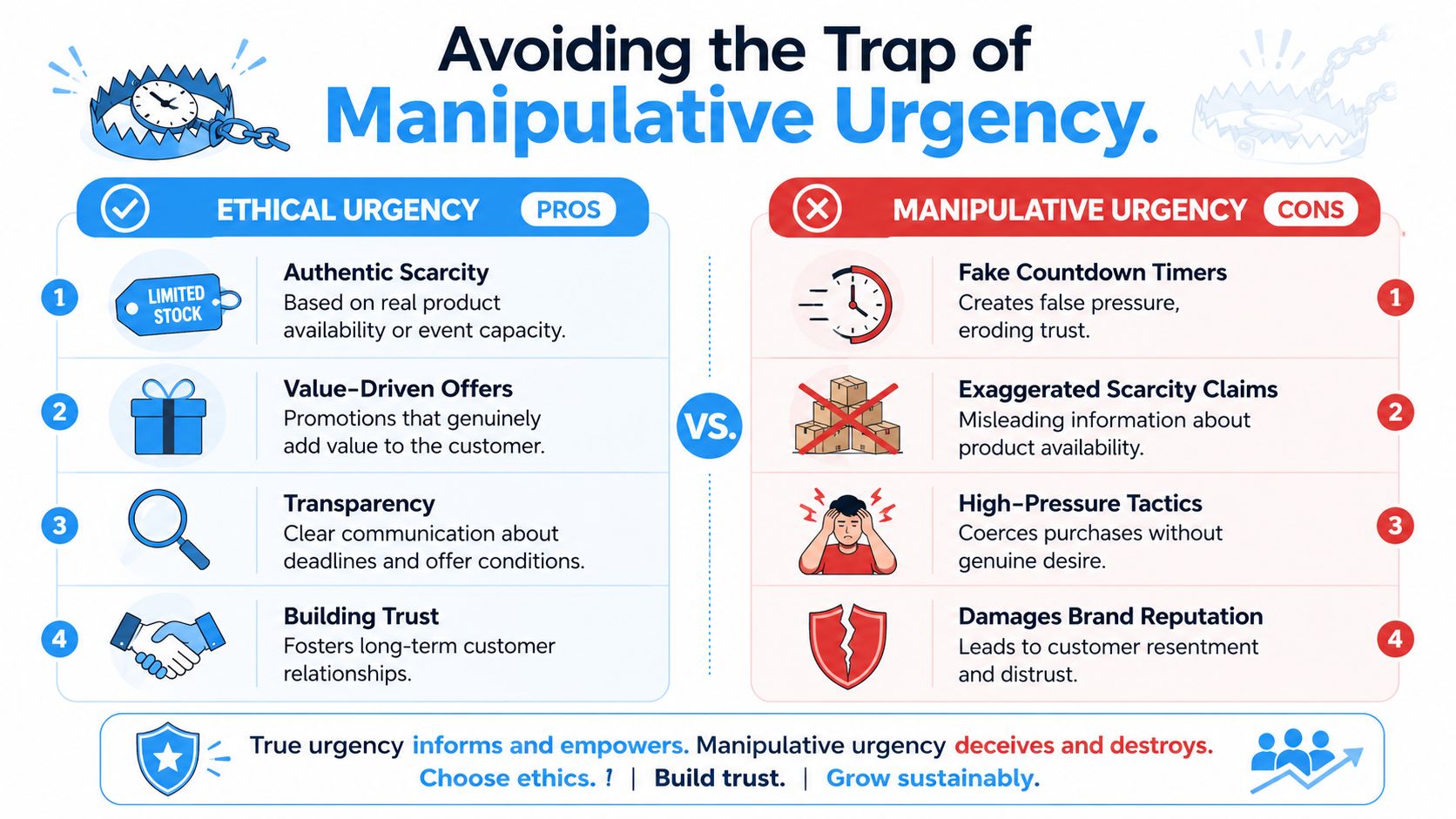
A lot of urgency marketing is lazy. Fake countdown timers that reset tomorrow. Low-stock alerts that appear on every SKU. Popups that shout urgency without proving anything. These tactics can produce action, but they also teach customers to distrust what they’re seeing.
That matters more than many brands admit. Research published in 2024 found that high FOMO correlates with stress, maladaptive coping, and risk-taking behaviors like impulsive purchasing, which is exactly why brands need to think carefully about how promotional pressure affects decision quality, not just conversion volume, in this ScienceDirect paper on FOMO, stress, and maladaptive coping.
The short-term trap
Manipulative urgency usually looks efficient because it’s easy to launch. Add an app. Turn on a timer. Push a message sitewide. Done.
But easy setup doesn’t mean good strategy. If the urgency isn’t credible, customers sense it. If the offer appears constantly, they stop responding. If the experience feels engineered to pressure rather than persuade, you may get the sale while weakening brand trust.
Ethical urgency looks different
Ethical urgency doesn’t remove pressure entirely. It gives the customer a reason to act that is both real and understandable.
Here’s the distinction:
- Real scarcity comes from actual inventory limits, event capacity, timed access windows, or reward availability.
- Transparent conditions tell shoppers what the offer is, who it applies to, and when it ends.
- Value-led design makes the opportunity worth acting on, instead of relying on pressure alone.
- Brand fit ensures the experience feels like an extension of the brand, not a cheap overlay pasted on top of it.
If a promotion would feel dishonest when explained plainly to a customer, it’s not a good promotion.
What doesn’t work for strong brands
Strong brands usually lose more from fake urgency than weak brands do. They’ve spent time building perception, trust, and pricing power. A manipulative promo can undercut all three in one campaign.
That’s the hidden cost of bad FOMO execution. It doesn’t just risk buyer’s remorse. It can turn your promotional calendar into a credibility problem.
Using Behavior-Driven Promotions to Leverage FOMO
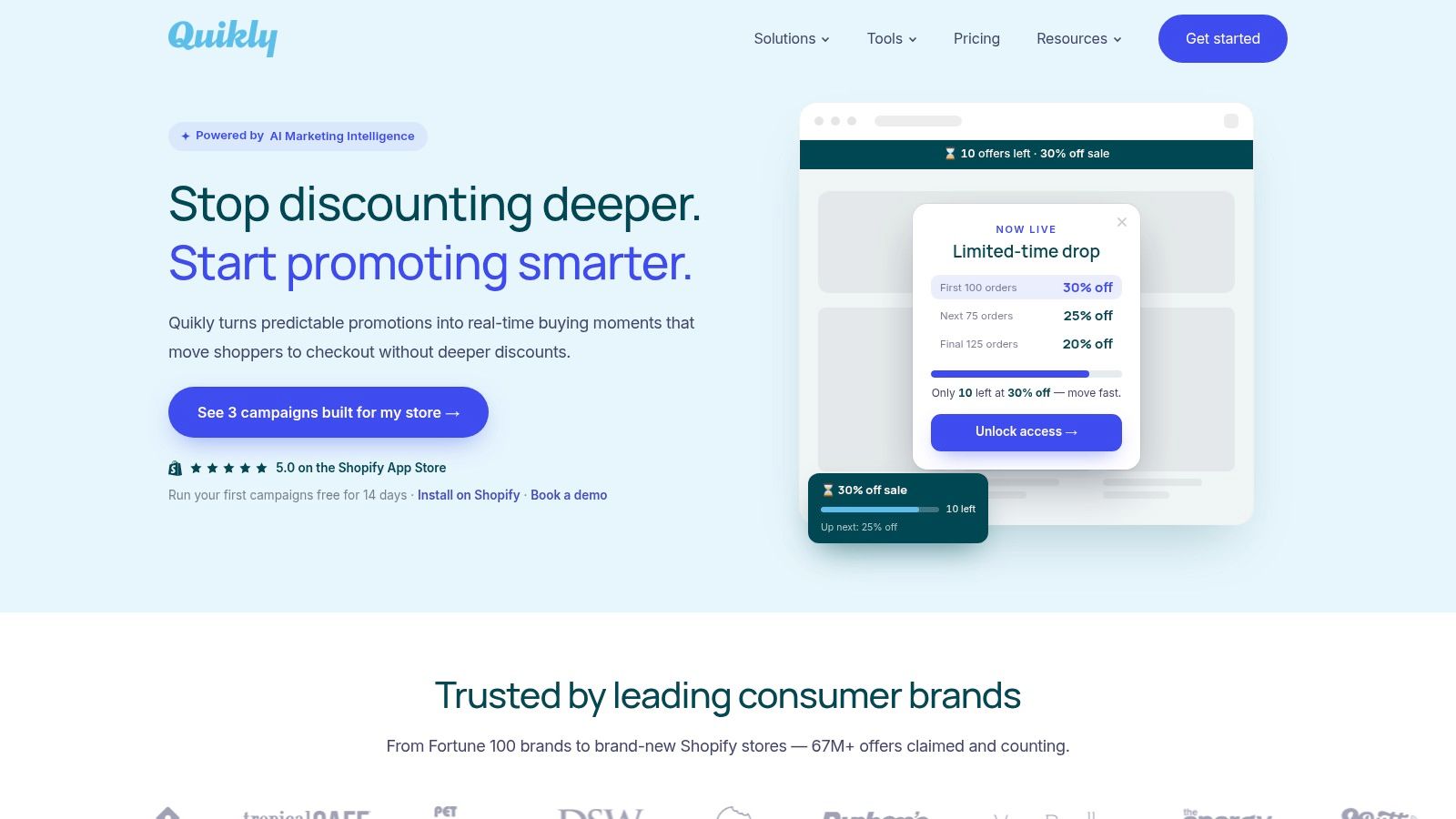
The better alternative is a behavior-driven promotion. Instead of pushing the same discount to everyone, you design an experience where customers take part in earning access, rewards, or priority. That changes the psychology completely.
The shopper is no longer reacting to generic pressure. They’re responding to a structured opportunity.
What behavior-driven promotions do better
They create urgency without requiring blanket discounting. They make participation matter. They also give the merchant more control over exposure, margin, and customer experience.
That’s a major shift from standard promo logic. Traditional offers ask, “How much do we need to cut to get people moving?” Behavior-driven offers ask, “What experience will motivate action while protecting economics?”
A few structures work especially well on Shopify:
First-access and limited-participation mechanics
“The first group gets the reward” is effective because it uses real scarcity. It’s finite, understandable, and credible.
That can apply to early access, limited reward pools, product drops, or time-bound rewards tied to actual participation. The key is that the limit has to be real.
Earned incentives instead of automatic discounts
When a shopper earns a reward by engaging quickly or meeting a threshold, the promotion feels more intentional. It also reduces the expectation that every session should end in a markdown.
Here is how many merchants recover margin. You’re not discounting every order by default. You’re creating selective incentives tied to action.
Tiered structures that build anticipation
Tiered rewards can increase engagement because they create momentum before the purchase. Customers see that timing, participation, or responsiveness affects the outcome.
That’s materially different from showing everyone the same code in a popup. The promotion feels active, not passive.
Where a tool fits in
On Shopify, this is hard to execute manually across theme logic, discount rules, customer messaging, and campaign timing. Tools that support real scarcity, controlled reward delivery, and branded promotional flows can make the setup practical.
One option is Quikly’s examples of FOMO marketing mechanics, which show how behavior-driven campaigns can be structured around participation rather than blanket discounting. Quikly’s Shopify app is built around psychology-backed promotions refined across more than 60 million consumer interactions, and the company reports a roughly 20% lift in profit for Jordan Craig, with incremental lift visible immediately upon activation.
Why this protects margins better
The point isn’t to avoid incentives. It’s to stop giving them away indiscriminately.
Behavior-driven promotions let you:
- Control exposure so not every visitor gets the same offer.
- Preserve price integrity because rewards are earned, limited, or conditional.
- Keep the brand intact by making the campaign feel designed, not desperate.
- Create excitement that comes from participation rather than markdown dependence.
The strongest FOMO campaigns don’t scream “buy now.” They make customers want to be part of the opportunity before it passes.
Measuring the Success of Psychology-Backed Campaigns
If you measure a promotion only by top-line revenue, you’ll miss whether it improved the business. A psychology-backed campaign should be judged by quality of conversion, not just quantity.
That standard matters because FoMO has been associated with broader harms. Research shows that higher levels of FoMO are directly associated with greater negative impact of social media on daily-life and work productivity, and studies also link FoMO with sleep disturbances, clinical depression, and social anxiety in this ScienceDirect review of FoMO and daily-life impact. For brands, that reinforces the need to apply urgency ethically and measure outcomes beyond a sales spike.
What to compare
Run your psychology-backed promotion against a conventional alternative, not against nothing. For most Shopify teams, that means comparing it to the blanket discount you would normally have launched.
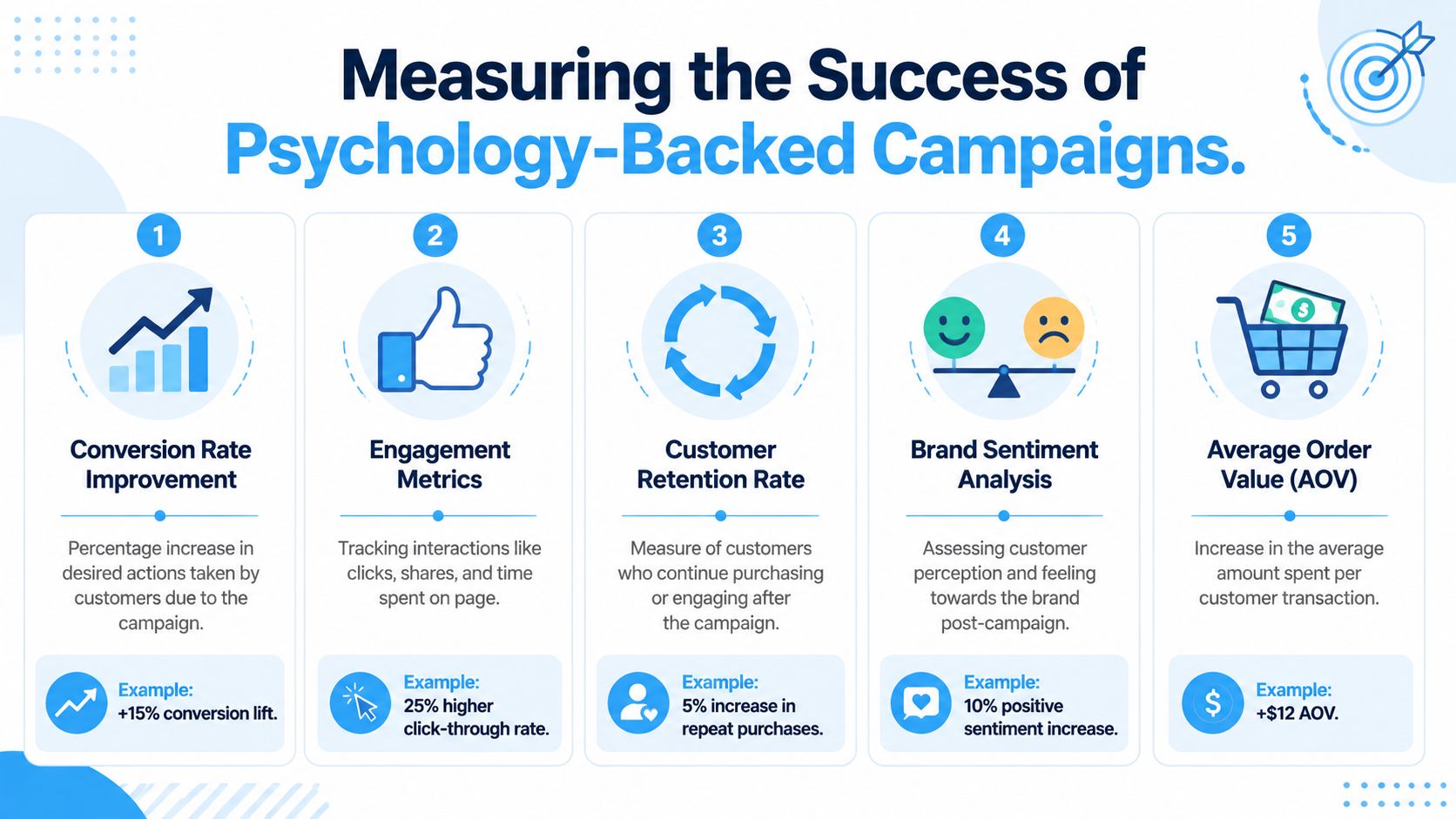
Track outcomes in a simple scorecard:
- Margin retention tells you whether the campaign preserved pricing power.
- Profit impact matters more than gross revenue when discounts are involved.
- Average order value shows whether the experience encouraged stronger baskets.
- Engagement quality includes response behavior, participation, and click intent.
- Post-purchase signals include return patterns, support friction, and repeat buying behavior.
How to judge success
A campaign is strong when it creates faster action without lowering trust. It’s stronger when it also protects margin.
Use your Shopify analytics, promotion-level reporting, and post-purchase feedback together. If the campaign lifted orders but increased returns or trained customers to hold out for the next incentive, it wasn’t a clean win.
Measurement lens: Ask whether the promotion created better demand or simply borrowed demand from the future.
Build Promotions That Strengthen Your Brand
The choice isn’t between promoting and not promoting. Shopify brands will always need moments that stimulate demand, convert passive traffic, and give customers a reason to act. The choice is between promotions that weaken your economics and promotions that sharpen them.
Fear of missing out psychology becomes useful when you stop treating it like a trick. Shoppers don’t respond only because something is discounted. They respond when the opportunity feels meaningful, finite, and worth participating in. That gives brands a much better path than repetitive markdowns and synthetic urgency cues.
The merchants that protect margin over time usually make one shift. They stop thinking of promotions as price cuts and start treating them as designed experiences. That’s where urgency becomes an asset instead of a tax on the business.
If your current promo calendar keeps forcing the same tradeoff between conversions, margins, and brand perception, don’t run more of the same. Build offers customers want to engage with, and make sure the urgency is real.
Quikly helps Shopify brands run behavior-driven promotional experiences that increase purchase conversions without relying on blanket discounts or damaging brand perception. If you’re evaluating a smarter promotional model, you can see how it works at Quikly.
Topics: fear of missing out psychology, ecommerce marketing, behavioral psychology, conversion optimization, shopify promotions