Margins get squeezed fastest when a store keeps leaning on the same blunt promotion. Shoppers learn to wait, conversion gets harder to buy, and the next discount has to work a little more to do the same job. The fix isn’t guessing harder, it’s using market research techniques that show what buyers need, where friction lives, and which offer mechanics earn action without training people to expect a lower price every time.
For Shopify brands, that matters because the decision isn’t just “what should we test,” it’s “what information do we need before we spend margin.” The strongest teams separate quantitative work, which tells you what’s happening at scale, from qualitative work, which tells you why it’s happening. The best results usually come from combining both, then testing the offer itself before rolling anything out widely.
1. Surveys and Questionnaires
Surveys are the fastest way to collect structured feedback from a defined audience, and they’re still one of the most practical market research techniques for ecommerce. Use them when you need scale, clear patterns, or a quick read on whether a problem is real across enough shoppers to matter.
For Shopify merchants, surveys are especially useful when the question is specific, like why people abandon carts, what makes a product feel worth full price, or which urgency message sounds persuasive versus pushy. A post-purchase survey can uncover why someone chose one SKU over another. A cart abandonment survey can reveal whether shipping cost, trust, or a weak offer is the primary blocker.
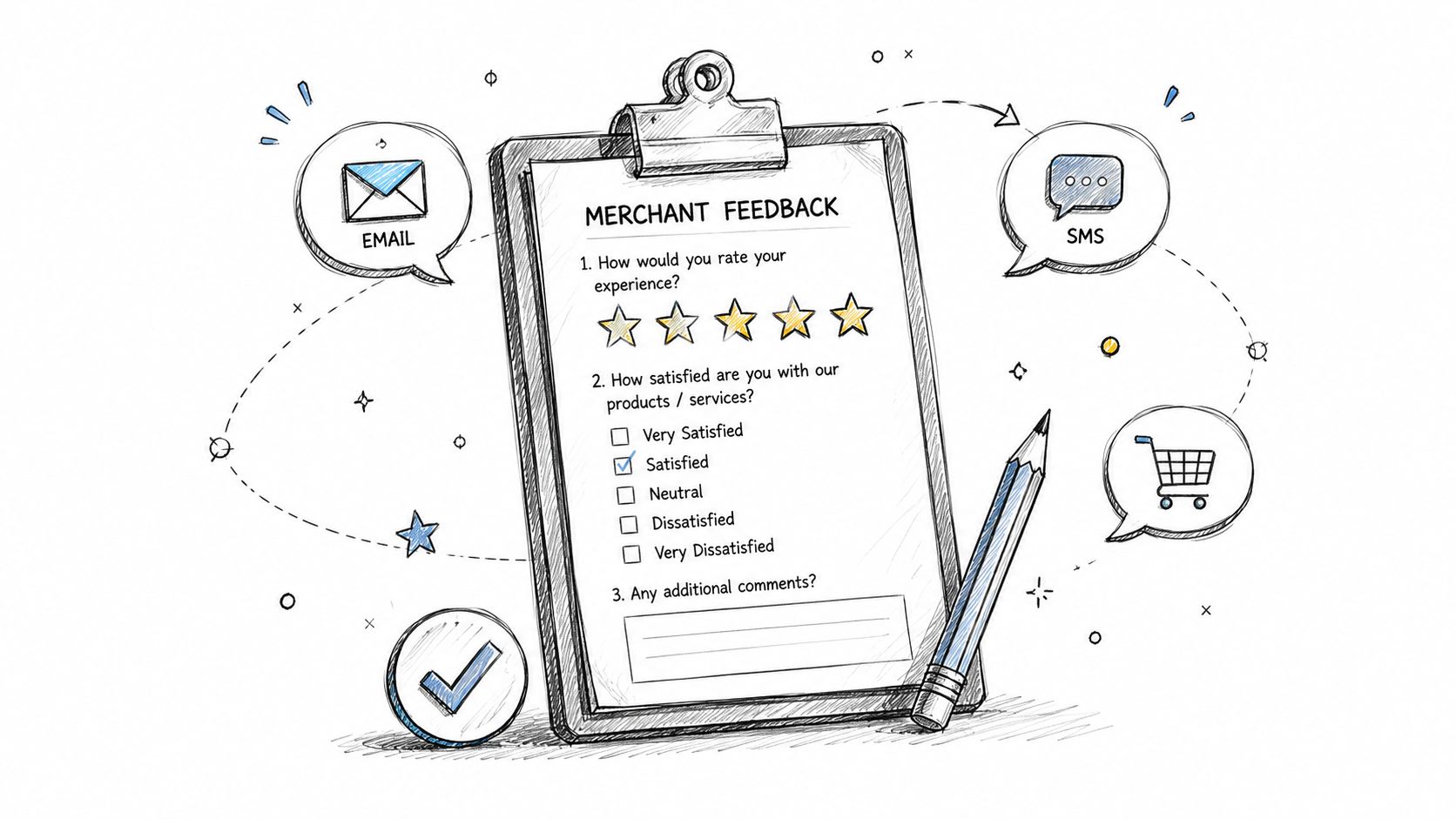
A few rules separate useful surveys from noisy ones:
- Keep it short. Five to seven questions is usually enough. Longer forms lose people fast.
- Ask about behavior and intent. “What would make you buy sooner?” is more actionable than “Are you satisfied?”
- Use timing well. Post-purchase, after a key collection browse, or right after cart exit tends to beat random outreach.
- Pair answers with behavior. Survey comments mean more when you compare them with actual purchase patterns and email engagement.
One practical move for Shopify teams is to connect survey answers to downstream segmentation. If a subscriber says they only buy on promotion, that’s different from someone who buys for product fit and rarely waits for offers.
Practical rule: don’t use surveys to prove your hunch. Use them to find where your hunch is incomplete.
For a sharper example of how a simple survey can support email strategy, see this quick survey email approach.
2. Focus Groups
Focus groups work when you need to hear how customers reason through a decision in real time. Surveys tell you what people pick. Focus groups show you how they explain it to themselves and to each other, which is useful when the problem is perception, not just preference.
In ecommerce, that makes them valuable for testing promotional language, scarcity cues, and whether an offer feels authentic or forced. A flat discount is easy to discuss. A descending reward, a time-limited claim, or a limited-quantity mechanic triggers much more opinion, and that’s exactly what you want to surface before launch.
What to watch for in the room
The best focus groups aren’t dominated by the loudest shopper or the person who loves every brand touchpoint. Recruit people who resemble your customer mix, then use a moderator who can stay neutral and keep the discussion away from leading questions. If you’re testing urgency language, show the creative or landing page, not a verbal summary of it.
A strong session often reveals whether shoppers see a promotion as scarcity bias done well, or as a cheap pressure tactic. That distinction matters because people don’t just react to the offer, they react to what the offer says about the brand. If the discussion keeps drifting toward distrust, you’ve probably found a brand perception issue, not a copy issue.
Useful prompts include:
- “What feels credible here?” That often surfaces authenticity concerns faster than direct feedback on the offer itself.
- “What would make this feel more like a reward and less like pressure?” That tells you how far the current mechanics can stretch.
- “What would you expect from a brand like this?” That exposes whether your promotion fits the audience’s price expectations.
If several people agree, don’t stop there. Follow up with one-on-one interviews, because focus groups can create social pressure that hides true hesitation.
3. Customer Interviews
Customer interviews are still the most reliable way to hear the full story behind a purchase, and they’re one of the strongest qualitative market research techniques for Shopify teams. A good interview gets past polished survey answers and into the messy details of timing, motivation, friction, and trust.
They’re especially useful when you’re trying to understand why someone bought now instead of next week, why a cart was abandoned, or whether constant promotions have changed how your brand is perceived. Interviews often expose the emotional language shoppers use when they feel a decision is urgent, risky, or overdue. That’s the stuff analytics can’t surface on its own.
Build the sample around different buyer states
Talk to recent buyers, repeat customers, lapsed customers, and cart abandoners. Those groups usually see the same store very differently. A repeat buyer may describe a reward as earned. A lapsed buyer may describe the same thing as overdue. A cart abandoner may point to uncertainty, not price.
Open with a broad prompt like, “Tell me about the last time you decided to buy from us.” Then move into what almost stopped them and what tipped the decision. That sequence matters because specific questions too early can push people into rationalized answers.
Listen for stories, not just reasons. The moment someone says “I had been comparing for days” or “I only clicked when I saw the offer would expire,” you’ve found a better signal than a generic satisfaction score.
For analysis, don’t overreact to one dramatic interview. Patterns usually start to settle after 10 to 15 conversations, especially when the same friction point keeps repeating across different customer types. If you hear one story from buyers and a completely different one from abandoners, that’s a decision gap worth mapping before you touch your pricing or promo calendar.
4. Behavioral Analytics and Heatmaps
A shopper lands on a product page, scrolls halfway, clicks the size guide, then exits without adding to cart. That kind of path is exactly what behavioral analytics and heatmaps surface, and it beats guessing why a page underperforms.
Behavioral analytics shows where visitors land, what they click, how far they scroll, and where they drop off. Heatmaps and session recordings turn that behavior into something you can inspect on the page, which is especially useful for Shopify teams trying to protect margin. If a promo banner gets attention but the offer still fails to convert, the problem may be the message itself. If people never reach the proof section, the page layout may be hiding the decision trigger.
This approach belongs near the quantitative side of customer behavior analysis, because it tells you what shoppers did before you ask them why they did it. It works best when you need fast direction on a page, offer, or checkout issue and you do not have time to wait for softer feedback to sort itself out.
Read the journey, not just the metric
Segment behavior by source, device, and whether the visitor is new or returning. A paid social visitor and a returning email clicker rarely move through a store the same way, and the difference matters when you are deciding whether to change the page or the traffic mix. Use funnels for key steps like product view to add to cart, cart to checkout, and checkout completion, then compare before and after any page change.
Heatmaps are most useful when a product page feels acceptable but still underperforms. If a key reassurance block sits below the fold and gets ignored, or a feature section is skipped entirely, the issue is usually placement before it is copy. Session recordings help confirm that reading. They show hesitation, repeated clicks, and dead ends that standard metrics flatten out.
The cleanest read comes from pairing behavior with survey feedback. One tells you what happened. The other tells you why, and that combination is often what keeps a DTC brand from changing the wrong thing.
Practical rule: if customers keep getting to the same page and leaving, fix the page before you change the offer.
For a more store-level view of this kind of analysis, see customer behavior analysis.
5. A/B Testing
A/B testing gives ecommerce teams a straight answer. One version goes live, another stays as the control, and the numbers show which change earns its keep. That matters on Shopify, where a small lift in conversion can protect margin better than a louder promotion ever will.
The method works best when the question is tied to a trade-off. A flatter discount might be easier to understand, but a structured reward can hold margin better. Urgency can lift action, but it can also cheapen the offer if it is used too often. Even the smallest wording change, such as “Claim your reward” versus “Get 15% off,” can shift behavior in ways that matter to the business. This principle applies across platforms, from your storefront to channels where you might want to improve Amazon PPC with A/B testing.
Test one change, then read the margin impact
Stacking a new headline, a new offer, and a new layout in the same experiment creates noise. The result may look interesting, but you will not know which element drove the change. One variable at a time keeps the read clean.
A useful test compares a baseline against one behavior-driven change, then checks both conversion and revenue quality. That second part matters. A test that raises clicks but lowers average order value can hurt the business even if the headline result looks positive. For DTC brands, the goal is not just a higher conversion rate, it is a better decision about which promotion preserves margin without slowing growth.
Traffic volume also shapes what you can trust. If the sample is thin, a test can only give false confidence. In that case, use the result as direction, then confirm it with the next experiment rather than treating it like a final answer.
A few guardrails keep the work honest:
- Run the test through normal buying patterns. Weekend and weekday behavior can produce very different reads.
- Wait until the result is stable. A temporary spike is not the same thing as a repeatable win.
- Keep a record of what you tested. Over time, those notes show whether urgency, scarcity, or tiered rewards are pulling their weight.
A/B testing also reveals when a smaller, better-structured offer outperforms a bigger discount. That usually happens when the reward feels earned, clear, and time-bound instead of being larger. For brands that are deciding between protecting margin and pushing a short-term spike, those results are hard to ignore.
For a closer look at the conversion side of that process, see this conversion optimization strategy guide.
6. Social Listening and Sentiment Analysis
A promo goes live, conversions look fine, and then the comments start changing. That is the moment social listening becomes useful. It shows how shoppers talk about your brand when you are not in the room, which makes it one of the most practical market research techniques for spotting brand perception shifts before they hit margin.
The strongest value comes from context, not just volume. Brand mentions matter, but so do competitor mentions, category conversations, and the repeat phrases people use across social media, review sites, and forums. If shoppers keep calling discounts noisy or predictable, that points to promotional fatigue. If they describe a brand as worth waiting for, that points to a different problem. Waiting can protect price, but it can also train customers to buy only on offer.
Read the language behind the reaction
Automated sentiment scores help with scale, but they flatten nuance. A sarcastic post, a mixed review, or a complaint about shipping can land in the wrong bucket. Manually review the mentions that carry real business weight, especially when tone shifts around major promo periods or product launches.
The best listening work also captures the words shoppers use to describe value that is not tied to price. They may talk about trust, exclusivity, quality, or relief from decision fatigue. Those phrases matter because they show what a discount cannot fully replace, and they often point to the reason a higher-margin offer still works.
Set up your monitoring around the questions you need answered.
- Brand mentions to track direct feedback on campaigns, offers, and customer experience.
- Category mentions to see how shoppers describe the space and what they expect from it.
- Competitor mentions to compare positioning and spot where rivals are creating promotional noise.
- Alert triggers for sudden spikes in negative, uncertain, or repetitive language.
A useful readout is not just “positive” or “negative.” It shows whether shoppers are reacting to price, trust, product quality, or the sense that a brand has become overly dependent on discounts. If you keep seeing those complaints, the issue is bigger than creative copy. It may be a brand trust problem that calls for a different promotional model, not just a sharper headline.
7. Cohort Analysis
Cohort analysis is what you use when a result looks good on day one but you need to know whether it holds up. It groups customers by shared behavior or timing, then tracks how each group performs over time. That makes it ideal for understanding whether a promotion improves the business or just creates a short-lived bump.
For Shopify brands, you can compare the long-term effect of different acquisition campaigns, offer mechanics, or urgency styles. A flat-discount cohort and a behavior-driven cohort might both convert well initially. The key question is whether one group comes back more often, spends more over time, or shows healthier margin behavior.
Compare the right groups
Cohorts only work if they’re defined consistently. Use the same time window, same source logic, and the same metric definitions. Then compare repeat purchase rate, average order value, and lifetime value without assuming they’ll all move in the same direction.
It also helps to separate first-time buyers from repeat customers. Those groups often respond very differently to the same promotion. A mechanic that pushes quick first purchases may not be the one that builds healthier repeat behavior.
The best cohort reads aren’t immediate. They show you whether a tactic trained the wrong habit.
Track cohorts for long enough to matter. Early conversion tells you something, but not enough. If the goal is margin-safe growth, the true test is whether the promotion still looks sensible after the first campaign glow wears off.
8. Competitive Benchmarking and Mystery Shopping
A shopper who compares three stores in the same category can spot margin pressure fast. One brand leans on constant markdowns, another sells with bundles, and a third uses scarcity copy to protect price. That comparison is why competitive benchmarking belongs in any serious market research techniques stack for DTC brands trying to decide whether to defend margin or match the market.
Mystery shopping gives the comparison a buyer’s view. You move through the experience like a real customer, join the email flow, test the promotion, and sometimes go all the way to checkout. That process shows whether a competitor depends on flat discounts, countdown pressure, tiered rewards, or a mix of tactics, and it reveals the friction points customers see.
The value is practical because the same offer can mean different things in different markets. A premium brand may use a light incentive to preserve perception, while a discount-led brand may use a heavier one just to keep traffic moving. If you compare the wrong stores, the conclusion gets distorted fast.
Watch the sequence, not just the offer
A single screenshot misses the part that matters. Promo cadence, message order, and post-offer follow-up often tell you more than the headline discount.
Track how competitors change their approach over time, because a tactic that appears once may be a test, not a standard play. A luxury brand and a value brand can use the same mechanic for opposite reasons, so compare direct competitors with similar audiences and price points. That keeps the read grounded in reality instead of in surface-level similarity.
This research matters most when your team is weighing margin against market pressure. If the rest of the category trains shoppers to wait for discounts, copying that behavior can erode price integrity without creating durable growth. If a competitor shifts toward scarcity messaging and away from price, that deserves a test of its own, not a blind imitation.
A clean benchmarking note usually captures:
- Offer type and cadence so you can see how often promotions appear.
- Messaging style to understand whether urgency or reward language dominates.
- Checkout experience because friction often hides there.
- Recent changes because a new tactic usually means the old one stopped working.
The goal is not to copy what competitors do. It is to understand the market well enough to protect margin, choose where to compete, and avoid being surprised by a shift that was visible all along.
9. Customer Journey Mapping
A customer journey map shows where each research method belongs in the buying path, and that matters when a DTC brand has to choose between protecting margin and pushing demand. It combines behavioral signals, qualitative input, and operational checkpoints. Used well, it shows where urgency helps, where reassurance reduces friction, and where a promotion only adds clutter.
For Shopify merchants, the payoff is practical. Some shoppers need comparison details early, before price becomes the main filter. Others only respond to urgency right before purchase. Repeat buyers may feel pressured by a discount at checkout, while lapsed customers may need a different reminder altogether.
Map the decision, not just the funnel
Strong journey maps start with customer evidence, not internal guesses. Teams often assume they know the moment that matters most, but shoppers usually place their trust somewhere else. A shipping policy, payment option, product proof point, or return detail can matter more than the offer itself.
Split the map by customer type, because the path changes fast. New, repeat, and lapsed customers need different reassurance. Then add data at each stage so you can see where people move forward and where they stall.
Timing often matters more than volume. A well-placed promotion at the decision point can outperform a louder promotion too early in the path. That makes behavior-based mechanics more useful than broad discounting, because the offer can match the stage instead of interrupting every stage.
For a closer look at how customer behavior analysis supports journey decisions, see how customer behavior analysis supports journey decisions.
10. Email and SMS Engagement Metrics
A Shopify brand can have strong campaign ideas and still miss the mark if email and SMS engagement stays flat. Opens, clicks, conversions, and revenue per send show which messages move subscribers and which ones only fill the inbox. For teams using Klaviyo or a similar stack, these metrics are often the quickest way to tell whether a new offer style is helping margin or subtly eroding it.
These signals matter most in urgent tests. A subject line that reads like a routine sale can get ignored, while a behavior-based message can feel more relevant to someone who already knows the brand. That difference matters because the same promotion can pull very different results depending on whether it reaches active buyers, cold subscribers, or lapsed customers.
Read engagement as a margin signal
Click rate by itself can mislead. A campaign with fewer clicks can still produce stronger revenue if the clicks come from high-intent subscribers. Revenue per email or SMS gives a better read on whether the message is creating sales efficiently, which matters more than chasing surface-level engagement.
Segment before you test. Cold subscribers and active buyers rarely respond the same way, and the wrong comparison can make a weak message look strong. If you change offer structure, watch unsubscribe and complaint rates as well, because list health affects future deliverability and future margin.
A useful testing rhythm starts with the message itself, then moves to the economics behind it:
- Test offer language to see whether reward-based wording outperforms standard discount copy.
- Compare promotion types to learn whether urgency beats flat markdowns for your audience.
- Track fatigue signals so you can spot when send frequency starts to wear down engagement.
- Coordinate email and SMS so the same audience does not get pressured from both channels at once.
Behavior-driven promotions often beat the default playbook because they create urgency without forcing a deeper discount. That gives a DTC team more room to protect margin while avoiding the look of a brand that is always on sale.
10 Market Research Techniques Compared
| Method | Implementation complexity | Resource requirements | Expected outcomes | Ideal use cases | Key advantages |
|---|---|---|---|---|---|
| Surveys and Questionnaires | Low, easy to deploy | Low, survey tool, list, basic analytics | Quantitative feedback at scale; potential response bias | Measure preferences, cart abandonment reasons, segmentation | Scalable, fast, low cost, customizable |
| Focus Groups | Medium–High, needs facilitation | Moderate–High, moderator, recruited participants, recording | Deep qualitative insights; influenced by group dynamics | Test messaging authenticity, emotional reactions, prototype feedback | Rich context, uncovers social dynamics and language |
| Customer Interviews | Medium, one-on-one moderation | Moderate, interviewer time, recruitment, transcription | Nuanced individual motivations and friction | Explore purchase triggers, cart abandonment, loyalty issues | Detailed context, candid responses, avoids groupthink |
| Behavioral Analytics and Heatmaps | Medium, tracking setup and analysis | Moderate, analytics/heatmap tools, analyst time | Actual navigation patterns, friction points, click behavior | Find drop-off points, evaluate urgency messaging impact | Reveals real behavior; real-time and visual evidence |
| A/B Testing (Split Testing) | Medium–High, experiment design and stats | Moderate, testing tool, sufficient traffic, time | Causal, measurable lift for specific changes | Validate promotional mechanics, optimize conversion elements | Data-driven decisions; reproducible results |
| Social Listening and Sentiment Analysis | Low–Medium, monitoring configuration | Low–Moderate, tool subscription, manual review | Unsolicited perception signals, trend detection | Monitor promo fatigue, brand perception, crises | Captures authentic public feedback and trends |
| Cohort Analysis | Medium, segmentation and tracking | Moderate, analytics platform, historical data | Longitudinal trends in retention, AOV, LTV by cohort | Compare effects of different promotion strategies over time | Reveals long-term value and cohort-specific impact |
| Competitive Benchmarking & Mystery Shopping | Low–Medium, systematic monitoring | Low–Moderate, time, purchases, tracking tools | Comparative view of competitor tactics and cadence | Assess market positioning, promo frequency, tactic gaps | Practical competitor insights and tactical ideas |
| Customer Journey Mapping | High, cross-functional synthesis | High, workshops, research, data inputs | Holistic view of touchpoints, emotions, opportunities | Design where promotions belong and timing of urgency | Aligns teams; identifies authentic moments for promos |
| Email & SMS Engagement Metrics | Low–Medium, campaign tracking | Low–Moderate, ESP, analytics, segmentation | Direct revenue attribution and engagement changes | Test offers, subject lines, scarcity language with owned list | Fast iteration, revenue-linked measurement, owned channel advantage |
Turning Research Insights into Margin-Saving Strategies
The strongest market research program doesn’t start with methods, it starts with the business decision. If the question is pricing, positioning, segmentation, or validation, choose the technique that answers that question fastest and with the least guesswork. Surveys help at scale. Interviews and focus groups explain motivation. Behavioral analytics shows what people do. A/B testing proves what works. Cohort analysis tells you whether it keeps working.
That sequence matters because ecommerce teams can waste a lot of margin trying to solve a behavioral problem with a blunt discount. When you layer quantitative and qualitative work properly, the picture gets clearer. You can see whether a problem is real, how widespread it is, what language customers trust, and which offer mechanics create movement without training shoppers to wait for a lower price next time.
The historical shape of the field points in the same direction. Market research became formal in the early 20th century, expanded with focus groups, probability sampling, and experimental design in the mid-century, and is now increasingly digital and data-heavy. The modern tools are faster, but the logic hasn’t changed. Measure behavior, test messaging, and let structured evidence guide the next move. The industry’s current mix of surveys, online interviews, text analytics, and other digital methods shows just how far the toolkit has moved toward blended research, not single-method certainty. As noted earlier, the global market research industry has also become large and technology-heavy, which makes disciplined method choice even more important when every campaign has a cost attached.
For Shopify brands, the key mindset shift is simple. Promotions should reward action, not punish patience. If your research keeps pointing to promo fatigue, weak urgency, or margin erosion, that’s a sign to design offers that feel earned and timely instead of repetitive and predictable. The best research doesn’t just tell you what shoppers say. It tells you how to shape the moment they decide.
Quikly helps Shopify brands turn that insight into behavior-driven promotions that create urgency without defaulting to deeper discounts. If you want a cleaner way to reward action, protect margin, and make your offers feel part of the store instead of bolted on, visit Quikly and see how the mechanics fit your next campaign.
Topics: market research techniques, ecommerce research, DTC market research, Shopify market research, customer insights